Category Archives: Bows

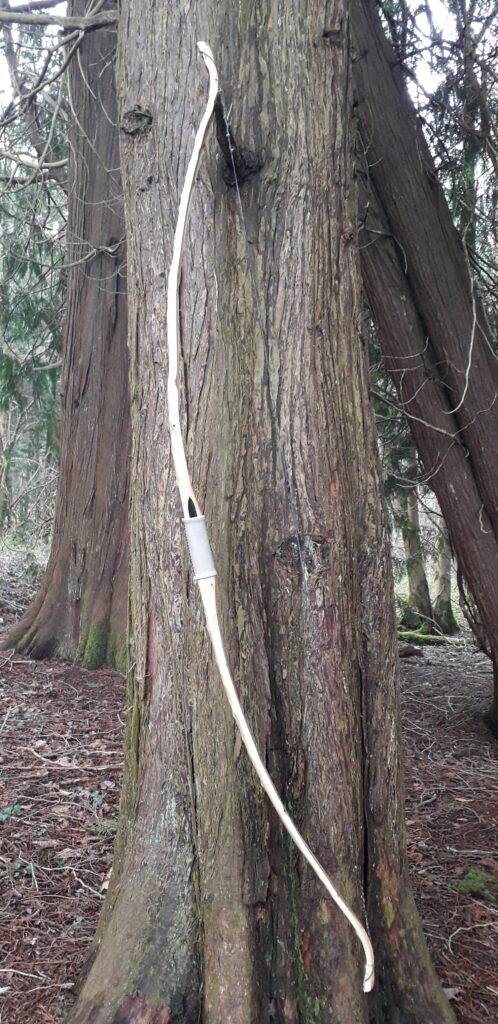
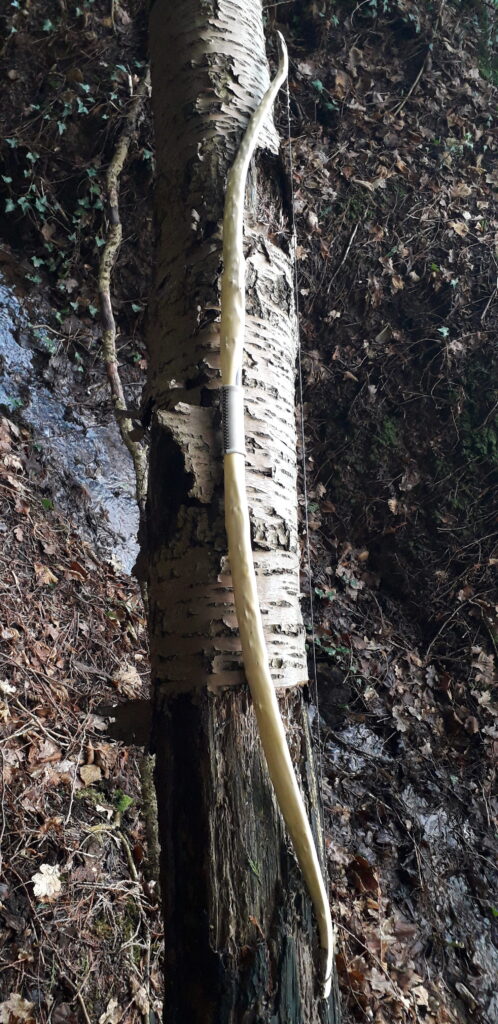
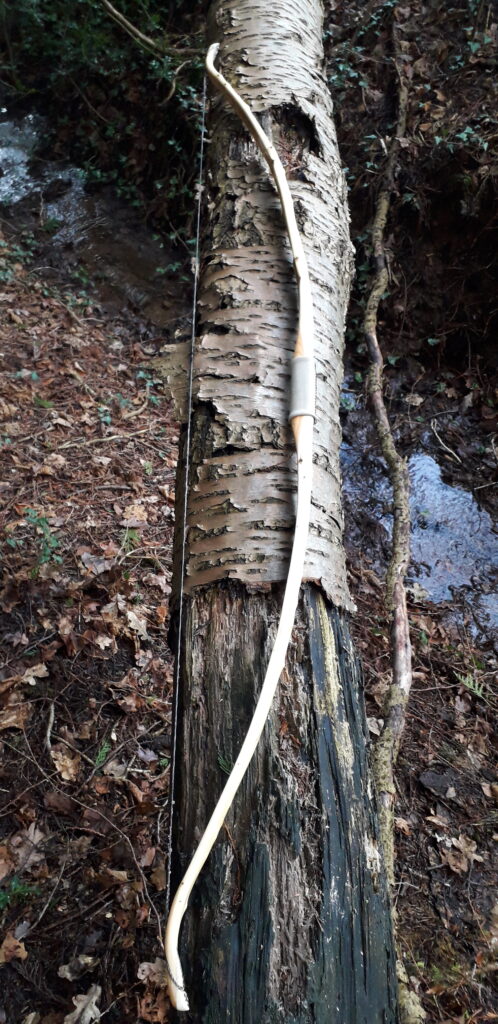
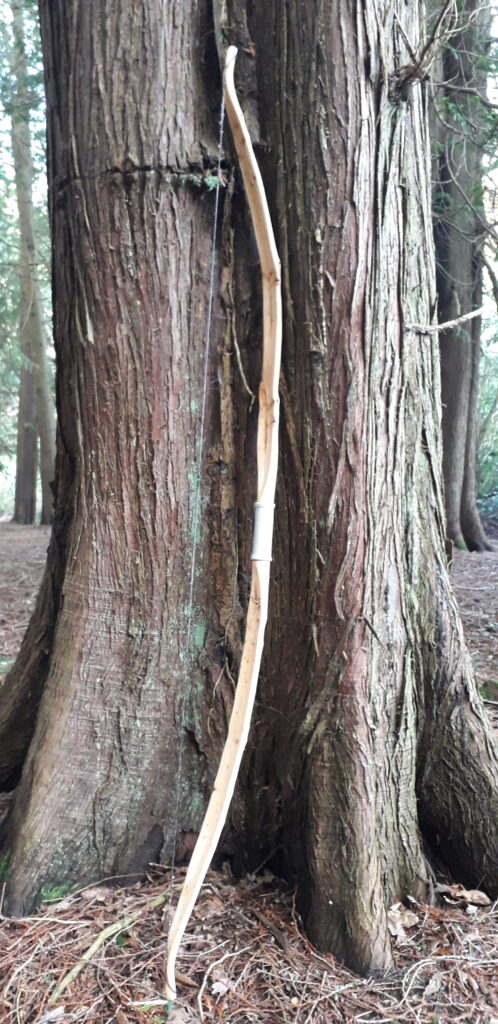
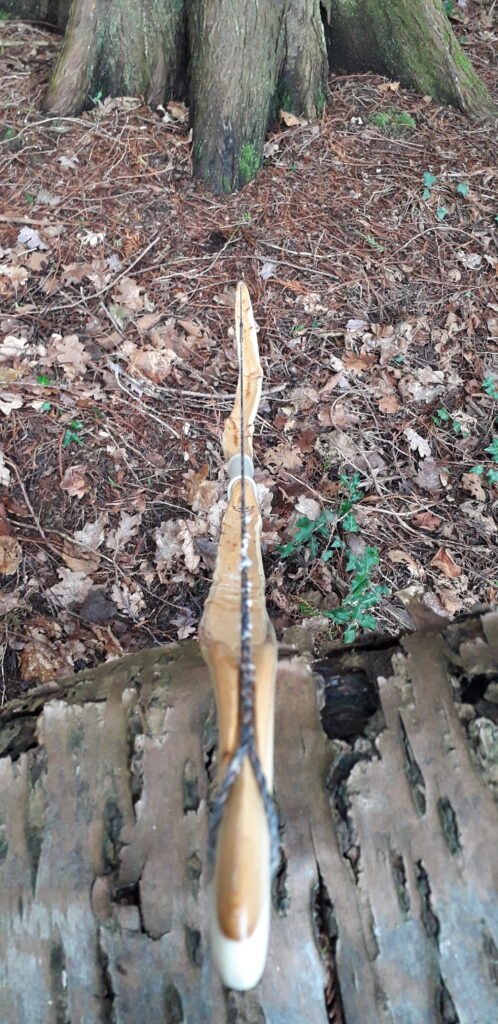
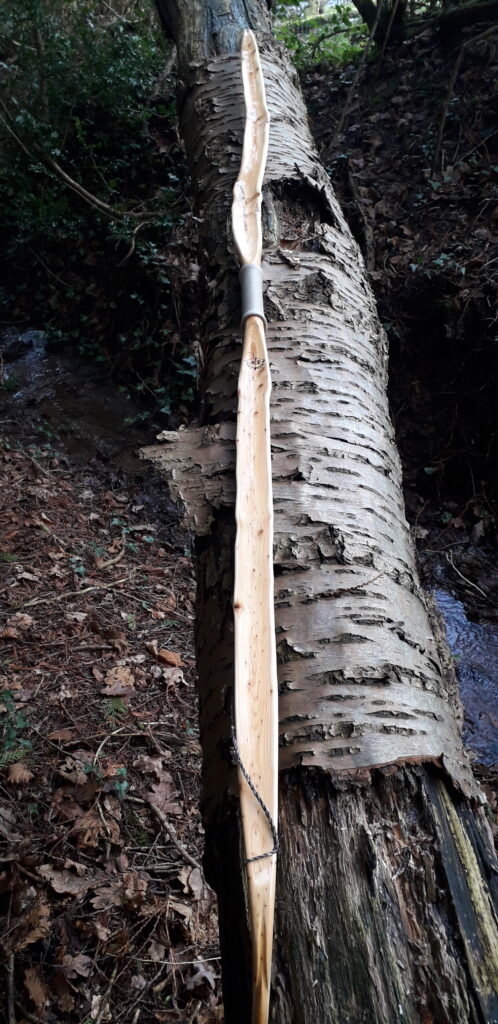
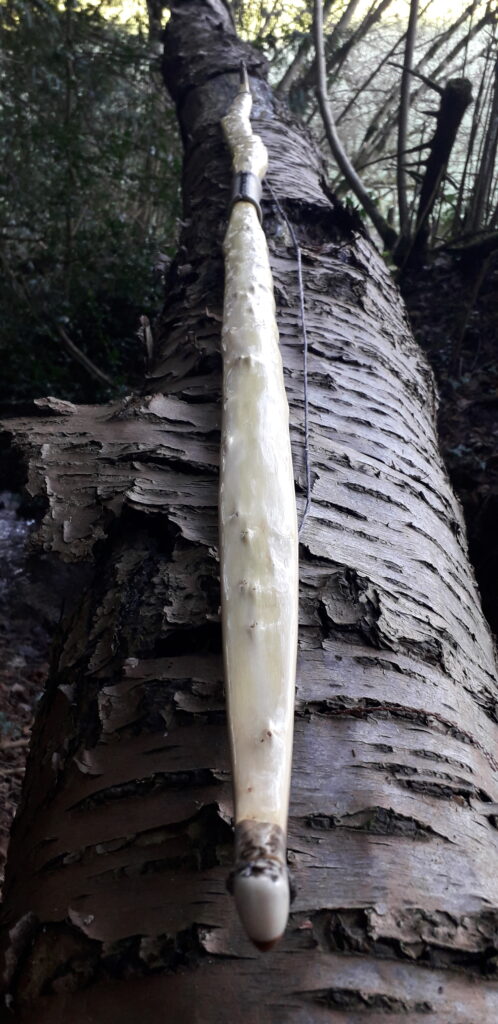
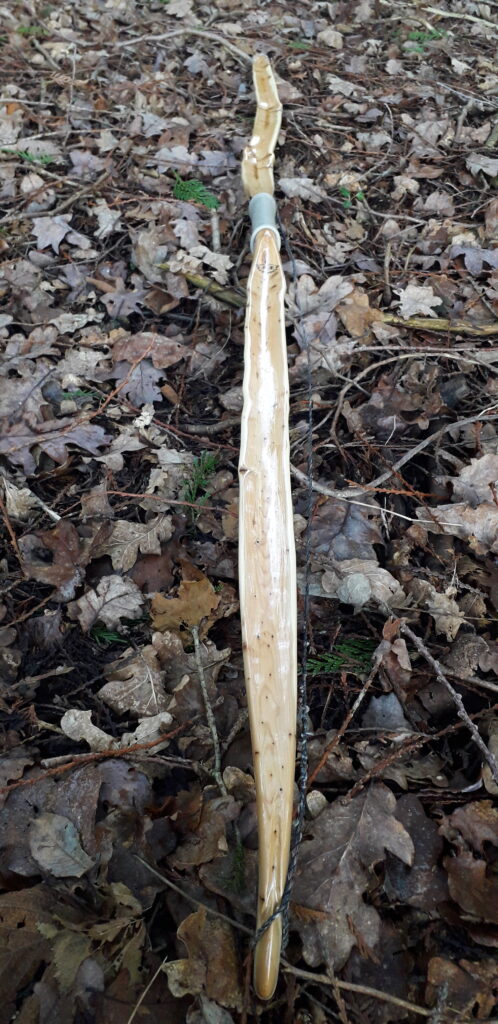
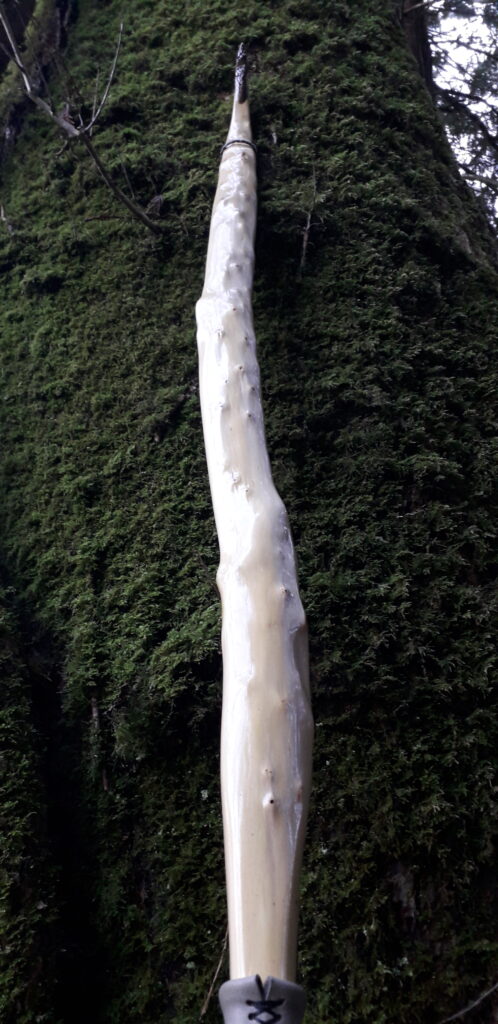
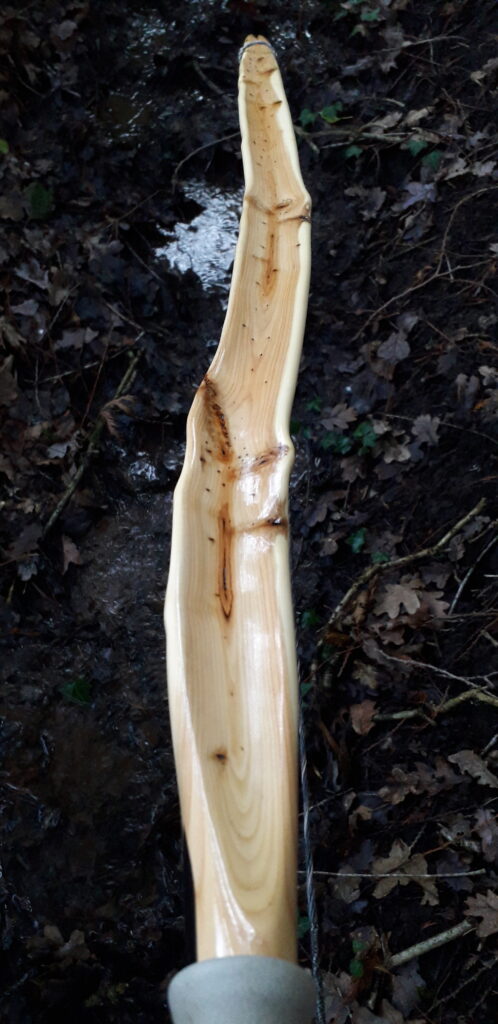
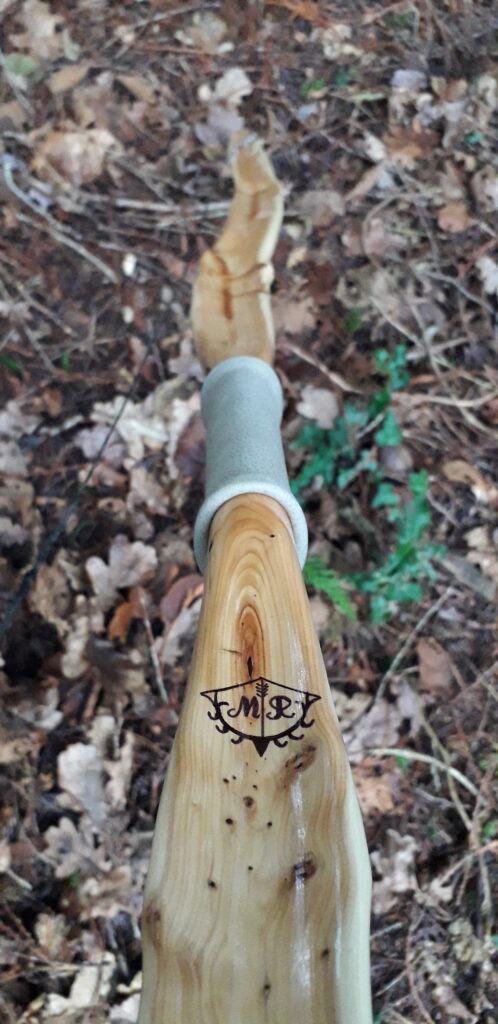
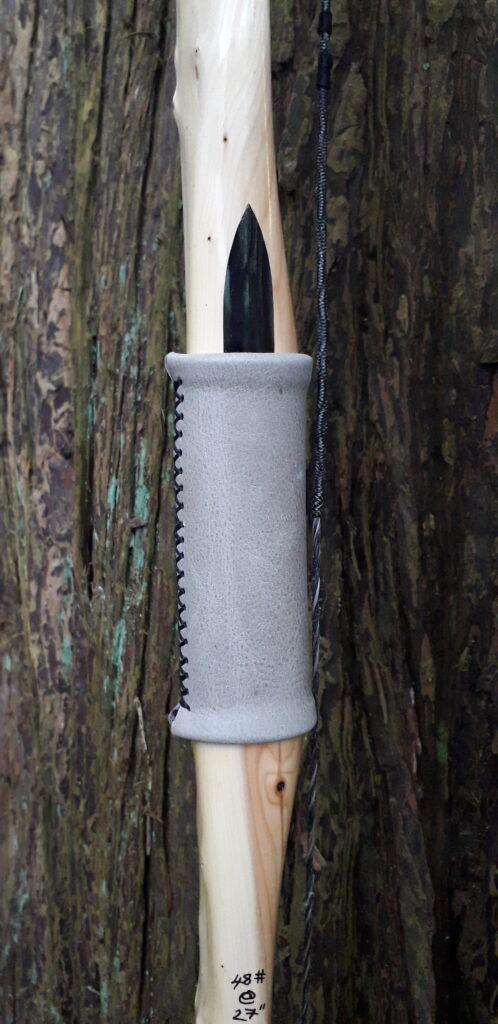
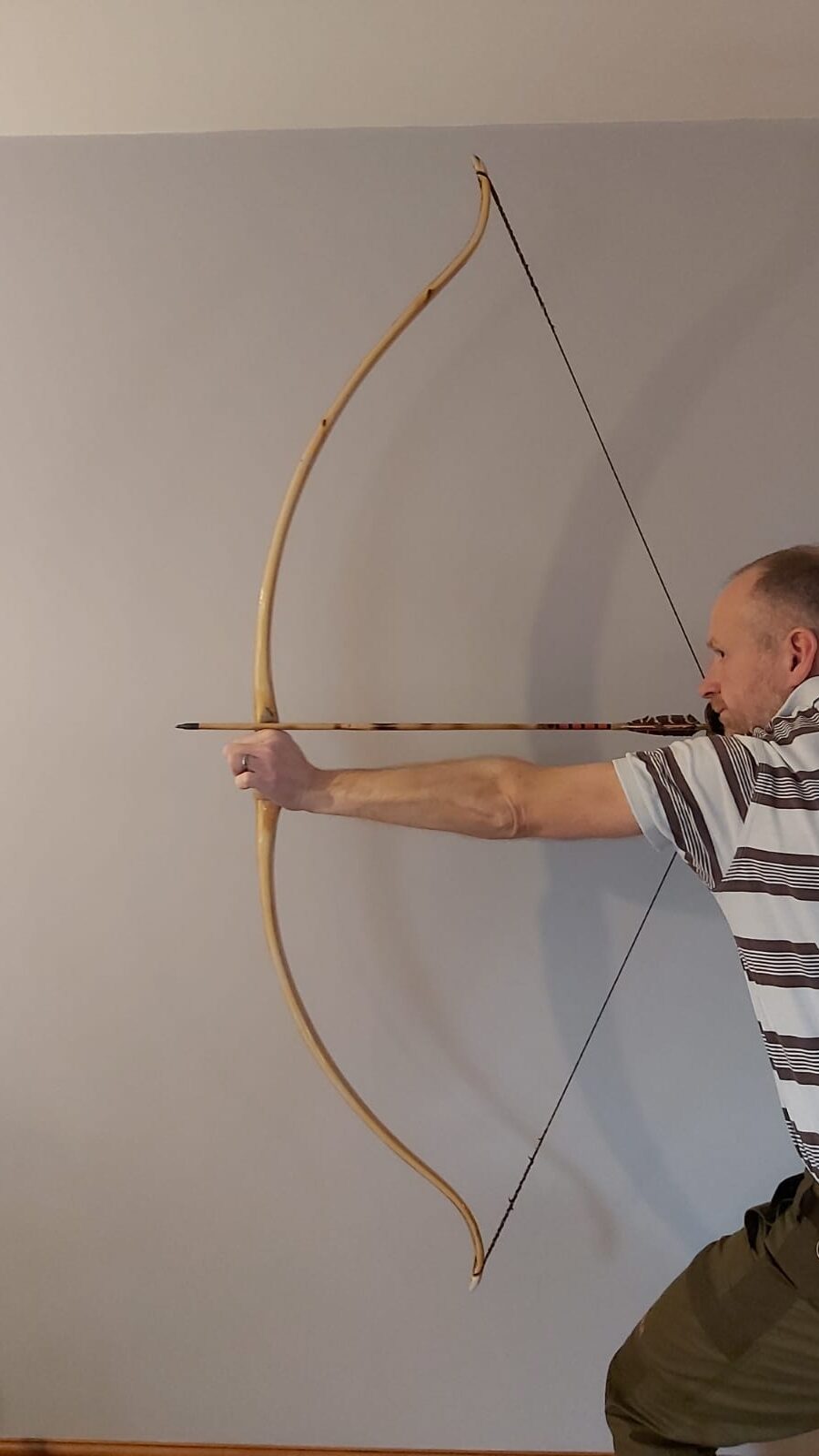
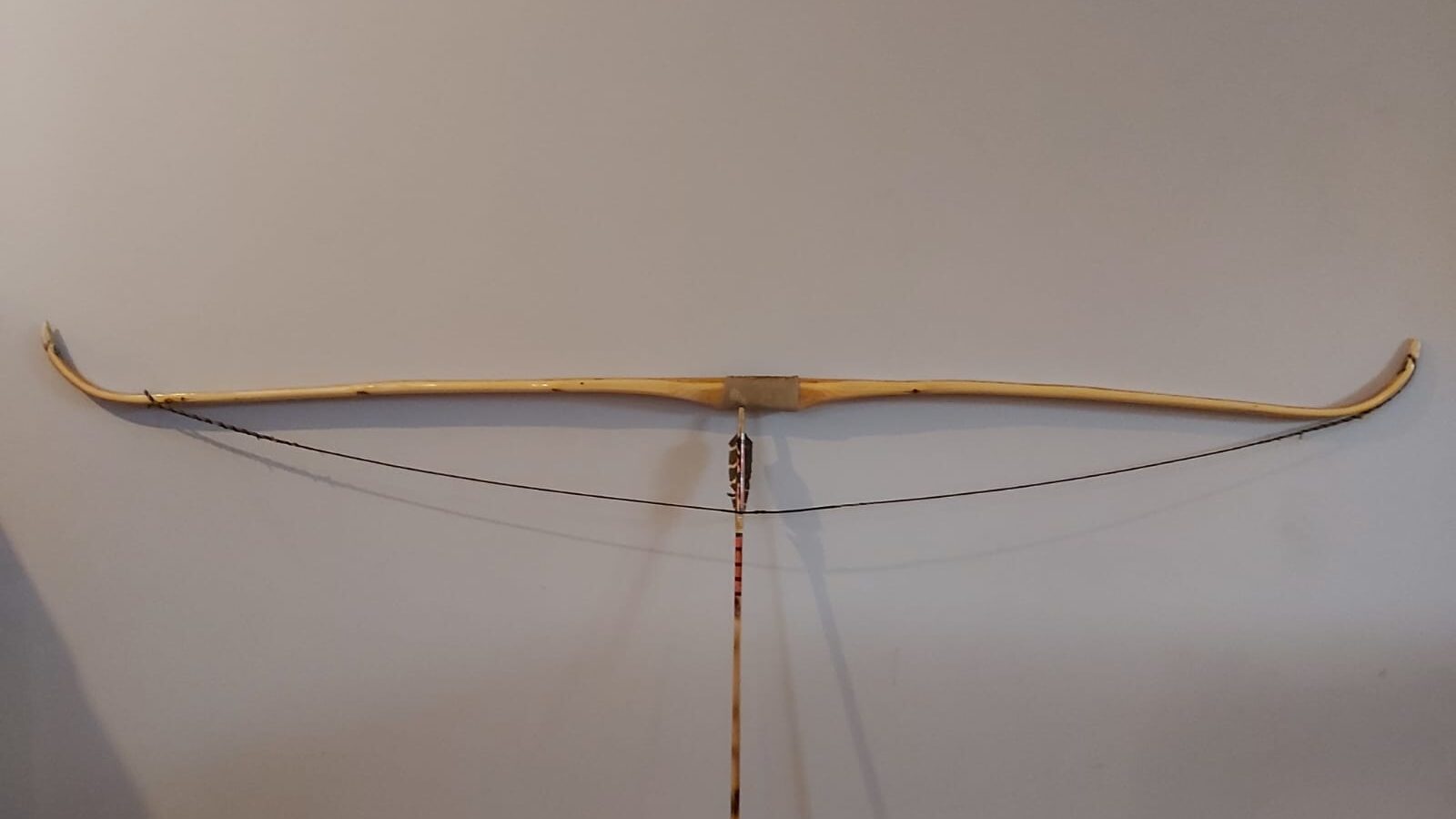
Yew HLD Recurve Character Branch Bow. 48# @ 27″ (Bow No. 7)

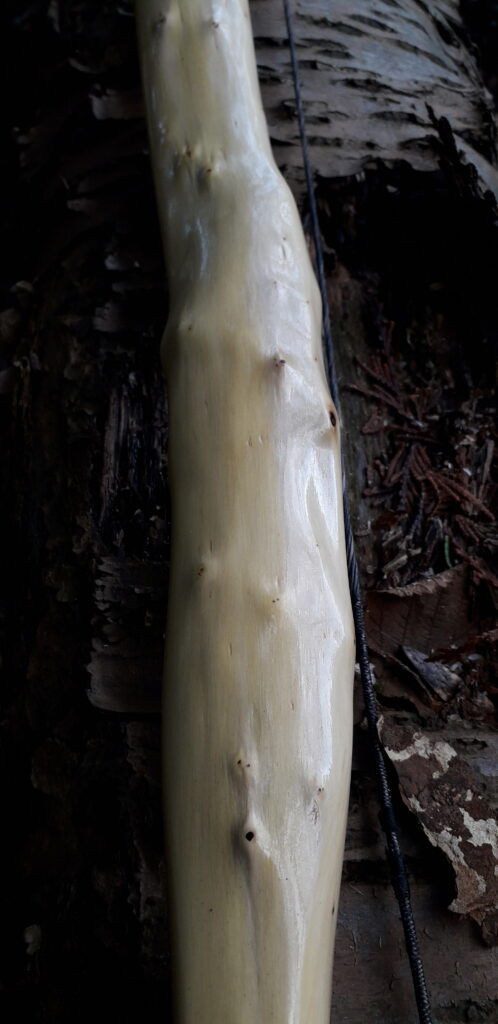
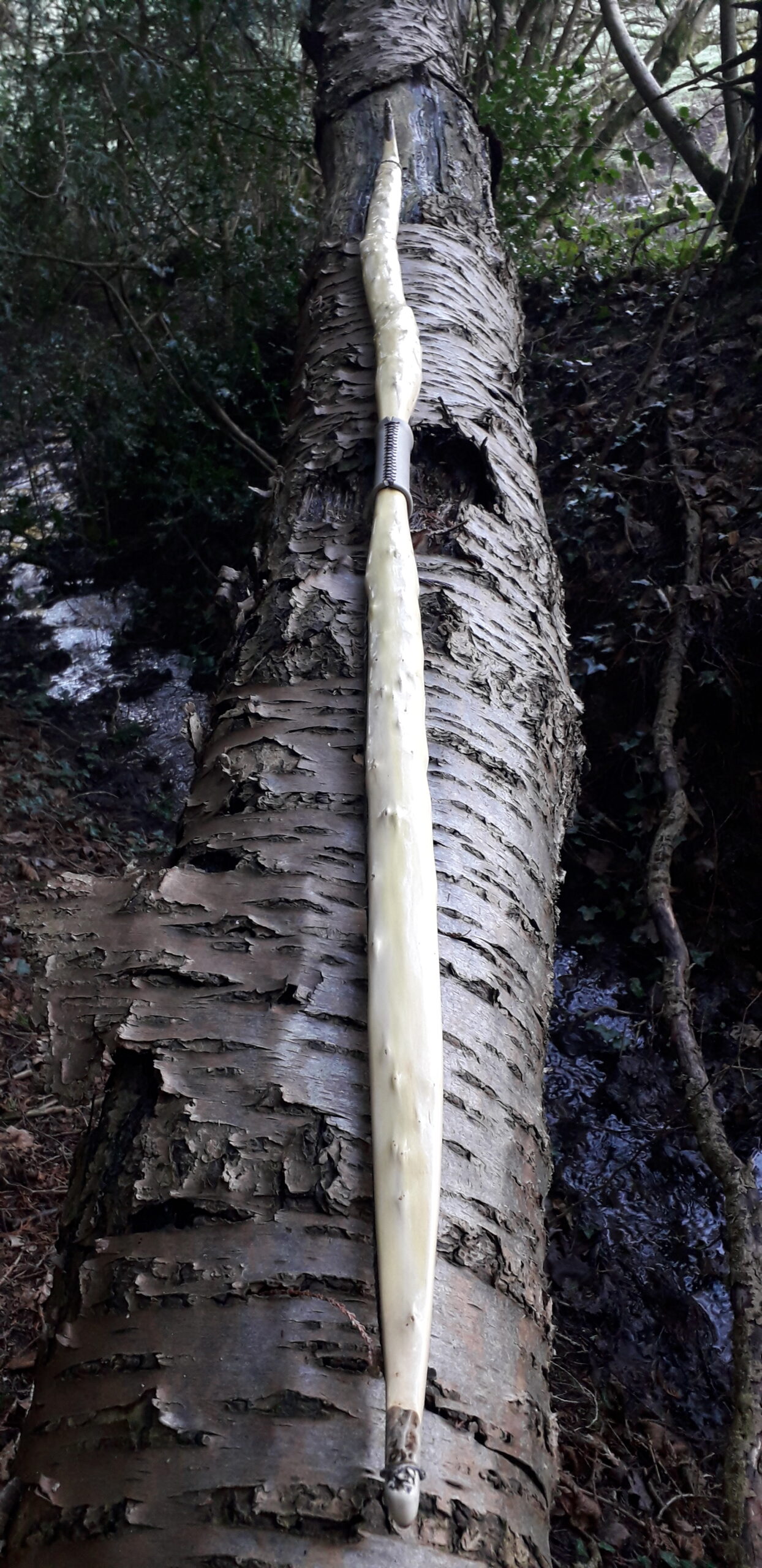
This bow started out life as a 2-3” branch which I harvested a couple of years ago. Given all the knots, kinks and wiggles, I knew it was going to be a challenge to turn this ugly little stick into a bow. Yew is one of those few bow woods which can be incredibly forgiving however, so I decided to give it a go!

The main challenge with this branch was going to be placing a bow back somewhere on it, and in a way which would keep the back from including any of the larger more fragile knots. One particular face was cleaner than the rest, but by choosing to use this face as the bows back, I would have to deal with a significantly deflexed 8” section which would have to fall somewhere between one of the limbs fades and the middle of that limb.

The branch measured only 68” long so I would have little opportunity to manipulate the handle location anywhere other than in the approximate centre. Given all the potential weak points on this branch, I did not dare to aim for a bow any shorter than 66” nock to nock.

I knew that I’d be able to steam out some of the unsightly deflex in what ended up being the top limb, but given all the knotty material in this deflexed section, I dared not try to straighten it out completely as the likely hood of one on the knots popping was very high.

After roughing out the basic limb thickness and face profile, I set about reducing the deflexed section with steam. After that was taken care of the small amount of string misalignment plus a little twist was corrected with some dry heat. At this point I also steamed in the gentle recurves. Now I had a more workable and predictable shape, I could then start to think about the final limb width and general profile/cross section.

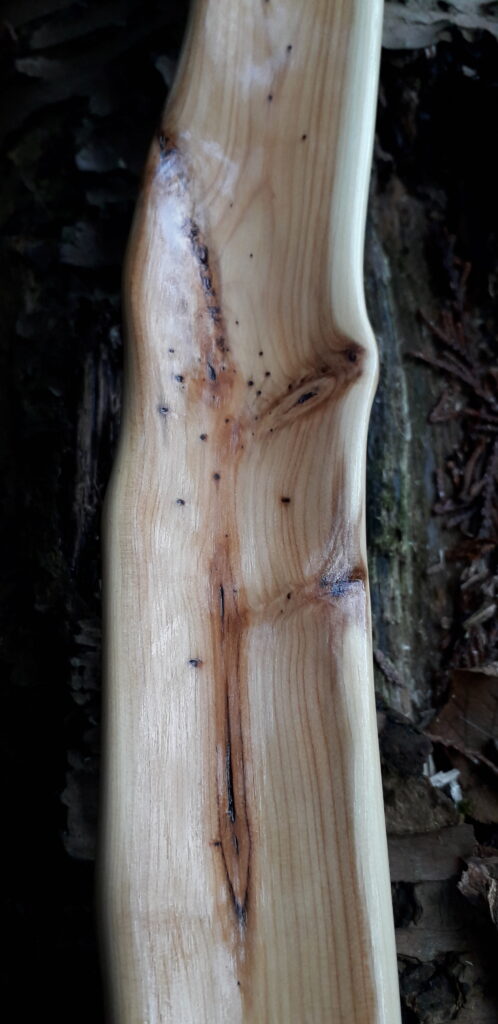
The heartwood content of this bow was not great and the sapwood was about 8-10mm thick. The back was covered in small raised pins so chasing a ring was totally out of the question. And since the likely-hood of this branch ending up as firewood was high, there was no way I would consider investing time and effort to sinew back a risky bow like this, just to get away with violating the back in order to improve the ratio of sapwood to heart wood.

As with all branches, the pithy centre was biased towards the side which had the tighter growth rings (1-2mm) which happened to be on the same side of the branch which I’d chosen as the back. This meant that the pith was currently contained within both limbs and ran right through the handle.

Whilst I have no problem with the pith running through the handle section or even the thicker parts of the fades, I do not like leaving the pith in the working parts of the limbs. Experience has taught me to expect cracking, splitting and even fretting to occur when the pith runs close to the surface of the belly material.

Given that the crown on this branch was significant and the pith was currently buried inside the roughed out limbs I opted to hollow out both limbs to match the crown, whilst hopefully getting deep enough to remove the pith at the same time.

This worked fine but left me with very little heart wood. In fact the sapwood to heartwood ration was around 70/30%. Not ideal so I decided to take the sides in as the sides were entirely sapwood. This reduced the limb width down from about 1” 7/8ths to around 1” 5/8ths.

Now that the pith was out of the limbs and the heartwood sapwood ration had been improved, I didn’t have a great deal of bow left to play with, so I had to be realistic with the outlook. I guessed she would probably make for a finished bow around 35 40lbs at best. So I was really suprised when I actually managed 51lb at 27”!

I tillered the bow to 27” as my brother will likely get this bow. His draw length on a good day is about 27”. I took the tillered (albeit unsealed) bow stump shooting for a couple of weeks with only tillering nocks cut in and a leather strip wrapped around the handle to double as a grip and arrow pass. After a hundred plus arrows I checked her over for faults but found none.

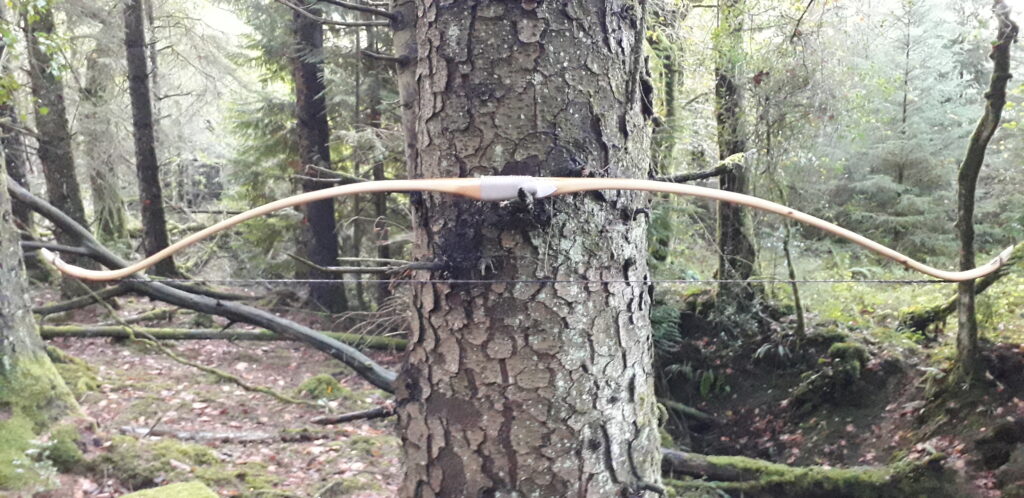
I was expecting some of the steam correction to pull out in the deflex section but it didn’t. The finished bow looks like it has a very positive tiller but it is deceptive. The deflex section right out of the top fade is what gives this bow the look of excessive positive tiller.

In reality, this bow feels very well balance through the entire draw cycle and the limbs time together great when I shoot it with split fingers. I’ve shot enough bows over the year to be able to feel when a limb is weaker than the other. Despite the appearance, this bow is very well balanced.

After double checking the bows tiller by feel and then by tiller tree, I confirmed that the top limb is only slightly weaker than the bottom limb which is perfect for both my use, and my brothers use, since we both shoot split fingers.

It never ceases to amaze me how you can take a bow which looks to be tillered very well, only to draw it back and feel that torque on the wrist that you get when one limb is significantly stronger than the other. Nowadays, when it comes to final tiller, I place more emphasis on feel than I do on appearances. Where wooden bows are concerned (especially character bow) appearances are incredibly deceiving!

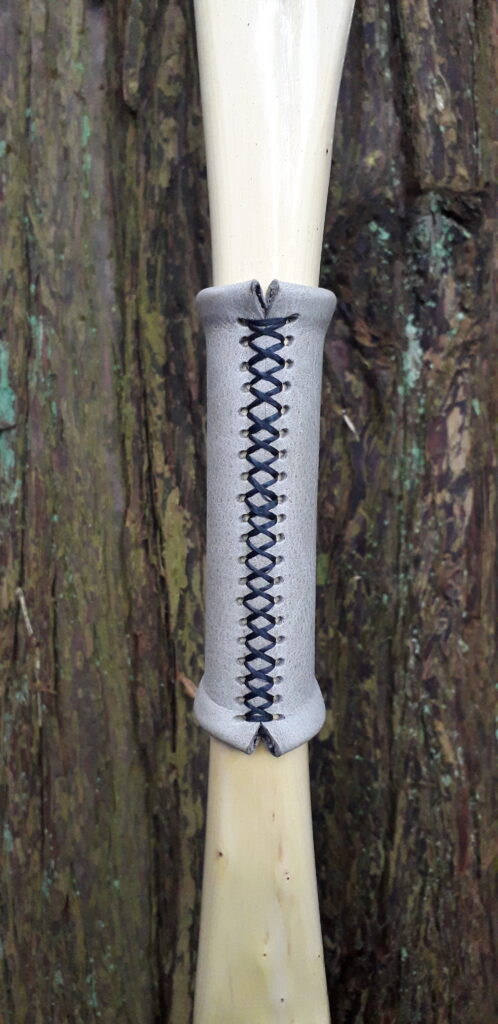
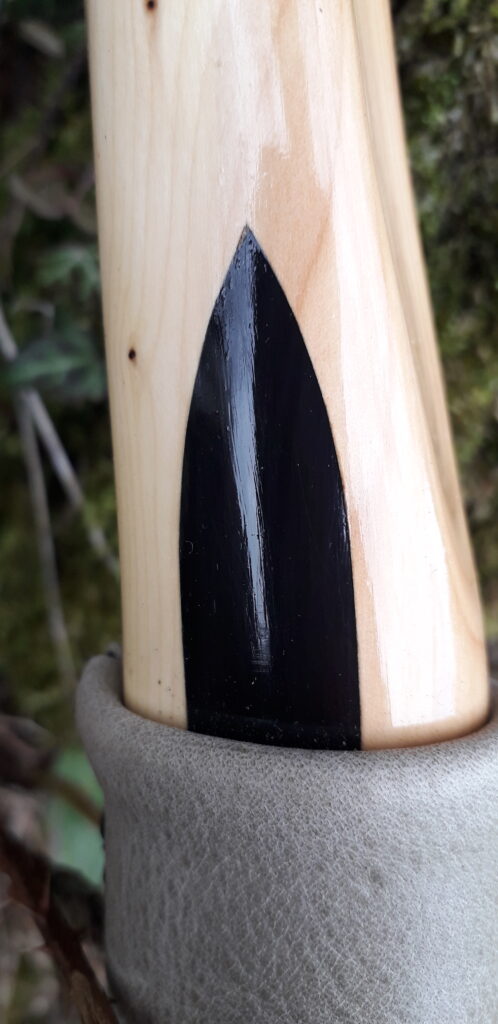
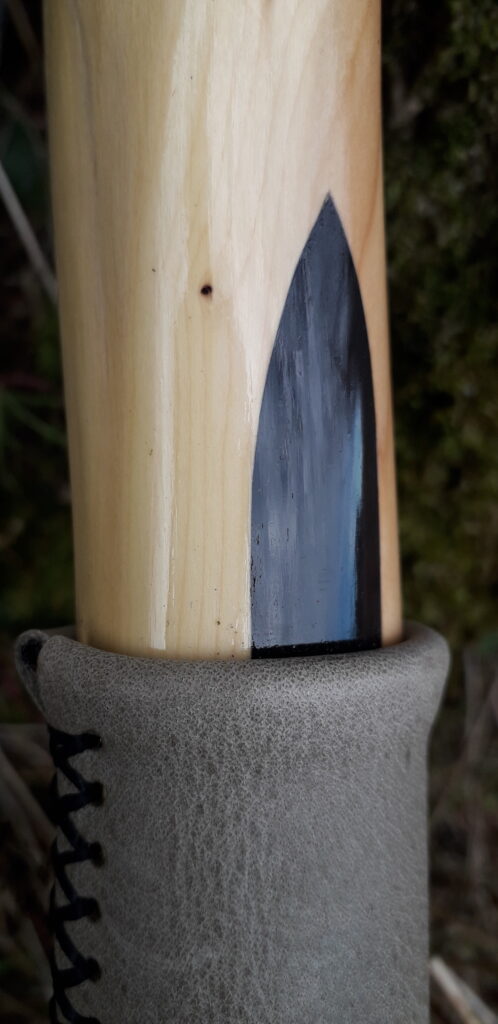
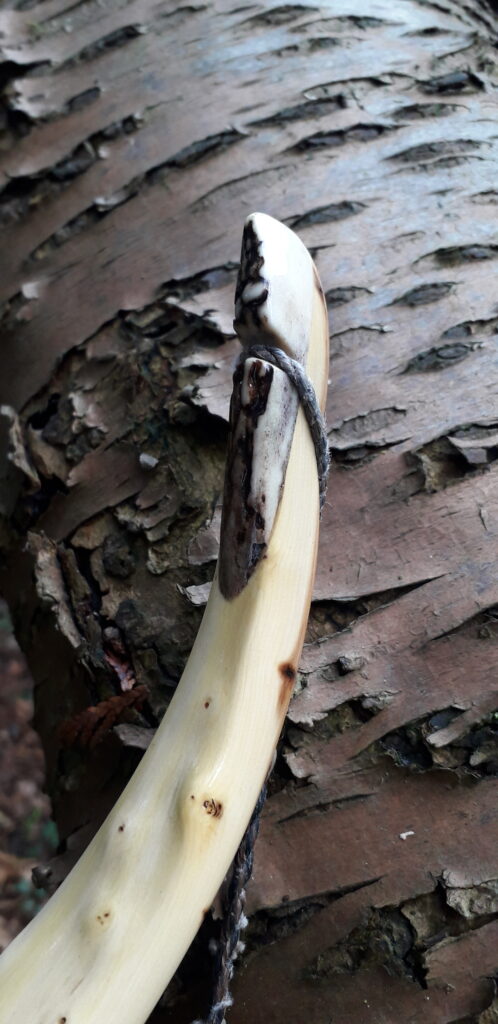
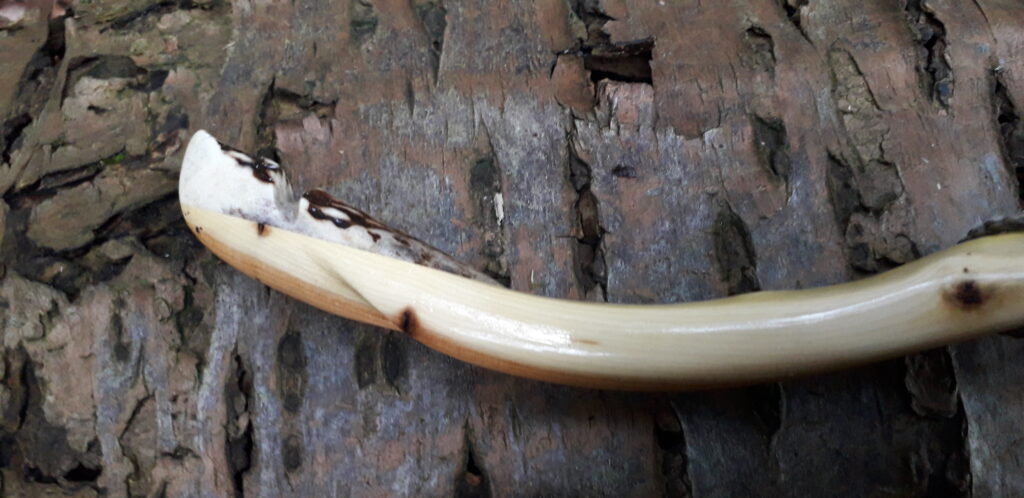
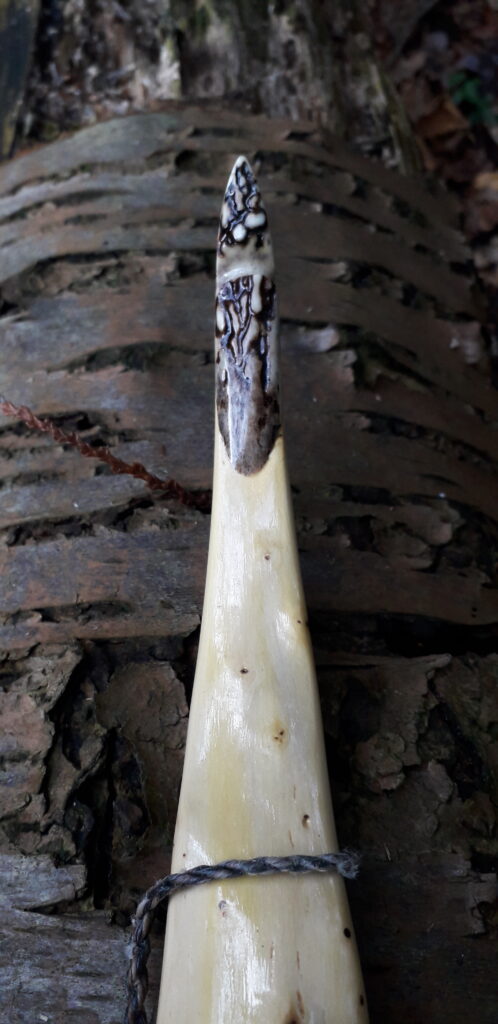
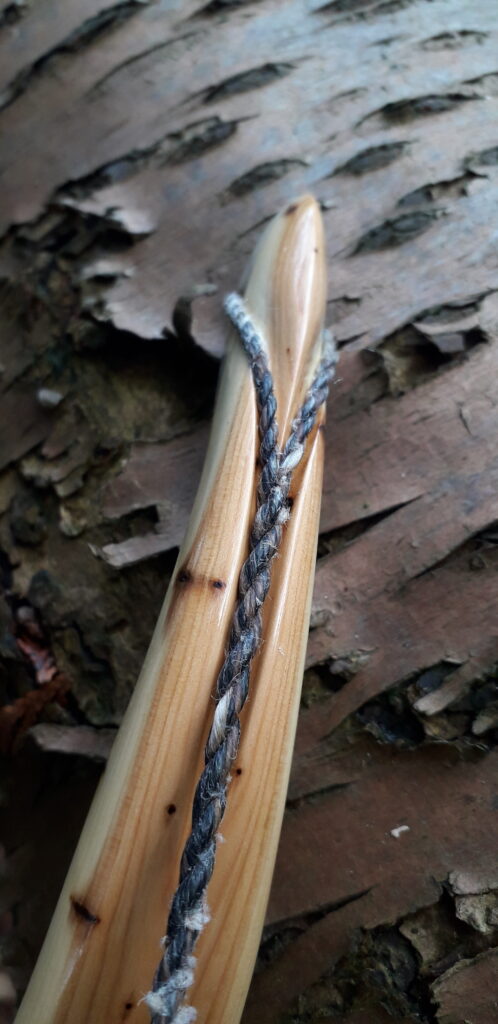
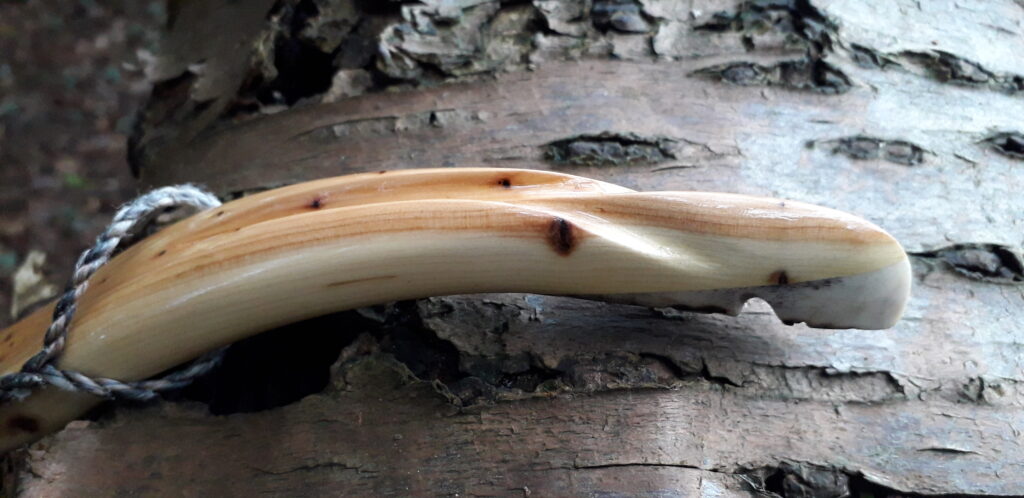
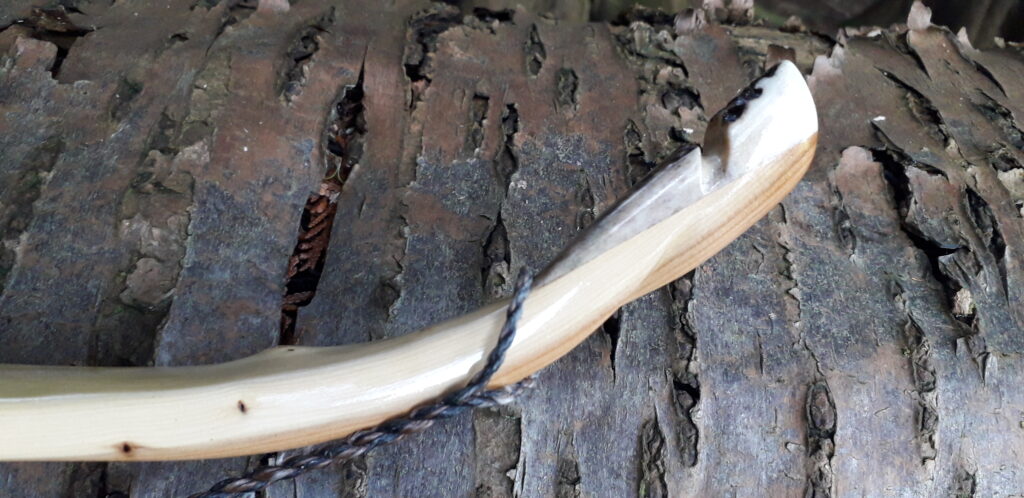
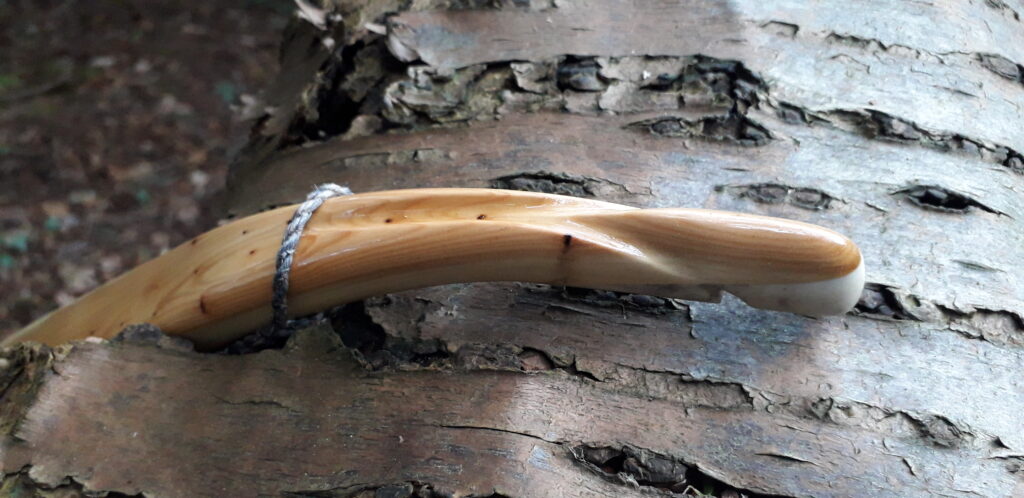
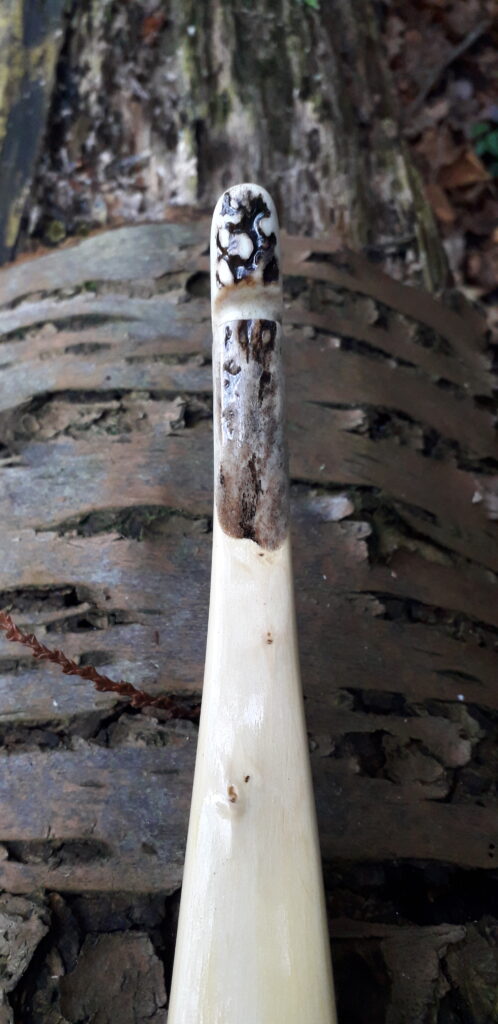
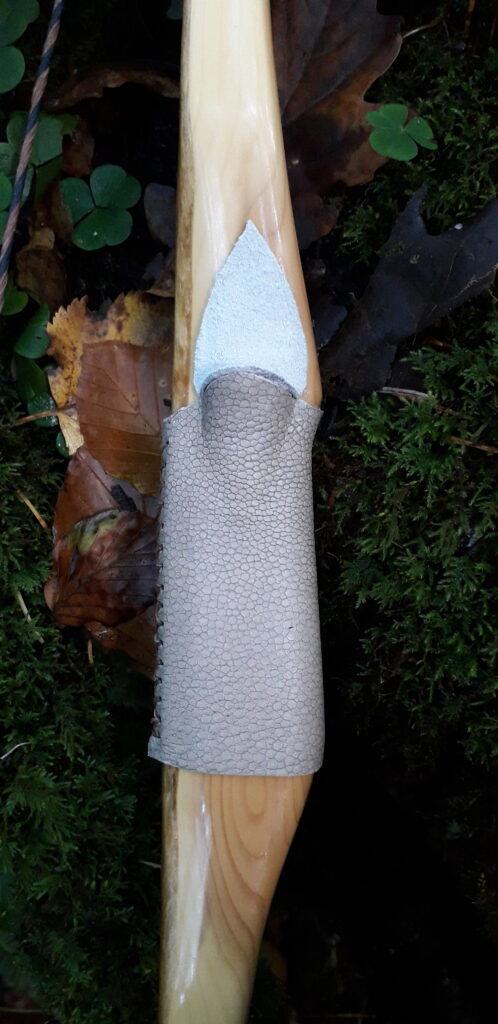
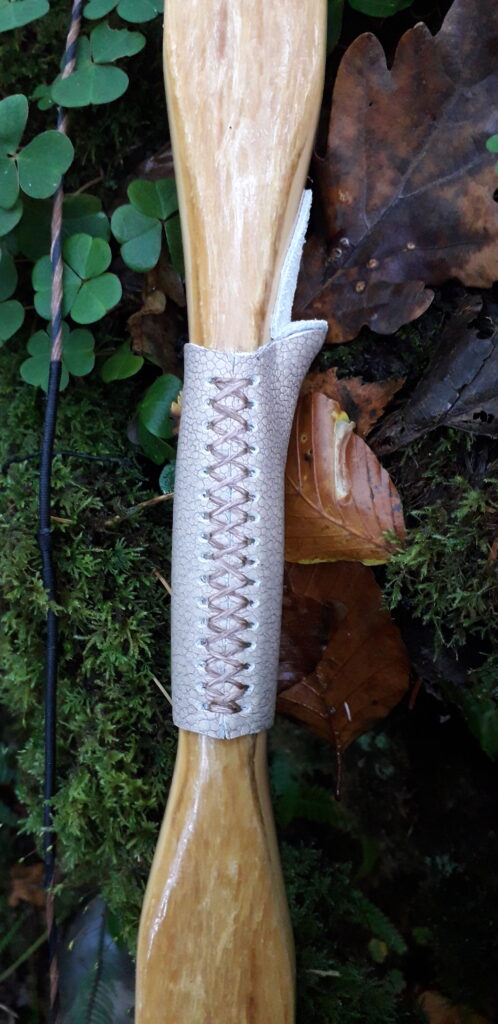
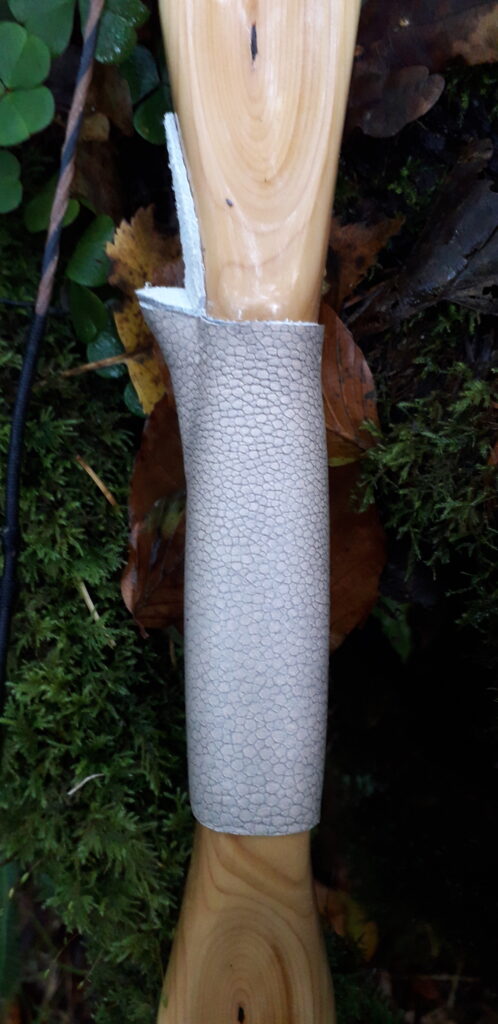
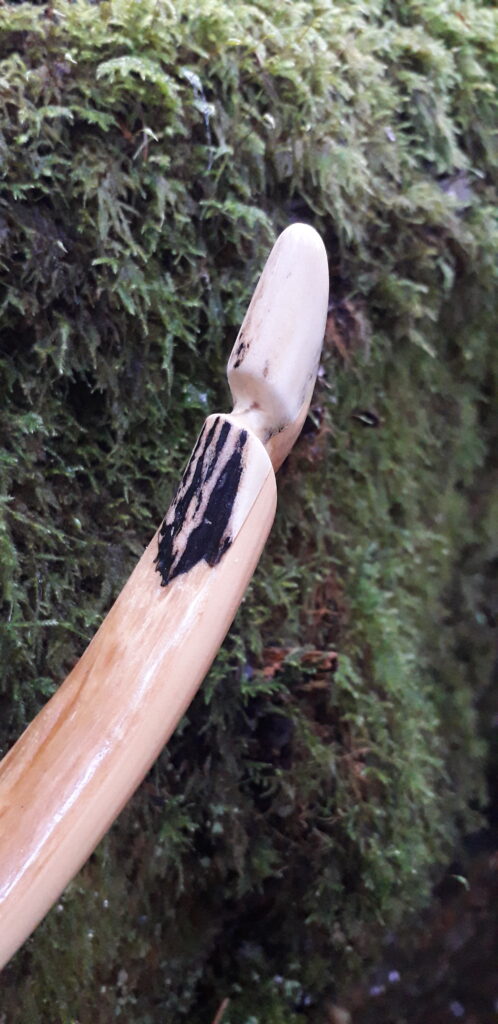
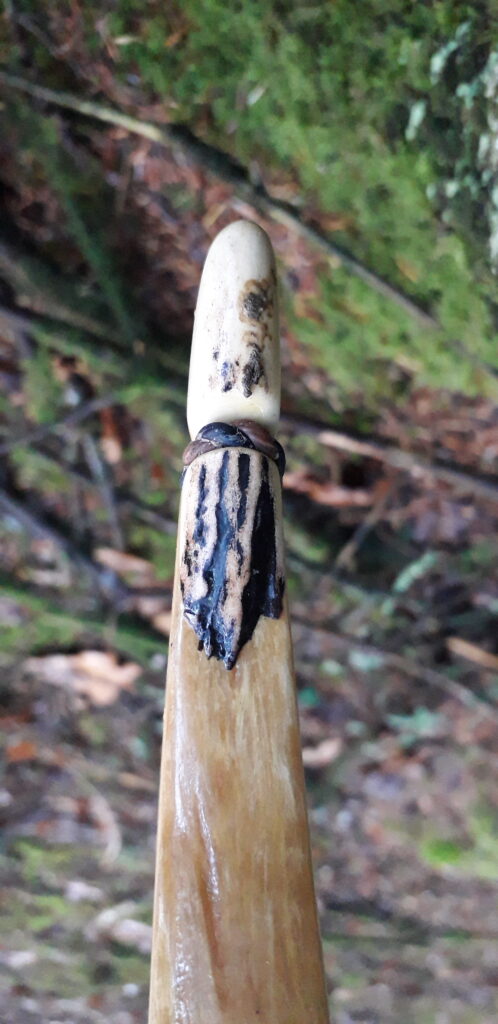
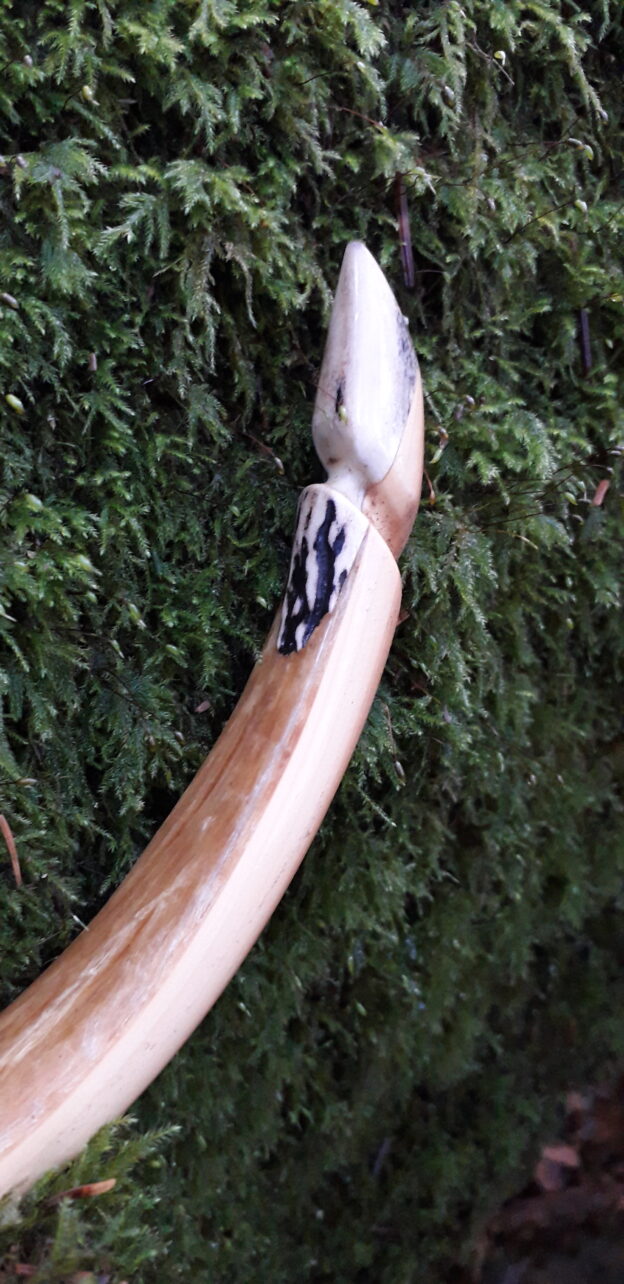
After shooting and sanding, I weighed her again and she was settled in at 48lbs at 27”. Happy with that I fitted her static recurved tips with a pair of Red Deer antler tip overlays, and I inlayed the arrow pass with a patch of buffalo horn. For the handle I chose a simple leather grip fitted after sealing the finished bow with 8 coats of Tru-Oil.

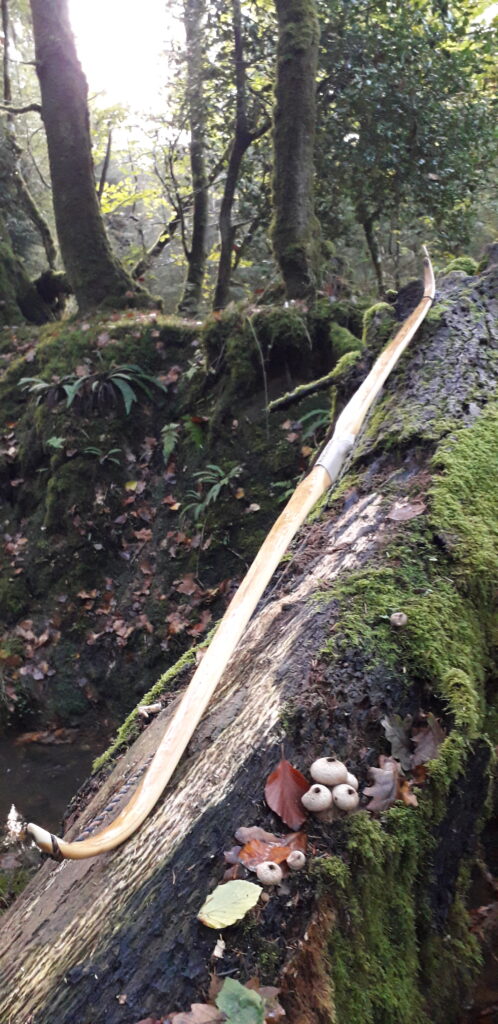
This bow put a smile on my face. I could well have imagined this bow breaking mid tiller. Not only was I impressed that she held together, but she actually ended up a being a proper little looker too. So much character and more than satisfactory performance has made this little bow one of my favourite character bows so far this year. (I have others to show off soon!)

In terms of performance, with a 12 strand B50 string on she sent a bunch of 450 grain arrows over the chronograph at an average speed of 143ft/sec. Not bad for a knarly old branch bow! Mass is 560 grams and she carries about ¾” of set immediately after unstringing which returns back to almost straight after resting.

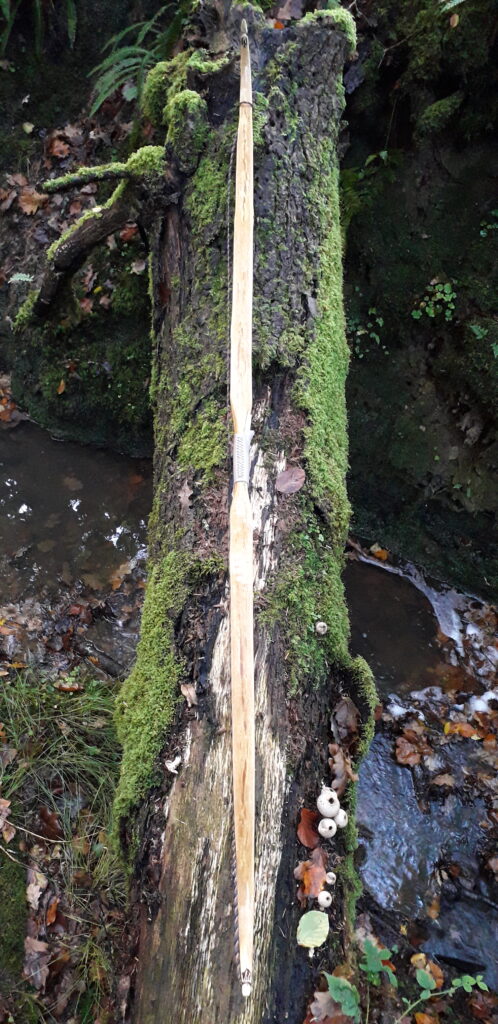
Here she is. Enjoy!
Top nock
Top nock
Top nock
Top nock
Top nock
Bottom nock

Bottom nock
Bottom nock
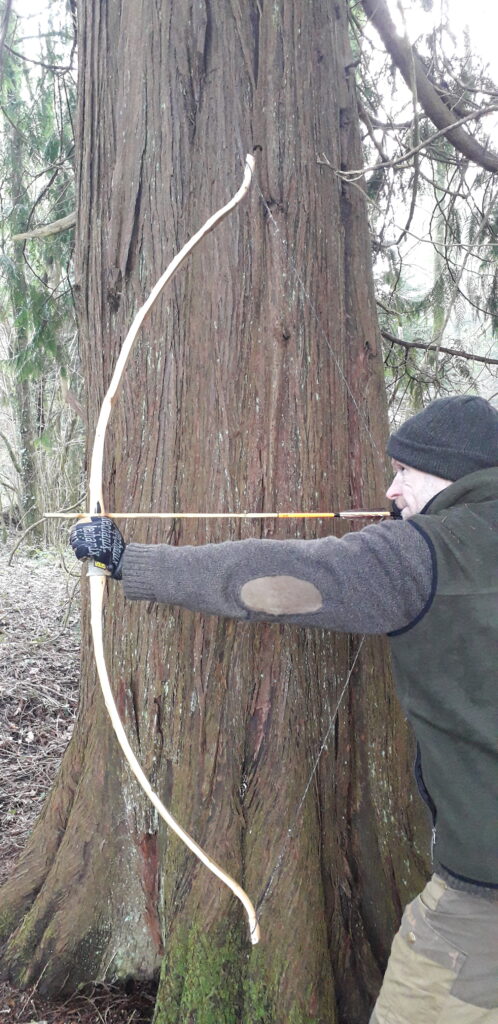
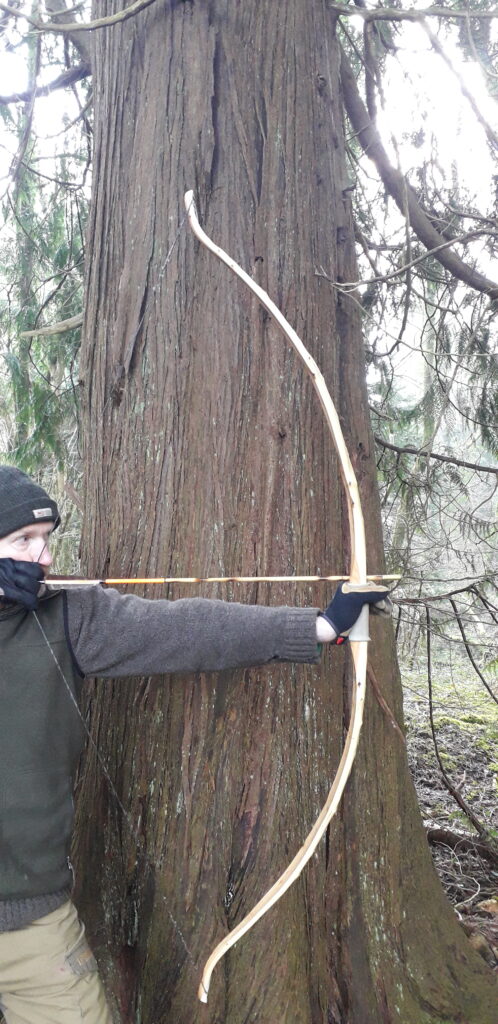
Drawn to 26″
Drawn to 26″
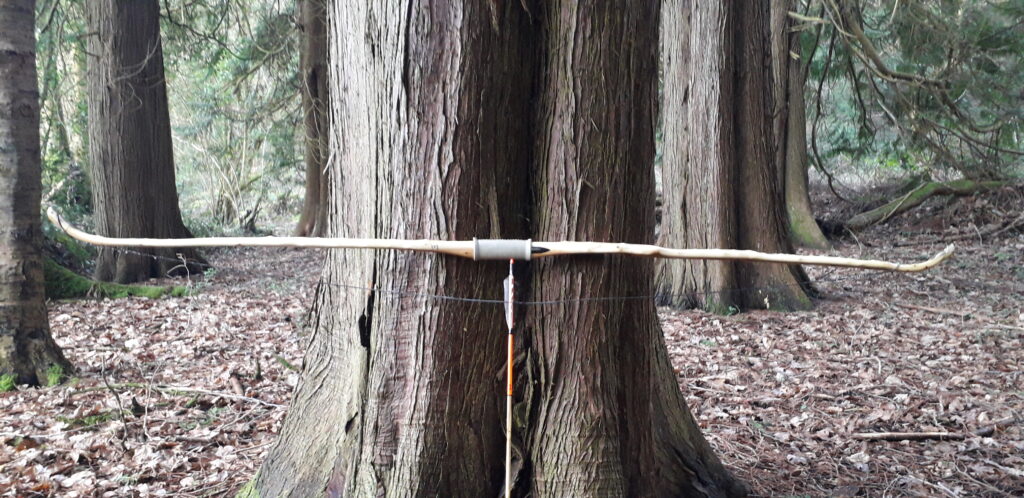
About 3/4″ of set immediately after unstringing. Returns to almost straight after resting.

Thanks for looking!
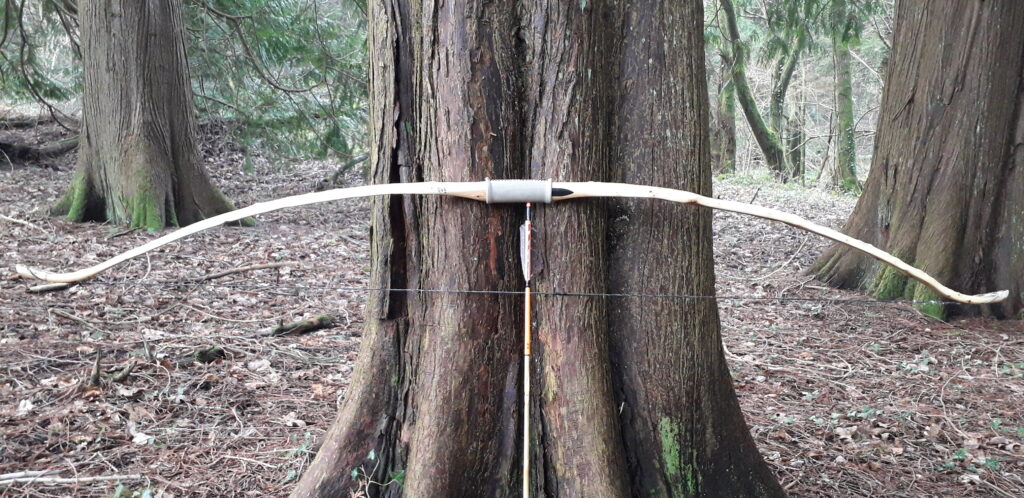
Sinew Backed Yew Recurve Flatbow 55# @ 28″ Bow No.6

This is one of the many “lockdown bows” which I made through 2020/21. Having been furloughed for a couple of months I took the opportunity to tinker with a pile of difficult staves which I’d had kicking about for years. A good time to try and sort the potential staves from the firewood!

This bow came from one such stave. It was nothing more than a branch to be honest but was still one of the better potential staves in terms of its overall shape. That said, It was still flawed to some extent with masses of pin knots on what would be the back side of the stave. It also had quite a lot of deflex across the entire length of the back. Especially in what would be the bottom limb.

Despite the imperfections I committed to making a bow from this stave and had long since promised to build a mate of mine a yew recurve. So I made it my mission to honour my promise using this far from optimal Yew branch. The basic plan was to build a 66″ nock to nock” 50-55lb recurve flatbow.

The stave had nice tight growth rings of between 1-2mm thickness but unfortunately carried little heartwood. The sapwood on what would be the back was too thick at around 12mm thick, but due to all the tiny raised pin knots, it would be impossible to properly chase a ring down to a better sapwood thickness without violating the back around all the tiny raised knots.

A trick which I have used many times before in this situation is simply to accept the violation of rings on the back but mitigate against limb failure by sinew backing. So that’s what I decided to do with this bow.

The stave was only 3″ wide so the crown was moderate. Rather than try and reduce the sapwood thickness in a rounded fashion as would be necessary to mimic the natural crown, I decided to just flatten the whole back with a rasp. In doing this I was able to work down to approximately one sapwood growth ring right down the centre line of the bows back and follow that from one end to the other maintaining a totally flat back profile.

Now that I had nearly 50% of the limb represented by heart wood, I roughed out the general limb thicknesses and finalised the face profile. In order to counter the significant deflex I recurved the tips with steam and performed a small amount of dry heat correction to line up the tips and correct some small string alignment issues. Then it was on with 3oz of deer leg sinew, glued on with my own home made sinew glue.

After the backing was completed I wrapped the whole thing up for a few days in cloth strips to keep the sinew from peeling away from inside the recurves and around the handle.

Once I could see that the sinew was dry I unpeeled the wrapping so I could take a peek. To my disappointment some of the sinew had dried out to form some small fissures. I put this down to one reason. Taking way too long to apply the sinew!

I’d timed the sinew application with the kids getting home which invariably led to a pile of requests, Dad jobs and other frivolous distractions all when I’m trying to slap on my glue soaked sinew bundles. Lesson learnt!!

Anyone who has done any amount of sinew backing will tell you that the best sinew jobs are done quickly and smoothly whilst the glue is still warm and not allowed to set up in between bundle applications. Each fresh bundle of sinew wants to be laid down alongside its neighbour before the neighbouring bundle has started to “Gel”. That’s where I’d gone wrong.

All the distractions had led to me applying bundles as and when I got chance as opposed to in one fast fluid operation. This meant that by the time my next sinew bundle got applied it’s neighbour has gelled up reducing the ability of the fresh sinew bundle sticking to it’s neighbouring bundle.

The result is bundles of sinew separating apart from one another when the bundles start to shrink during the drying process. I should add however that the adhesion between the glue soaked sinew and the bow’s back is not affected by this phenomena.

As disappointing as the end result was, the imperfections that I was seeing in the dried backing were only aesthetic. The functionality of the bow’s backing was completely unaffected.

So onwards we went. After the cloth wrappings had been removed and re-tightened several times over the initial drying period (a week), the wrappings came off and the stave was set aside for nearly a year to cure thoroughly.

I’d kept the limbs asymmetric to try and mitigate for the lower limb deflex which was now substantially less than it was. This was due to the sinew backing pulling the stave back about 1 & 1/2″. Now the deflex was only about 3/4″ in total which was a massive improvement as before backing the natural deflex was about 2 “. After coming out of hibernation, deer antler tip overlays were fitted over the top of the sinew and the tillering began.

In order to preserve as much heart wood on the belly as possible I opted to create a slightly rounded albeit mainly flat belly. An arrow shelf was added in the form of a scrap piece of deer antler.

The bow was quick and easy to tiller and looked nice pulled down to 28″. At this point the weight was 58lb which was about right for the guy who would be getting this bow.

Before finishing the bow I shot stumps with it for a couple of weeks then re adjusted the tiller slightly to weaken the top limb just a tad bit more then called her done at 55lb at 28″ with a neutral tiller. (The owner of this bow shoots three under.) To finish I coated the sinew with a good covering of Titebond III so seal and smooth out the sinew. After sanding it was on with 8 coats of Truoil to finish.

The handle was covered with a piece of scrap leather and the same leather in reverse was used to protect the arrow pass.

I really like this bow. It’s a bit heavy in the hand (630Grams) due to the extra weight from the sinew but isn’t really noticeable once you get in the swing of shooting her. The limbs are an even tapper from 1″ 3/8ths at the fades down to 1/2″ at the tips.

This bow made for a snappy shooter which I really enjoyed shooting. I shot her over the chrono to see if she was quicker than usual and, whilst hardly getting blown away by the speed, I was quite happy with the 162ft/sec average that I got with a 500 grain arrow. That’s not bad for a stick and string bow!

Anyway, I hope you like the pics!