Tag Archives: Pyramidal bow

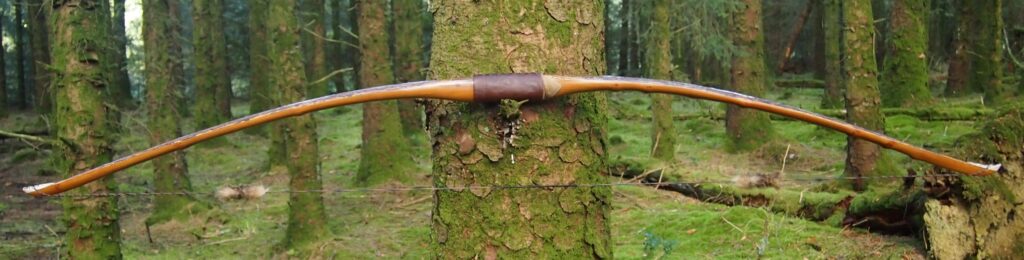
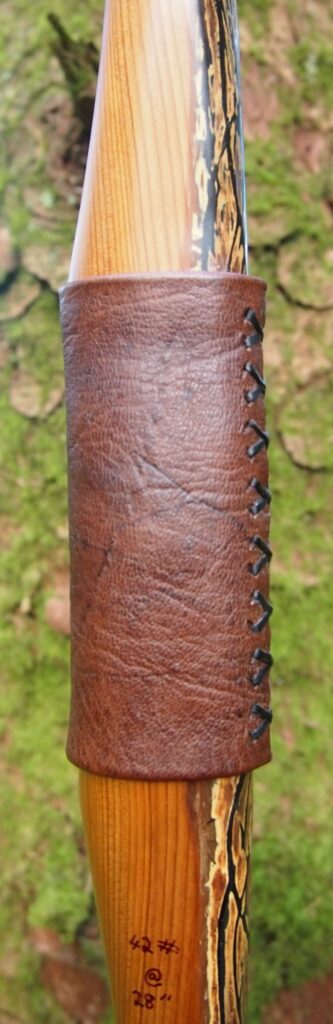
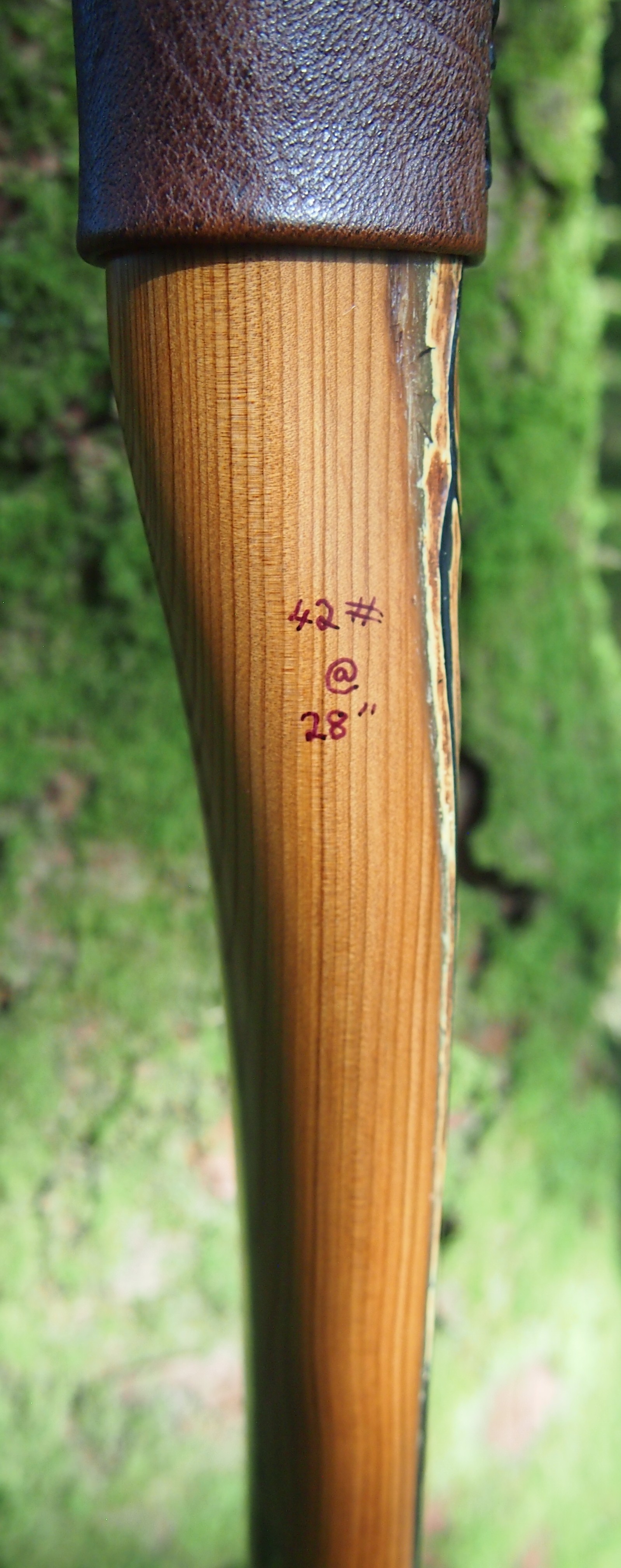
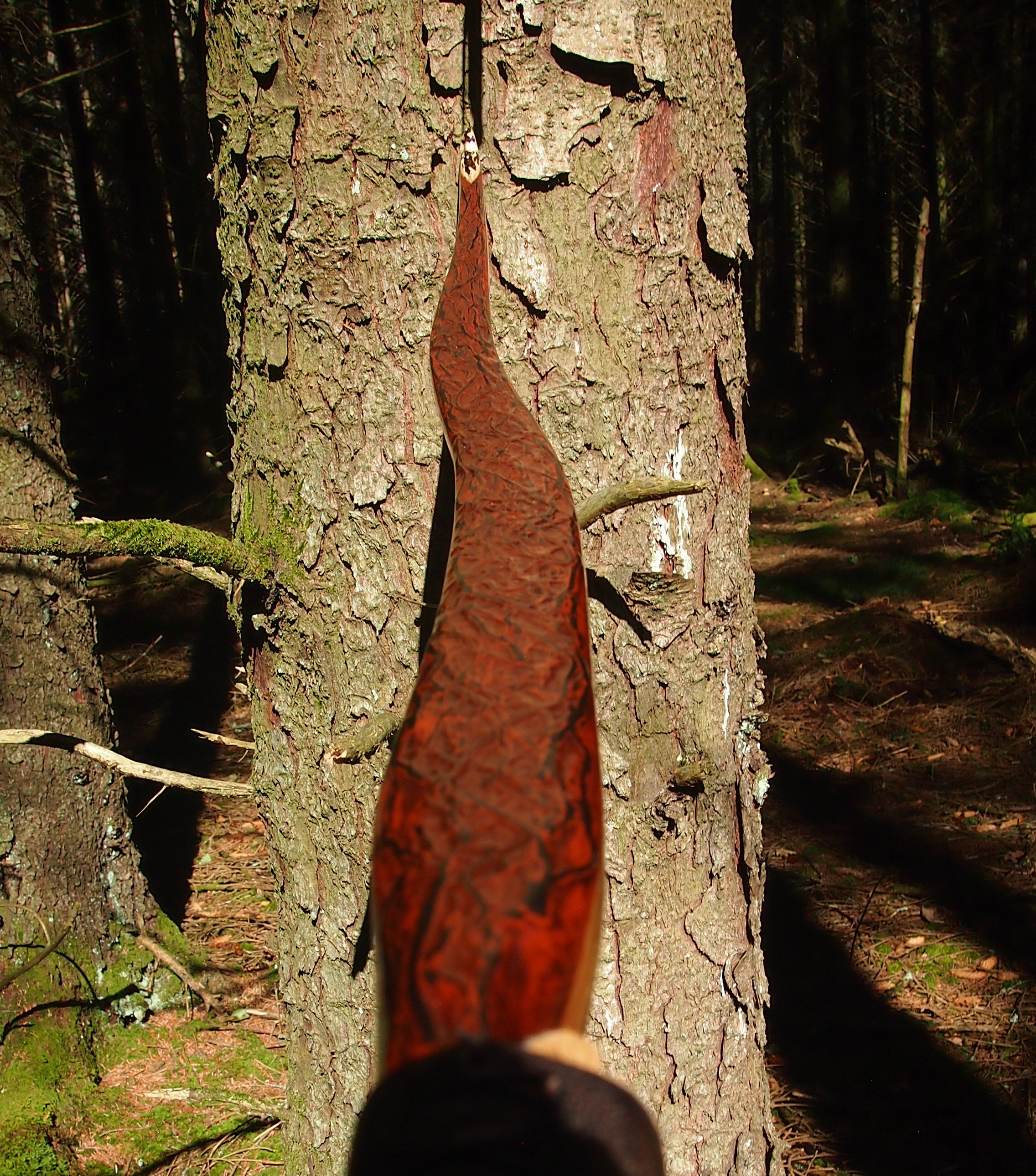
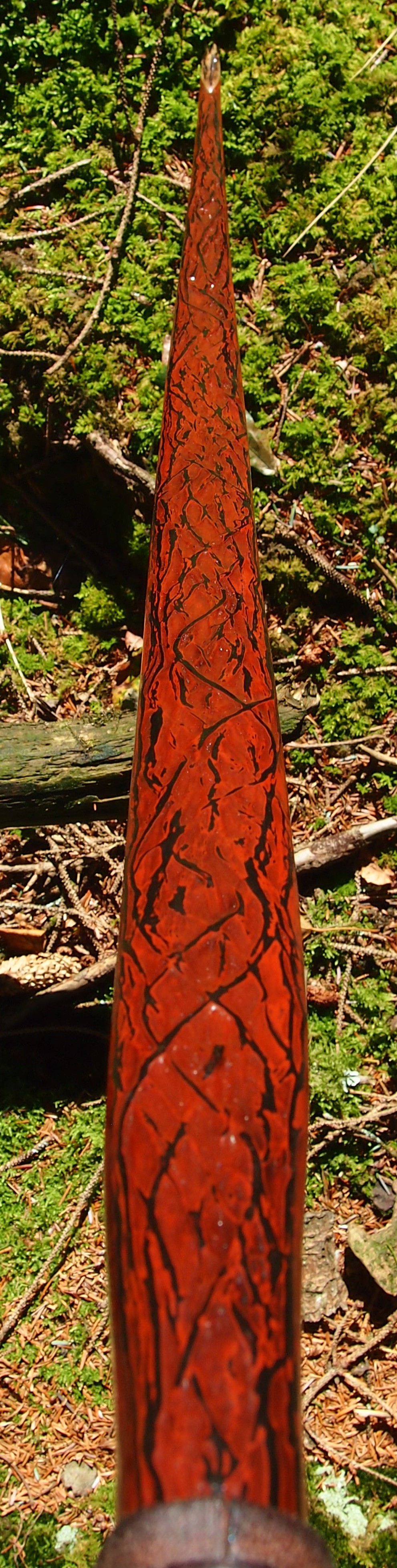
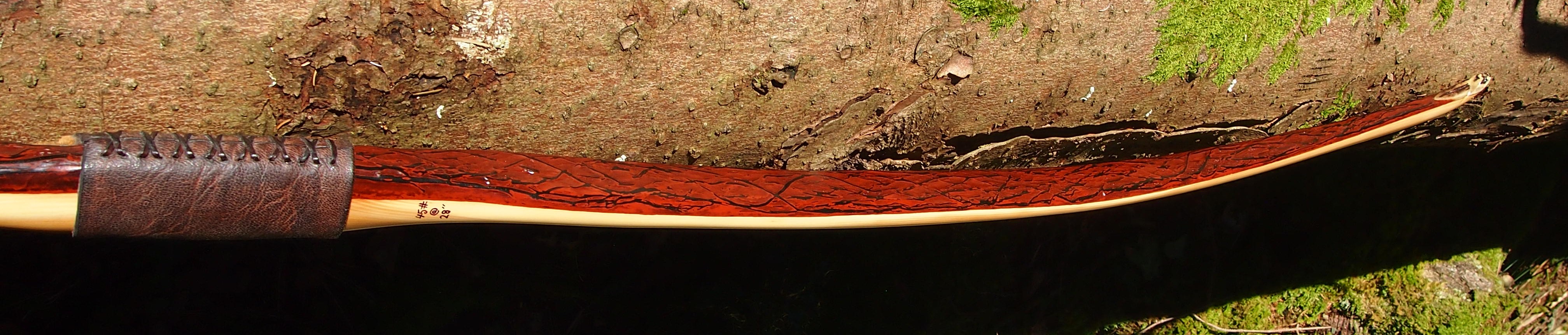
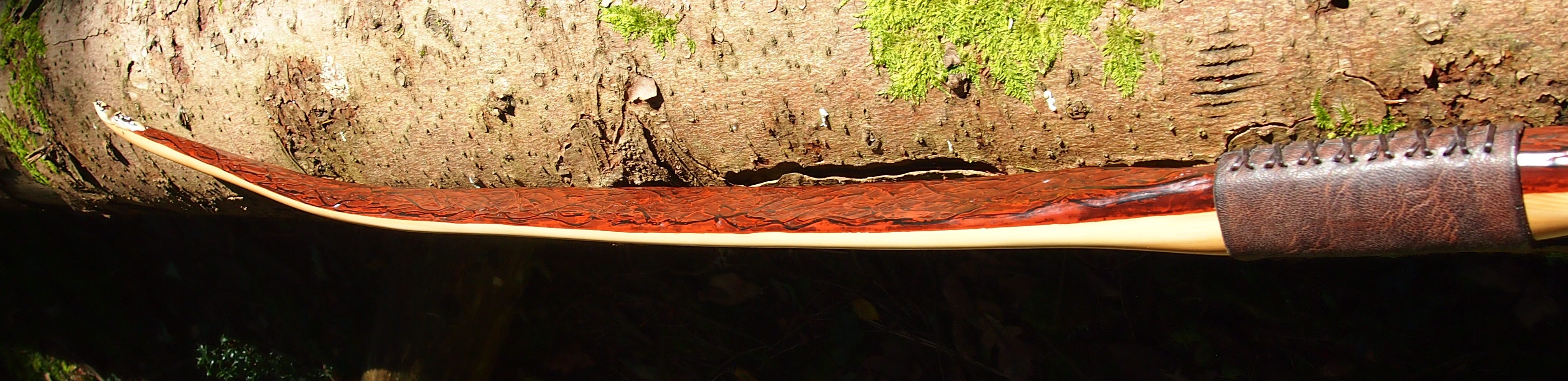
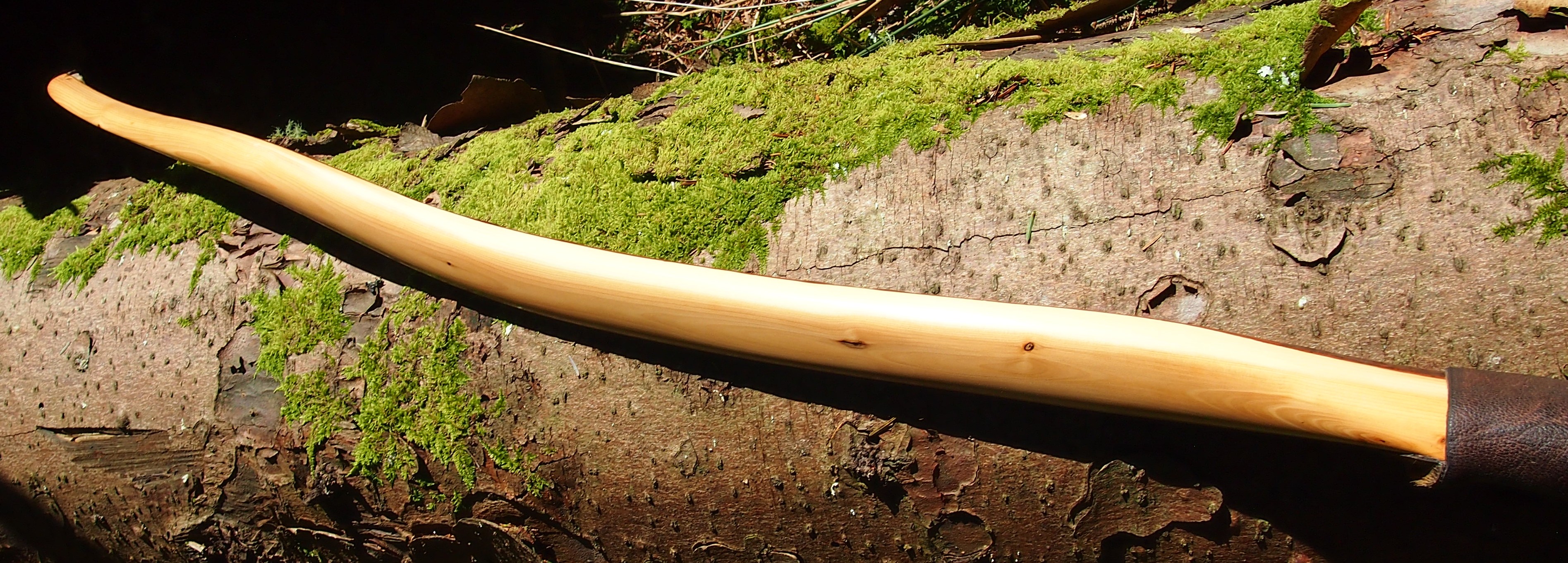
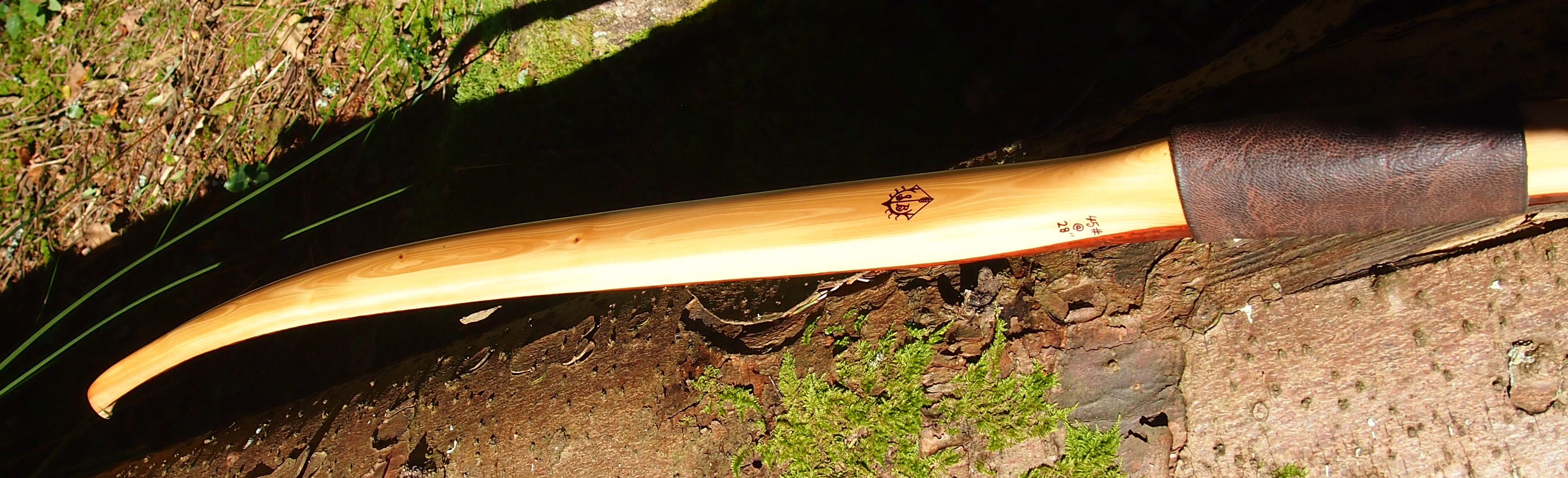
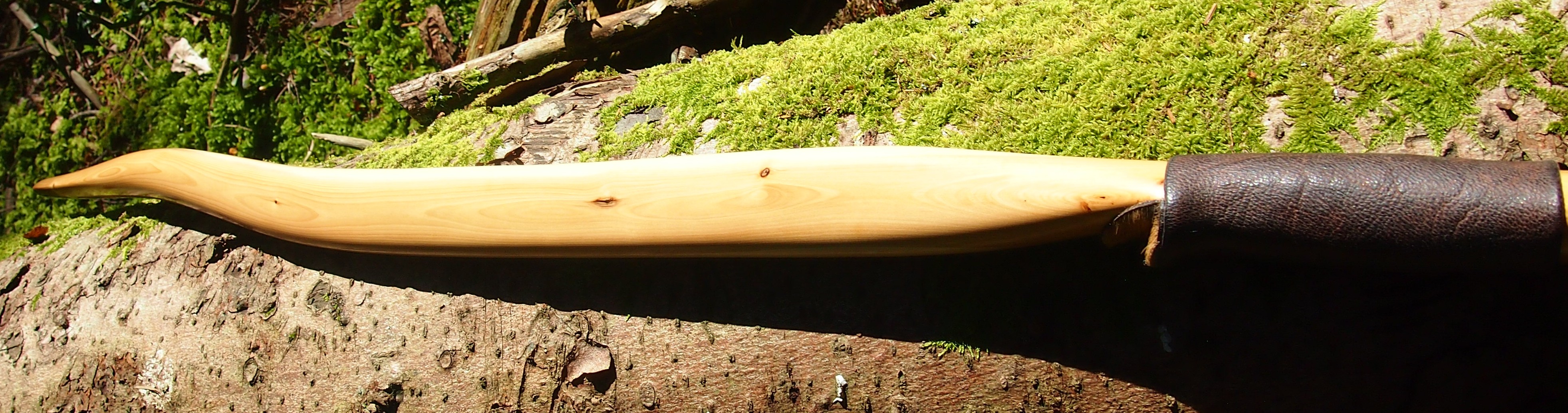
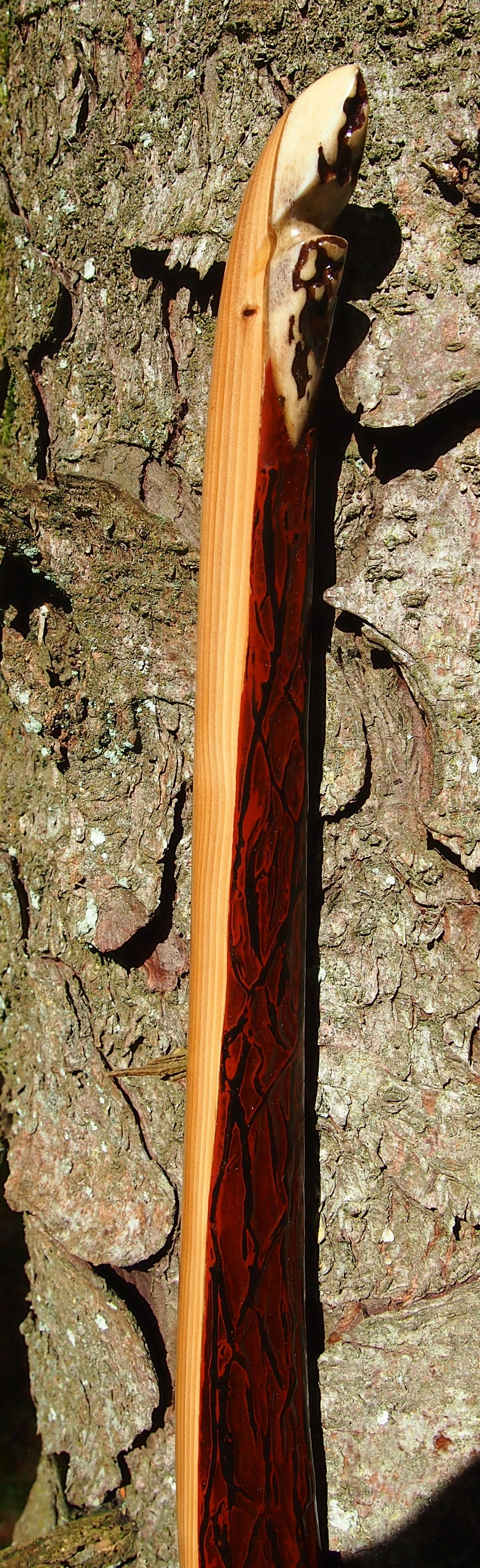
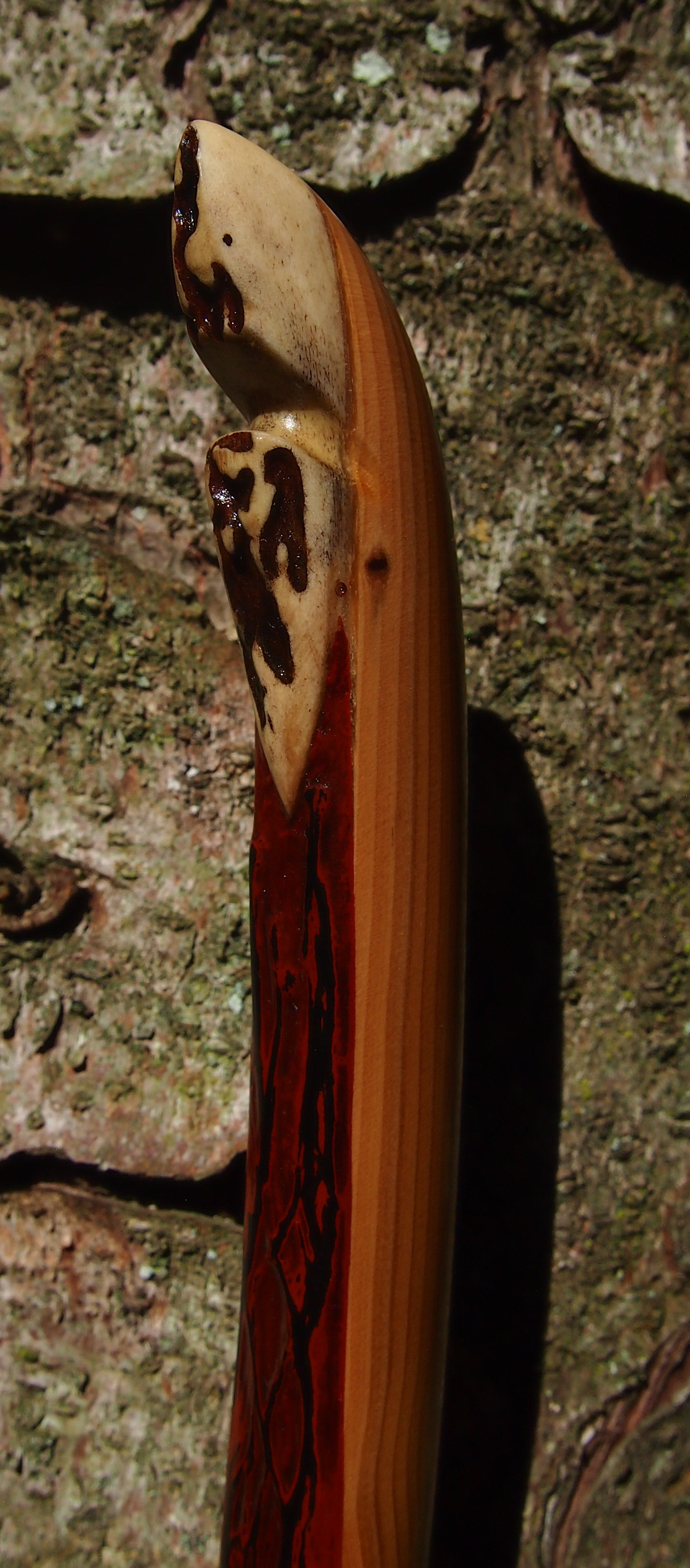
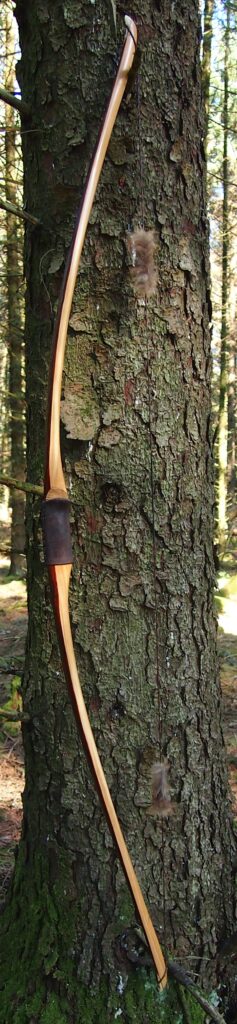
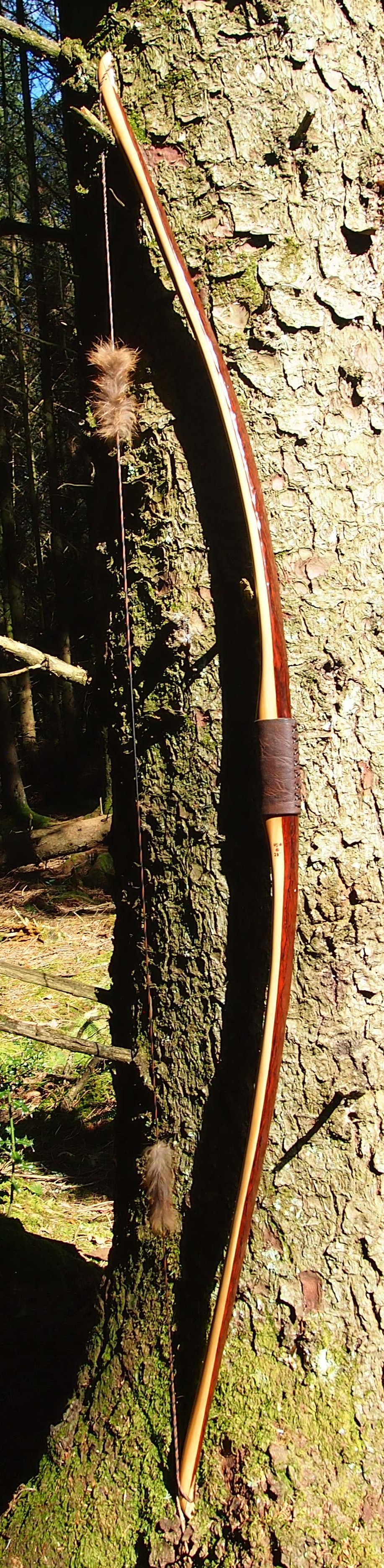
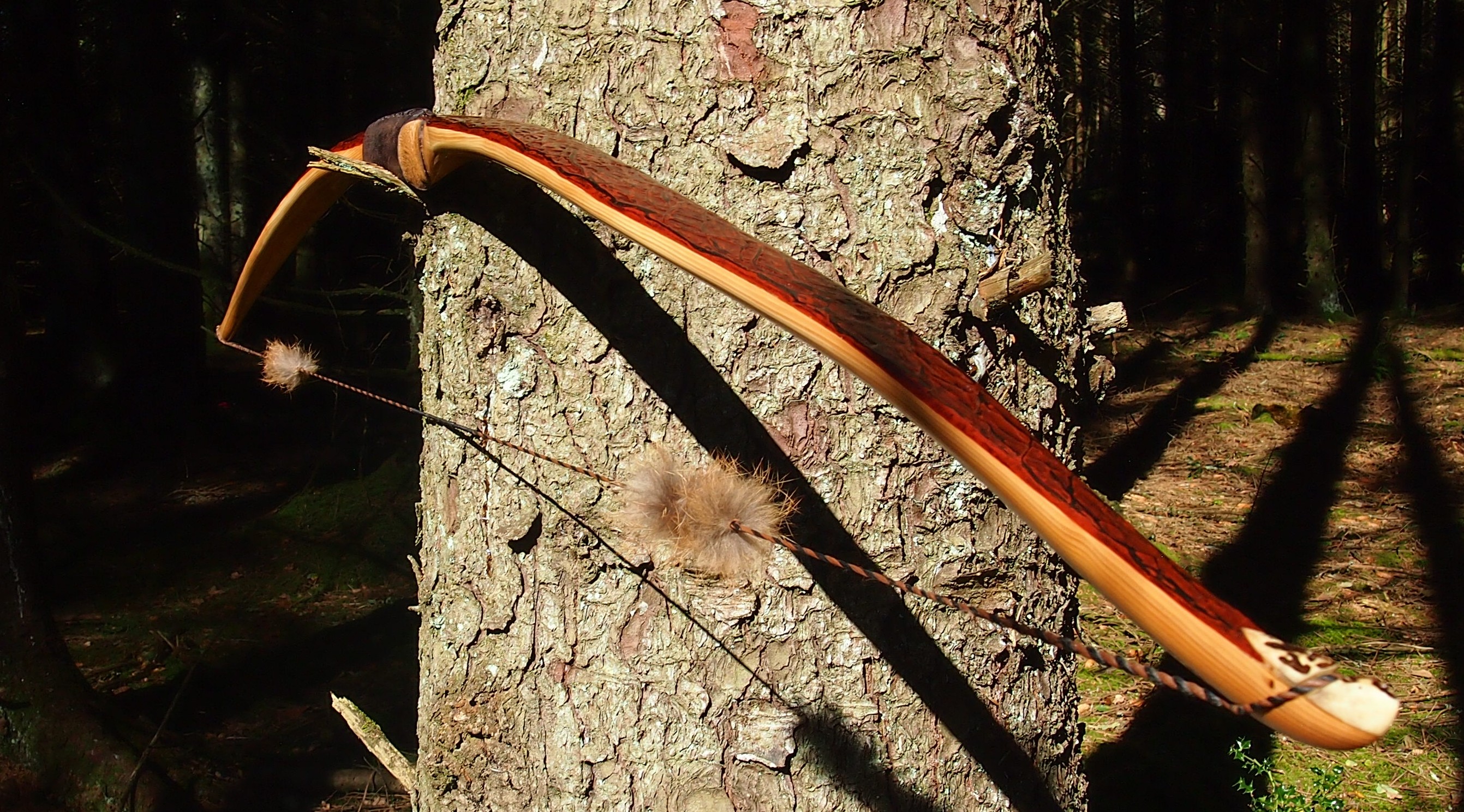
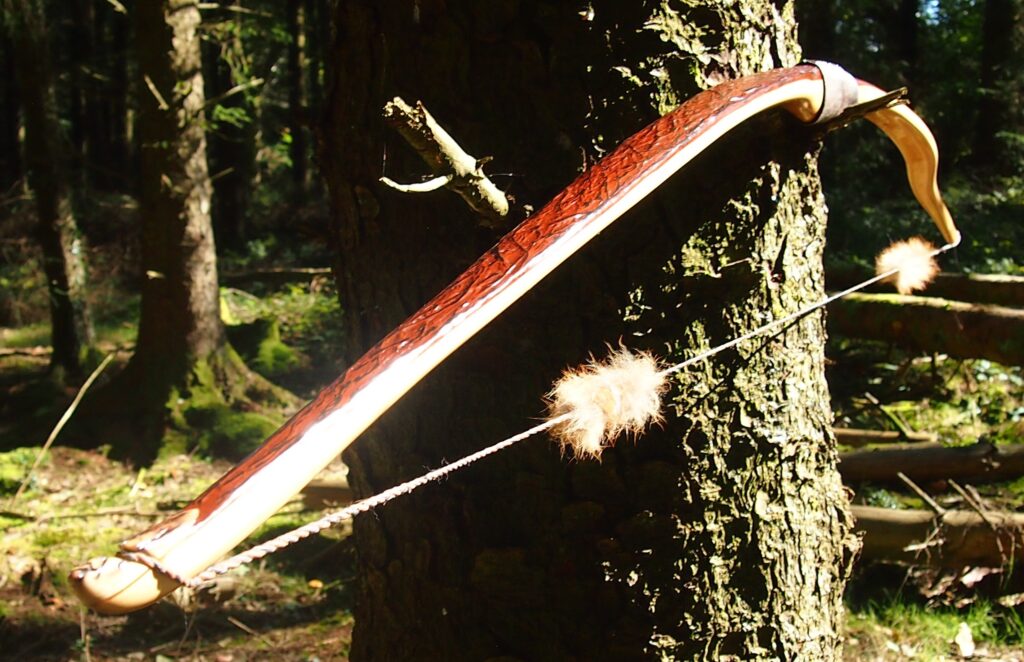
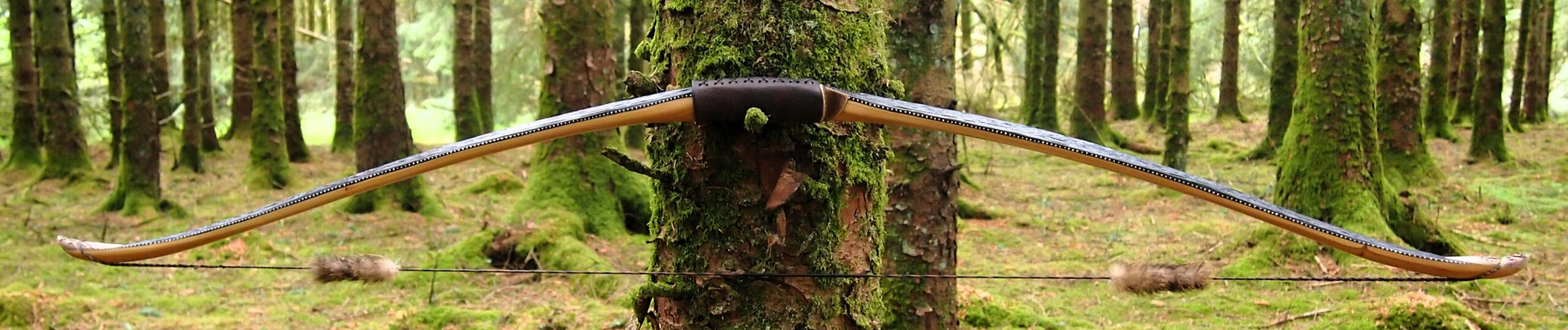
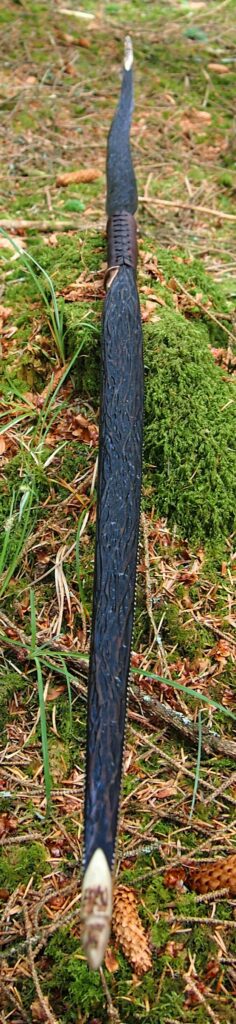
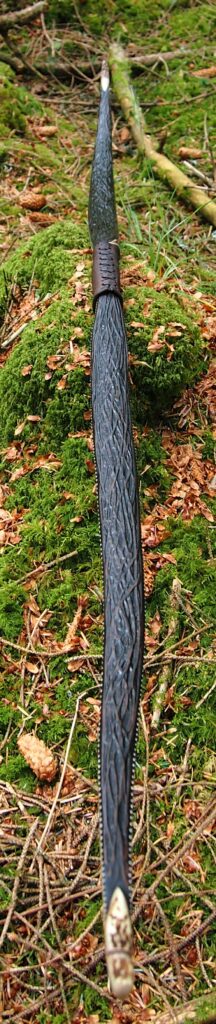
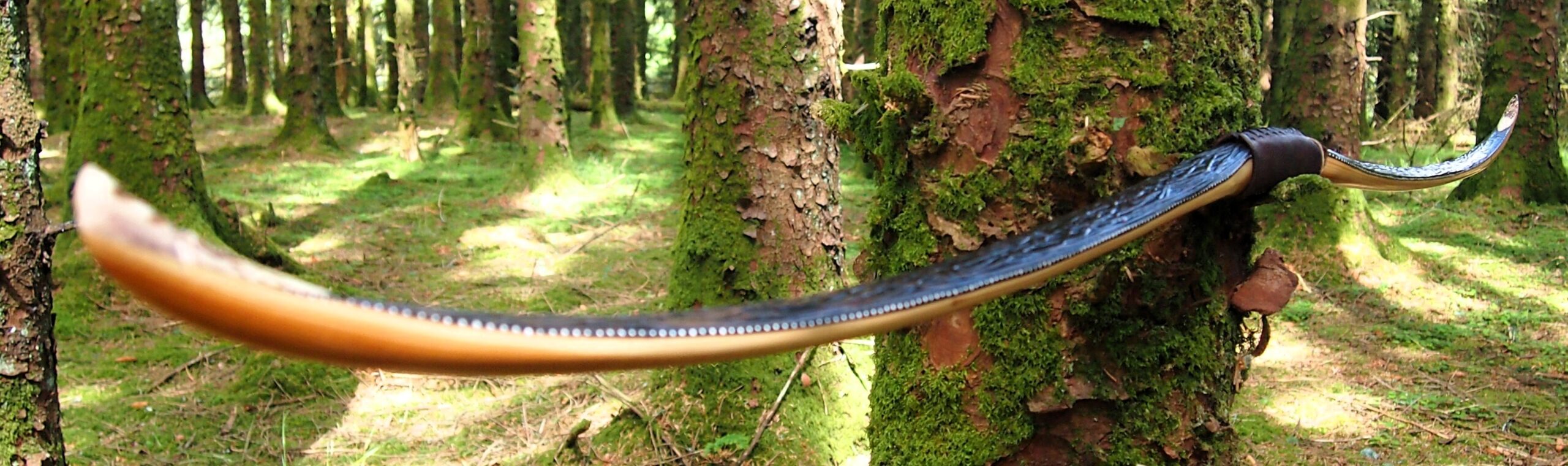
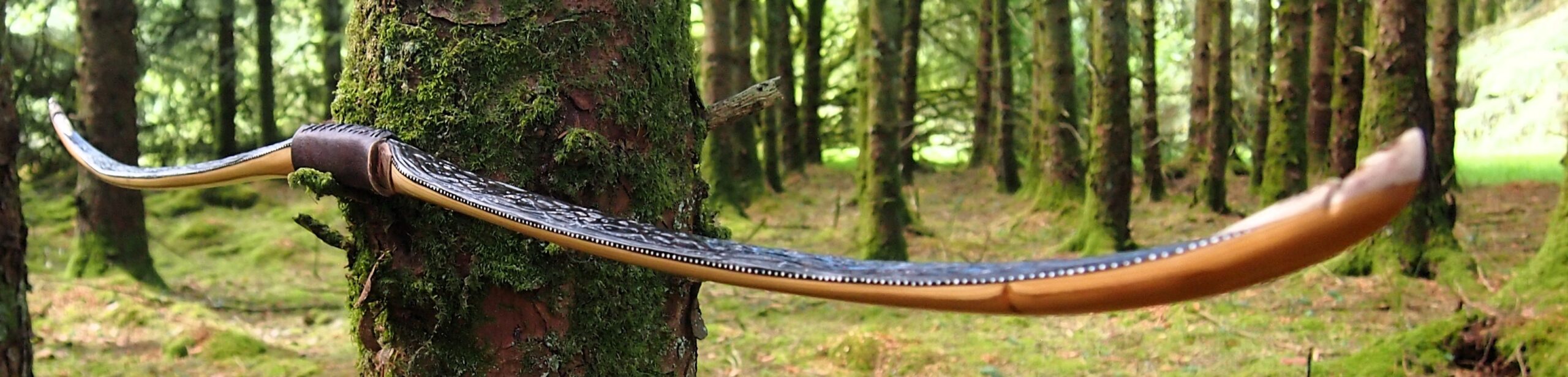
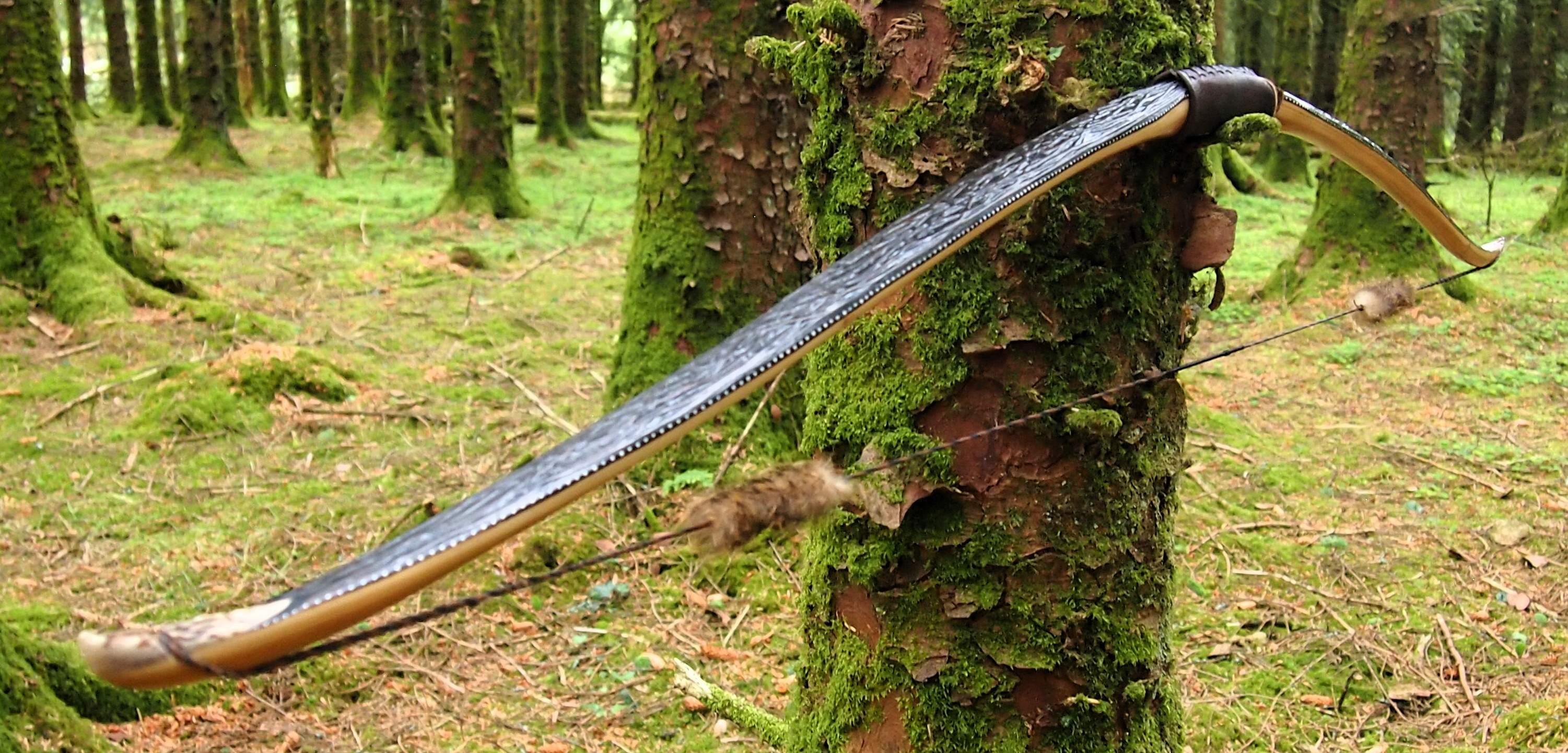
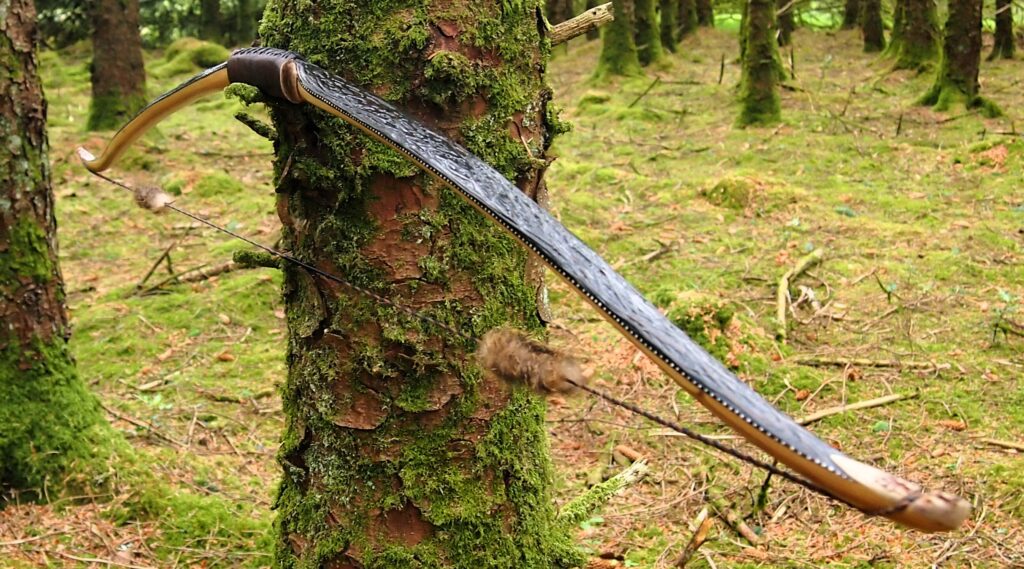
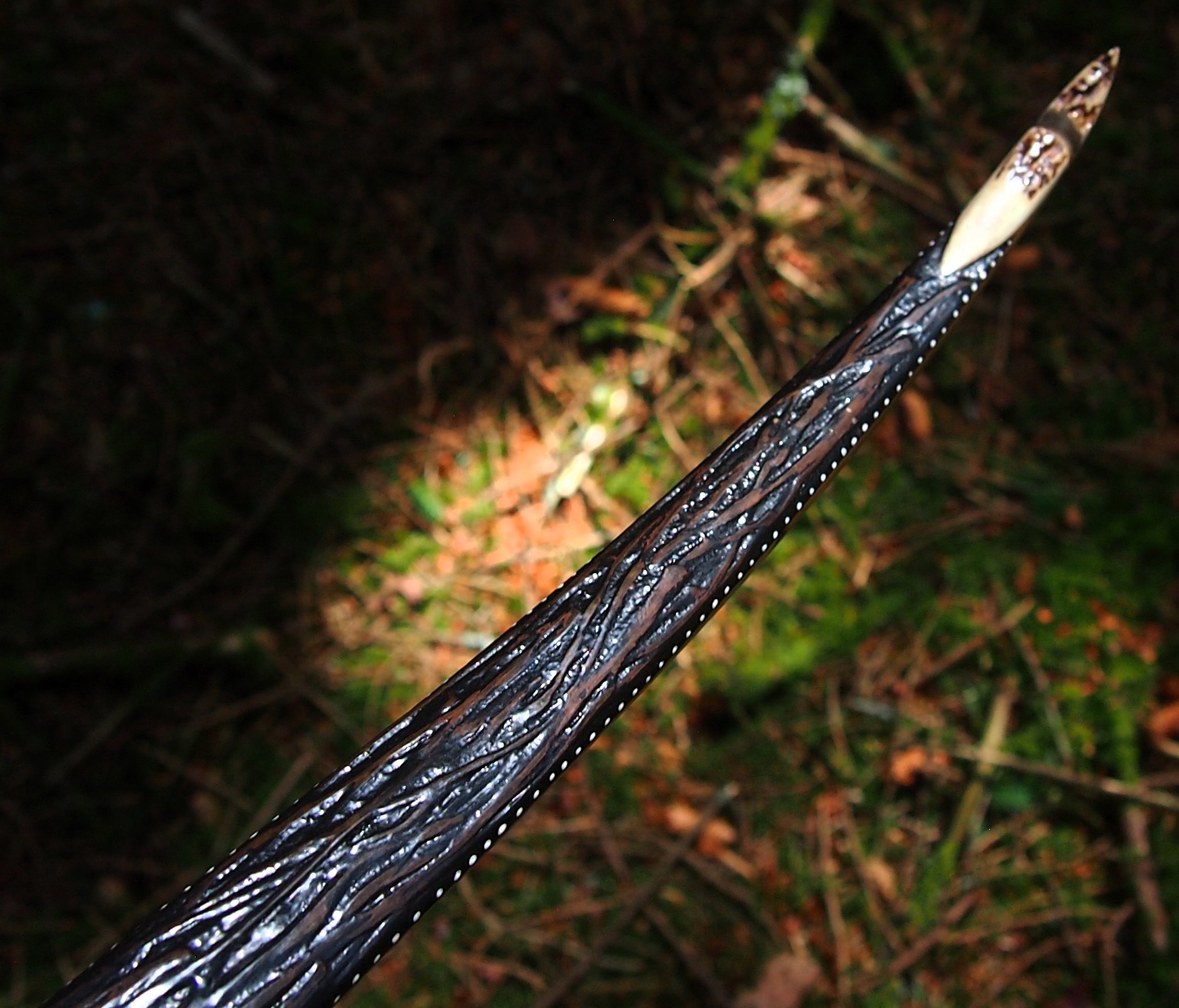
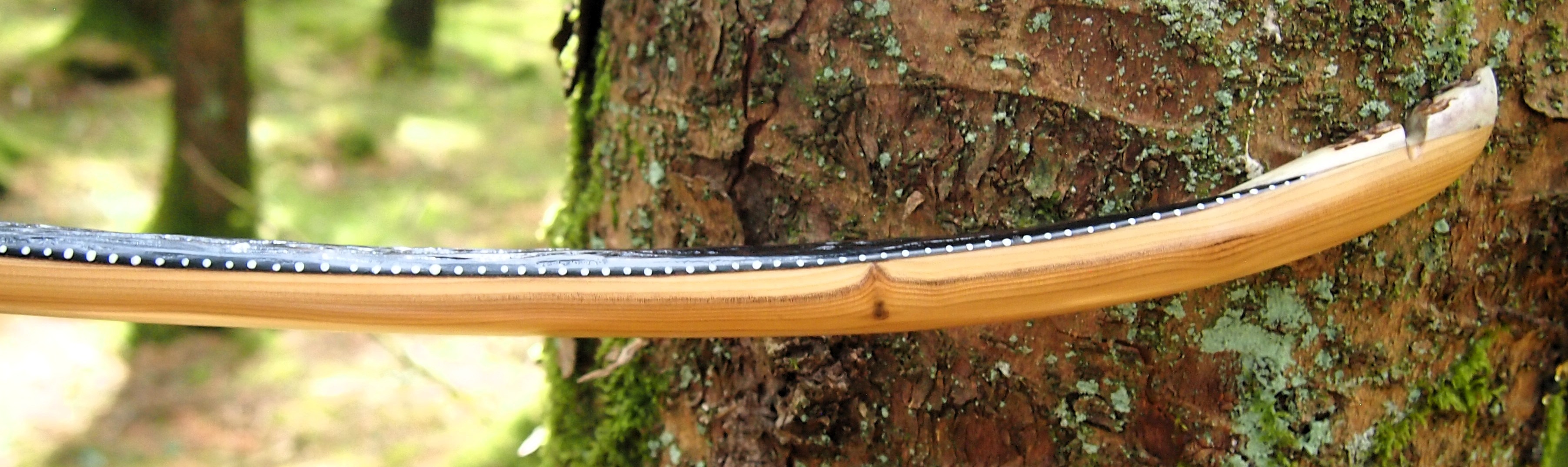
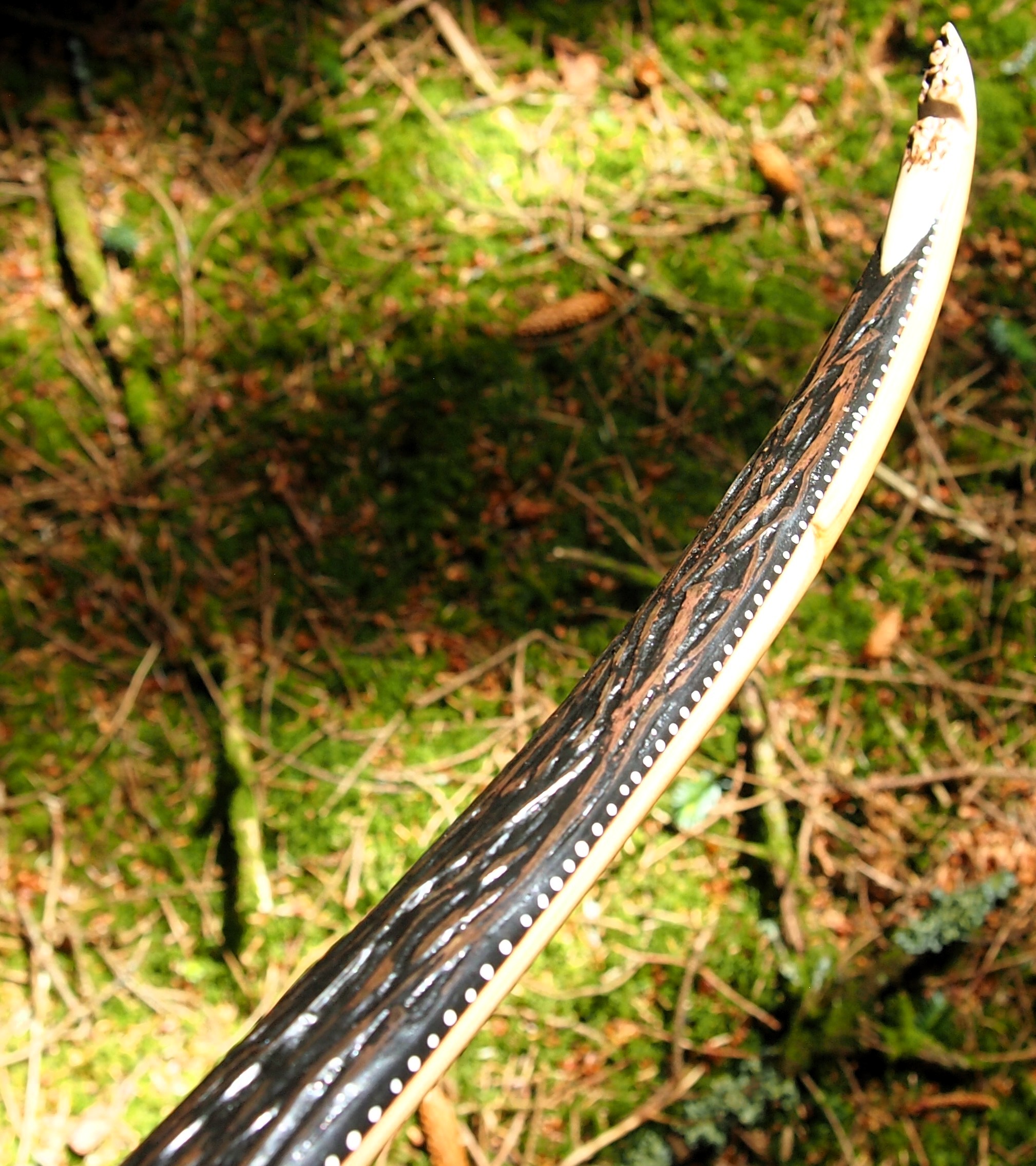
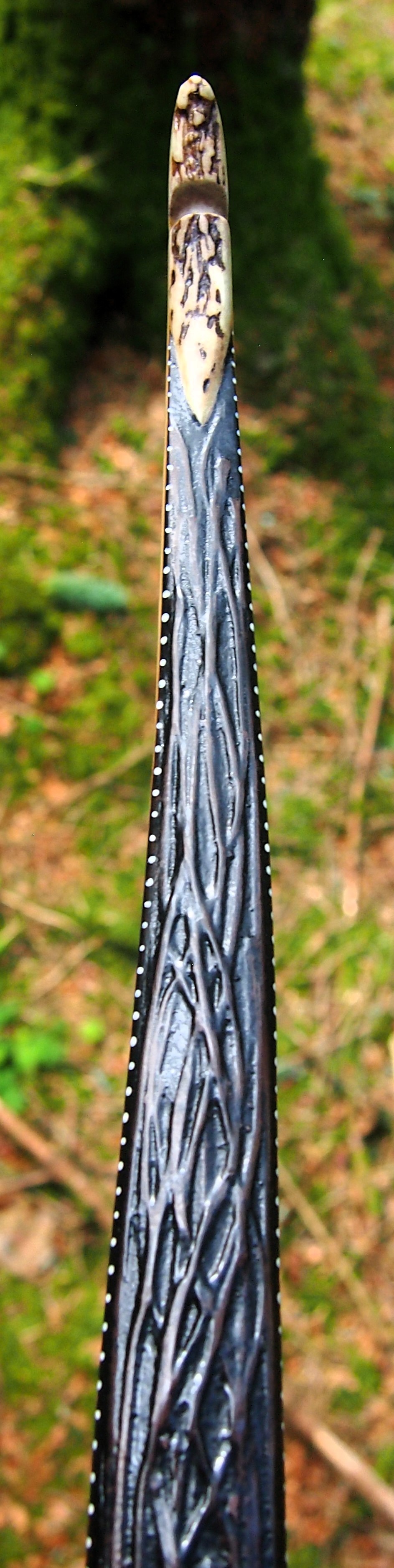
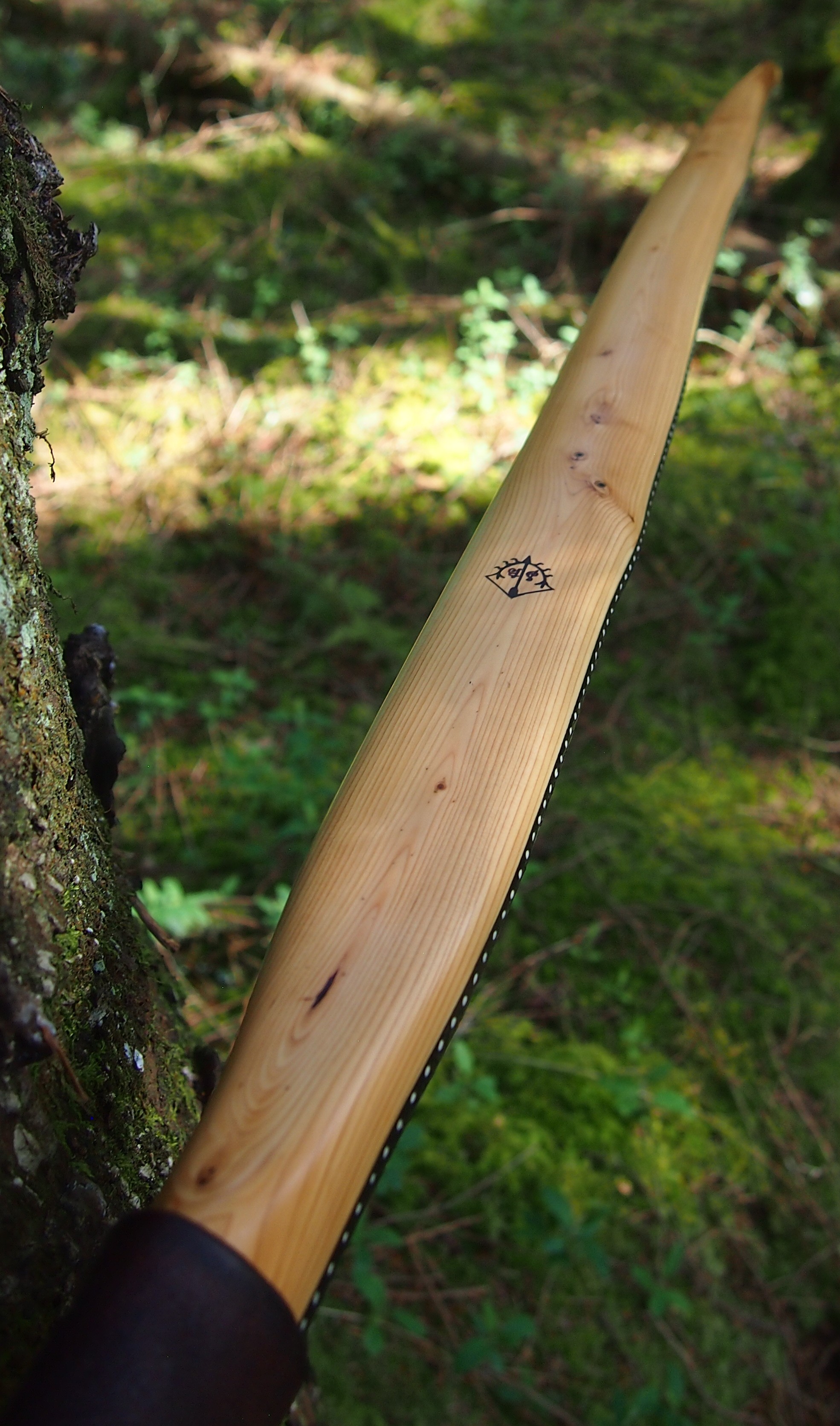
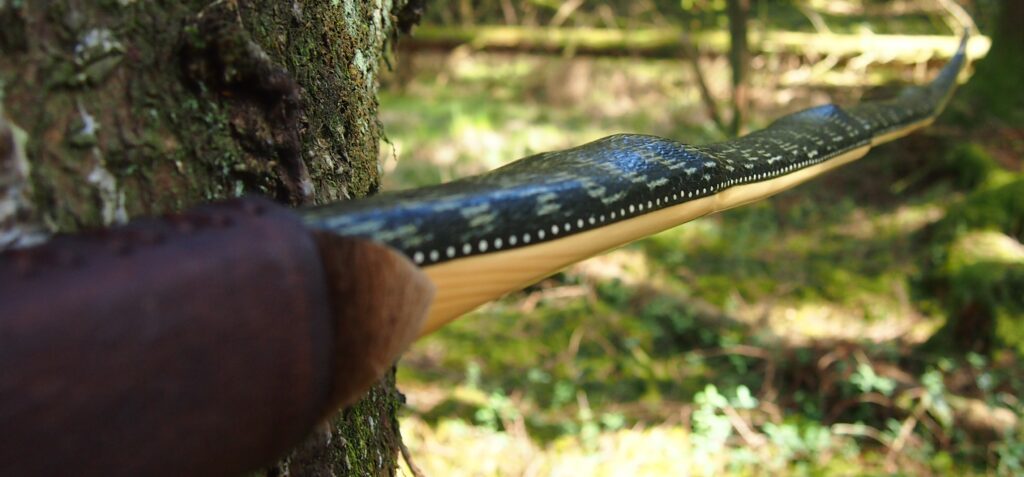
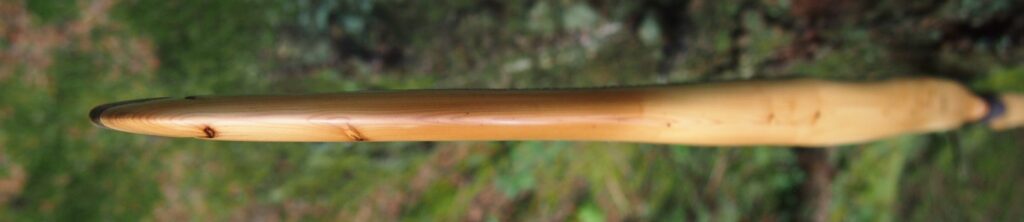
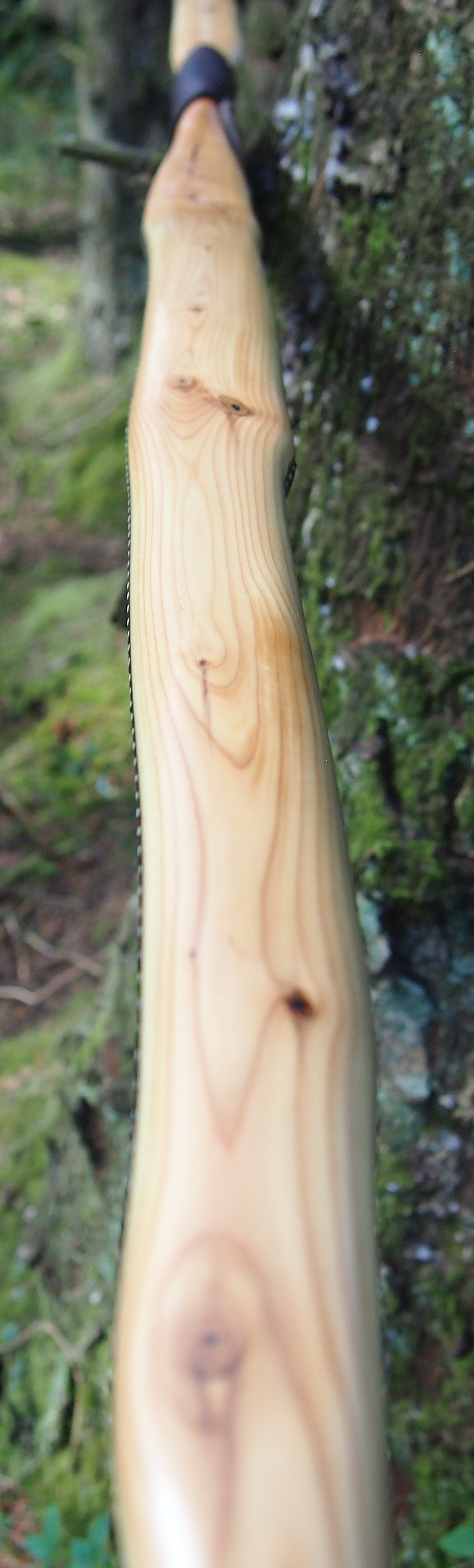
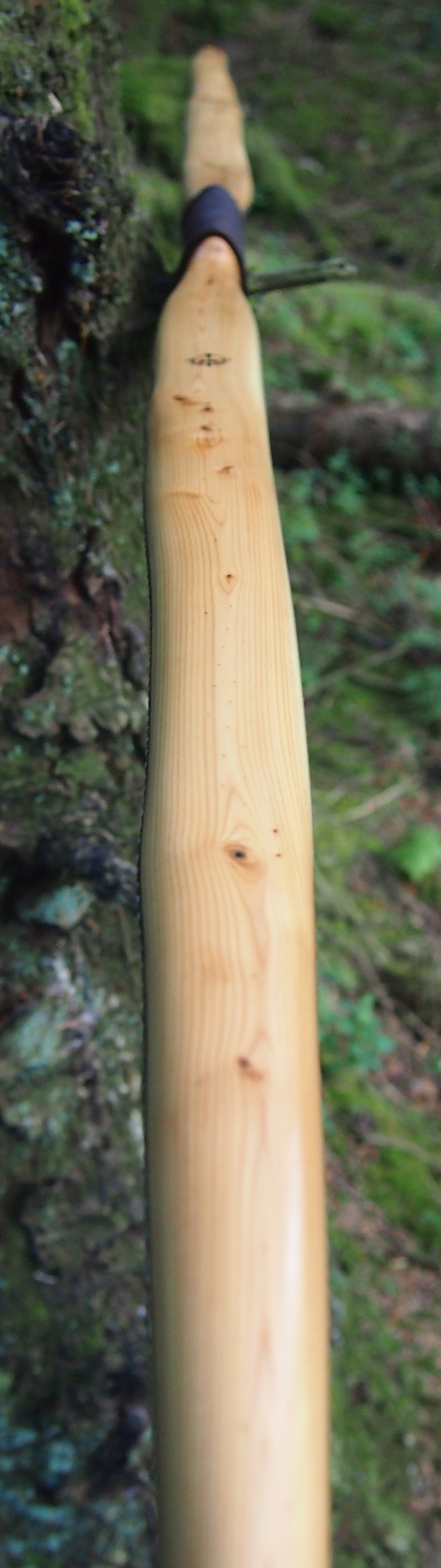
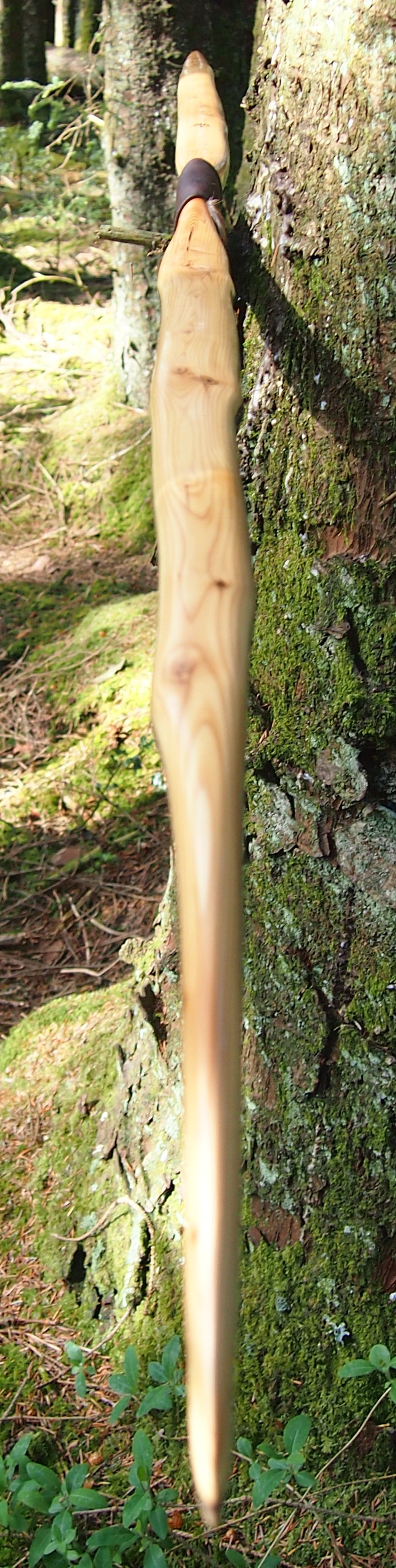
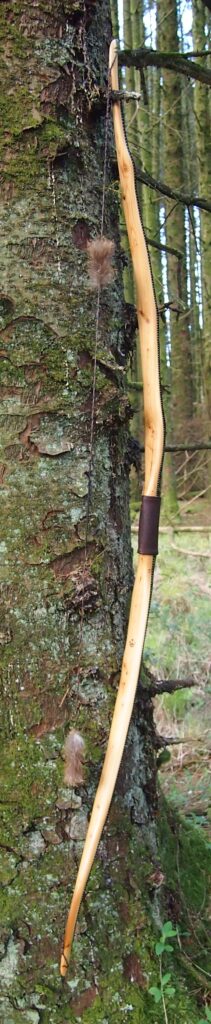
Bog Yew Sinew backed  Longbow 42# @ 28” (Bow no: 26)

A friend of mine is a digger operator. He often ends up getting involved with projects like pond clearance/restoration type works. Whilst digging and dredging these kinds of places he often unearths all kinds of stuff. Much of my local part of North Devon is boggy wet ground. And whilst we don’t have those classic preservative peat bogs found elsewhere in the UK and Ireland, the bogs we have here are still sufficiently acidic and anaerobic enough to preserve certain types of organic mater which become submerged or buried within these often forgotten and neglected wild places.

Ages ago I asked this bloke to keep an eye out for any submerged oak he might come across, knowing that such a find would likely yield some very nice black ancient bog oak which would make for great carving or wood turning projects. So I was pleased to pick up a message from this chap last summer in which he detailed a find which he thought may be of interest to me.

He’d been working on an old estate property dating back to the early 1800s which had an overgrown cider apple orchard adjacent to a large silted up pond which he was in the process of reinstating on behalf of the estate. The pond was fed from a bog below the orchard which had a large earth hedge bank along one edge. And up on top of this hedge bank was a large, solitary, and likely very ancient yew tree.

At some point many years, if not decades ago, a large section of this ancient Yew had broke away from the rest of the tree and had fallen into the bog. And after decades sitting there this lump of yew had been completely consumed by the bog which had enveloped it with several feet of silt and clay.

Whilst digging out the bog this chap caught hold of this buried lump of yew and raised it up and out of the bog. Initially he assumed that it was just a big old piece of willow which had caved in from the edge of the bog. But once he’d pushed it up out the way he could feel how solid this particular timber was in comparison to other woods which would be well rotten and fragile by now.

He could also see from the broken ends of the tangled mass of wood that the preserved timber inside the muddy mess was a deep, bright orange colour, as opposed to a dull brown grey which you would have seen with most other species of rotten bog submerged tree.

Once he’d noticed the large yew tree standing up on the bank above the bog, he realised immediately that this buried timber was actually yew. And since he knew that woods like yew and oak will preserve in bogs, he thought he’d give me a shout in case I could make use of any of it. Trouble was he’d been distracted by other work and had forgotten about it for several weeks before telling me. Needless to say though, once he told me where it was, and that I could help myself to it, I was round there like a shot!

Upon first inspection of the mass of stinky mud and timber, I wasn’t very hopeful of salvaging much other than a few nice bits for making spoons and bowls etc. But after a bit of digging around, I was excited to find a fairly straight looking section of timber which was about 6 feet long, 5 “ in diameter and looked to have been undamaged by the digger.

With my silky saw I was able to cut the section of timber out from the rest of the fairly useless tangled mess of smashed branches and cord wood. And after wrestling this piece of timber out from the rest of it, whilst covered head to toe in mud and stink, I finally got a chance to inspect the log in more detail.

This log (like the rest of the wood) was completely free from even a hint of sapwood. The sapwood being free from tannins had rotted off decades ago. When a wood like oak or yew sits in a bog environment for any length of time, the sapwood simply rots off like any other wood would do. This is because most sapwoods including yew don’t contain the tannins critical for the preservation of the timber.

But due to the very high tannin content present within the heartwood of timbers like oak, chestnut and yew, the heartwood stays intact for decades, if not centuries, so long as conditions are suitably acidic and anaerobic enough to prevent decomposition.

And in addition to the anaerobic/acidic preservation of this tannin rich heartwood, there is another wonderful feature that our local bogs can bring about in tannin rich timber – and that is the unique colour change that takes place to the heartwood after many years saturated in our local ground water. This unique colour change is only attainable through this longwinded natural preservation process.

Due to our local underlying geology consisting of carboniferous sandstone, we are fortunate to have a large geological reserve of iron pan deposit within the sandstone bedrock endemic to our local landscape. This iron rich bedrock both surrounds and sits below our local bogs. And when these iron oxide deposits come into contact with our typically acidic ground water, the iron is dissolved into the water which in turn supplies high levels of dissolved iron rich water to these ancient saturated bog sites.

Given enough time submerged in such a iron saturated bog, the dissolved iron in the water reacts with the tannic acid in the heartwood of timbers like yew and oak. Slowly over time this turns the preserved heartwood a wonderful dark antique colour, which penetrates right through the entire log. Oak will often go almost jet black in this process. Oak preserved this way (“bog oak”) is typically prized and sort after by wood turners and carvers alike.

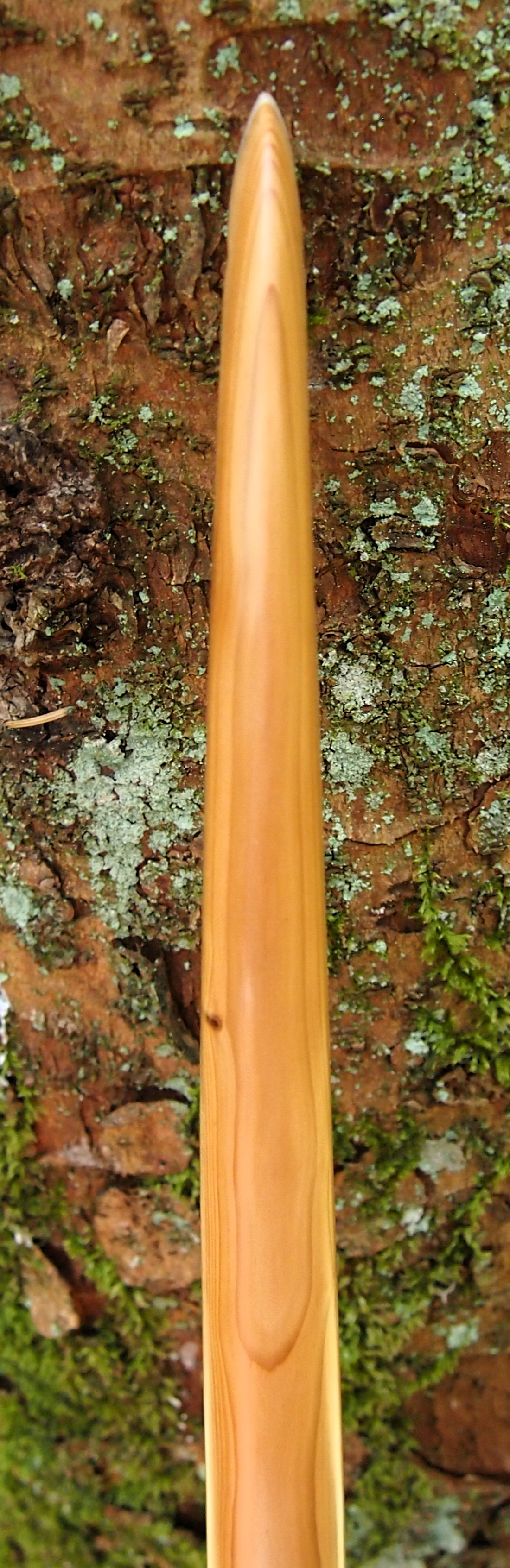
This salvaged pure heartwood yew log was clearly preserved and coloured right through as could be seen by looking at the end grain on the freshly cut log. I was blown away by the stunning bright rose gold colour which had penetrated the entire log. And from what I could see of the end grain so far, I couldn’t see any checking radiating in from the outside of the log either. Nice!

Drying checks in bog timbers is a common issue when wood is pulled out of its saturated boggy situation and suddenly exposed to air and sunshine for several weeks. Which unfortunately was the case with this particular find. But this log appeared to be free from checks and looked like I could potentially produce a bow stave. So once home it got hosed and scrubbed down so I could see what I had.

One side of the log was full of large knots and other problems, but the other side looked clean except for several whirls of pins situated with varying gaps between the pin whirls. I didnt dare to try and split this very precious stave, so I cheated and ran the saw through the middle of it splitting it into two halves. Inside was dreamy looking and also free from drying checks, mainly due to the stave still being saturated.

Keen to minimise the risk of drying checks developing, I decided there and then to get this stave roughed out to as close to final dimensions as possible so as to get way past the inner pith and reduce the mass to a point where I could feel confident that the stave wouldn’t start splitting as it rapidly dried out.

Once roughed out I used steam and a form to put a small amount of deflex in the middle of the riser. I also wanted to use this opportunity of having saturated wood to add a little gentle sweeping reflex into the entire length of the limbs to counter the deflex and reduce any potential stack felt at full draw.

Even whilst fully saturated this stave felt very stiff so I didn’t want to push my luck with the heat bending. So after heating, and once I was happy with the shape and approximate string alignment, I clamped her tight to the form and parked her up to dry out fully. After a couple of months the stave came off the form for inspection. No cracks visible and the light R&D shape had held tight. The stave felt a fraction of its former weight too indicating that it was now dry.

I’ve never before worked with bog yew so I was unsure of its ability to make a safe bow. Especially as it felt quite stiff. So to make absolutely sure this stave wouldn’t explode during tillering, or worse still, explode during use, I decided to sinew back it with 3oz of wild English red deer leg tendon sinew. Once the backing was completed and wrapped up on a drying form to retain the staves shape, the stave was put away again for another 8 months of curing time.

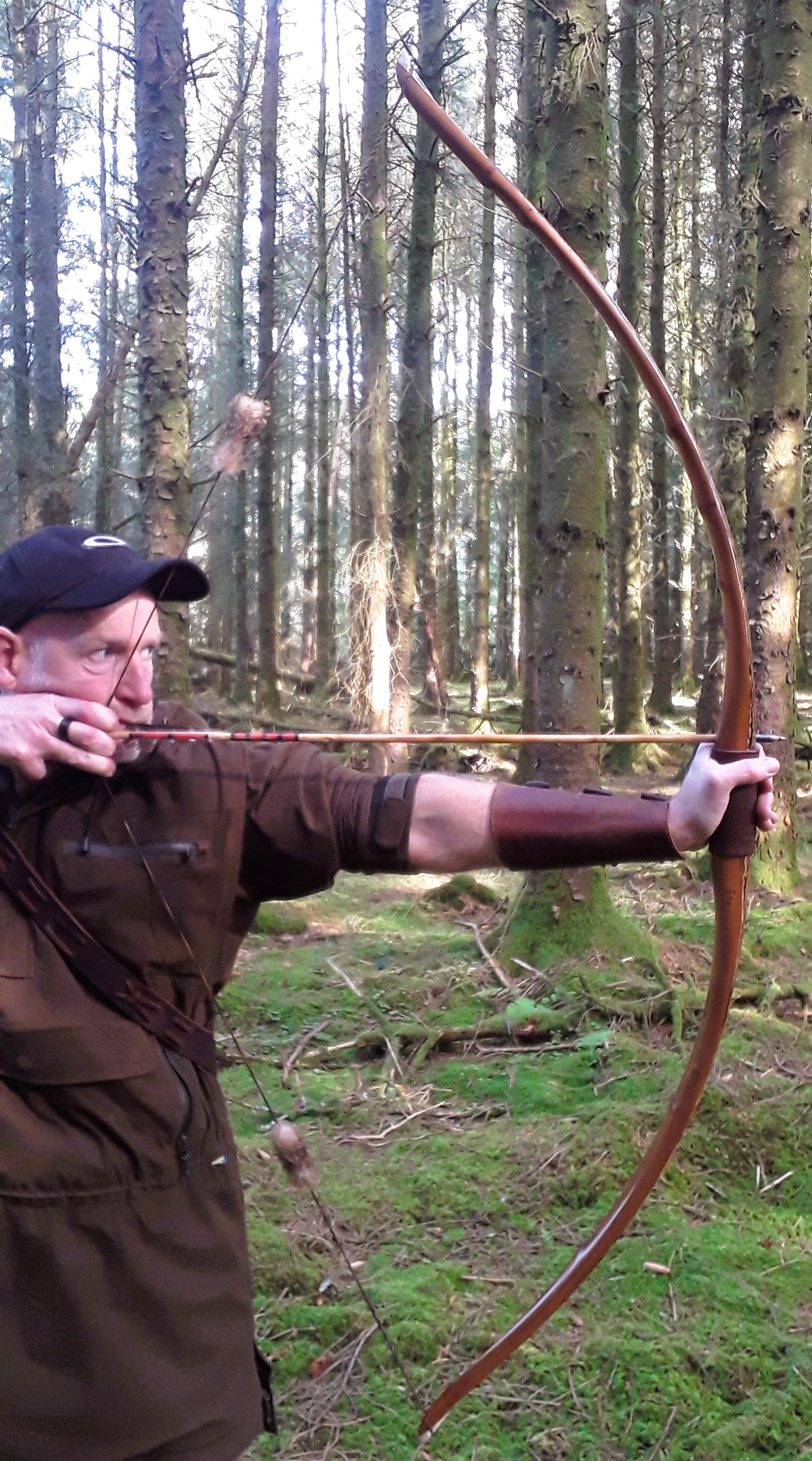
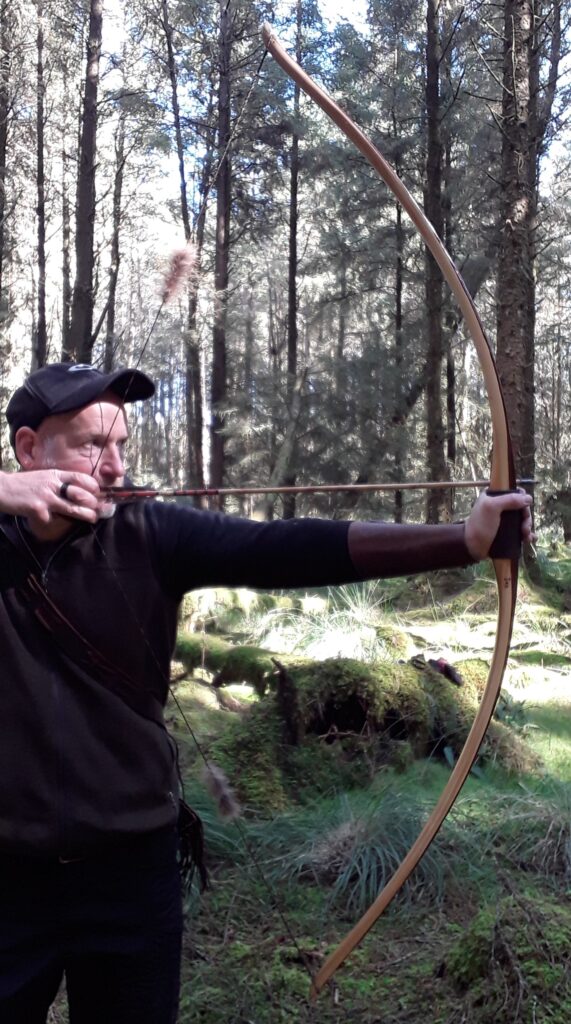
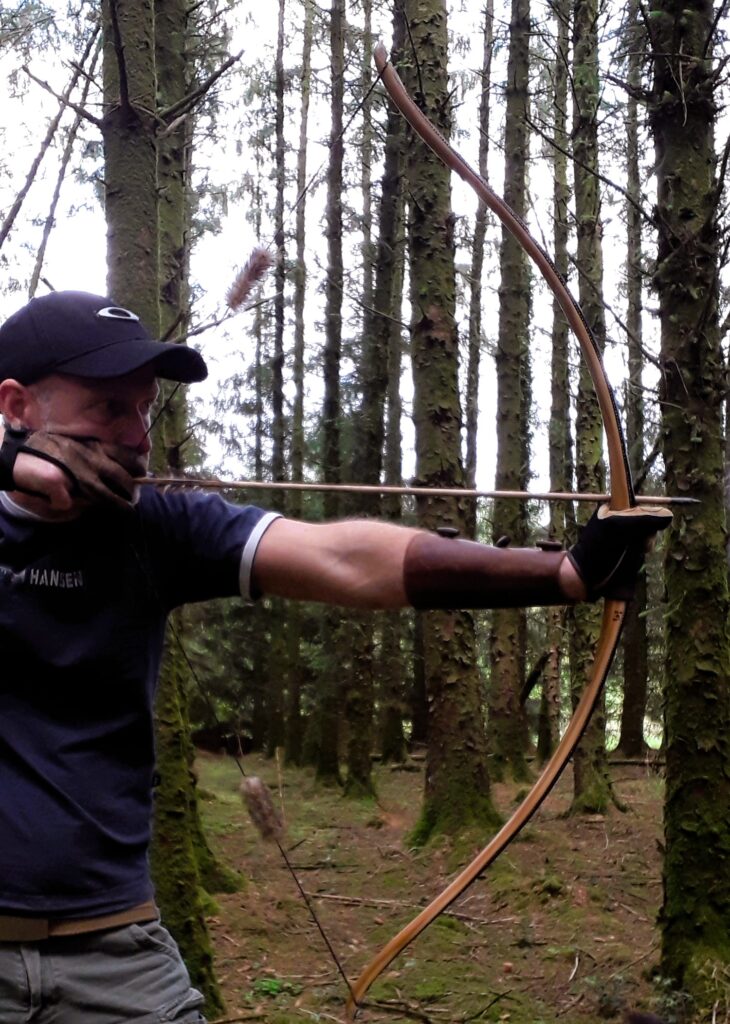
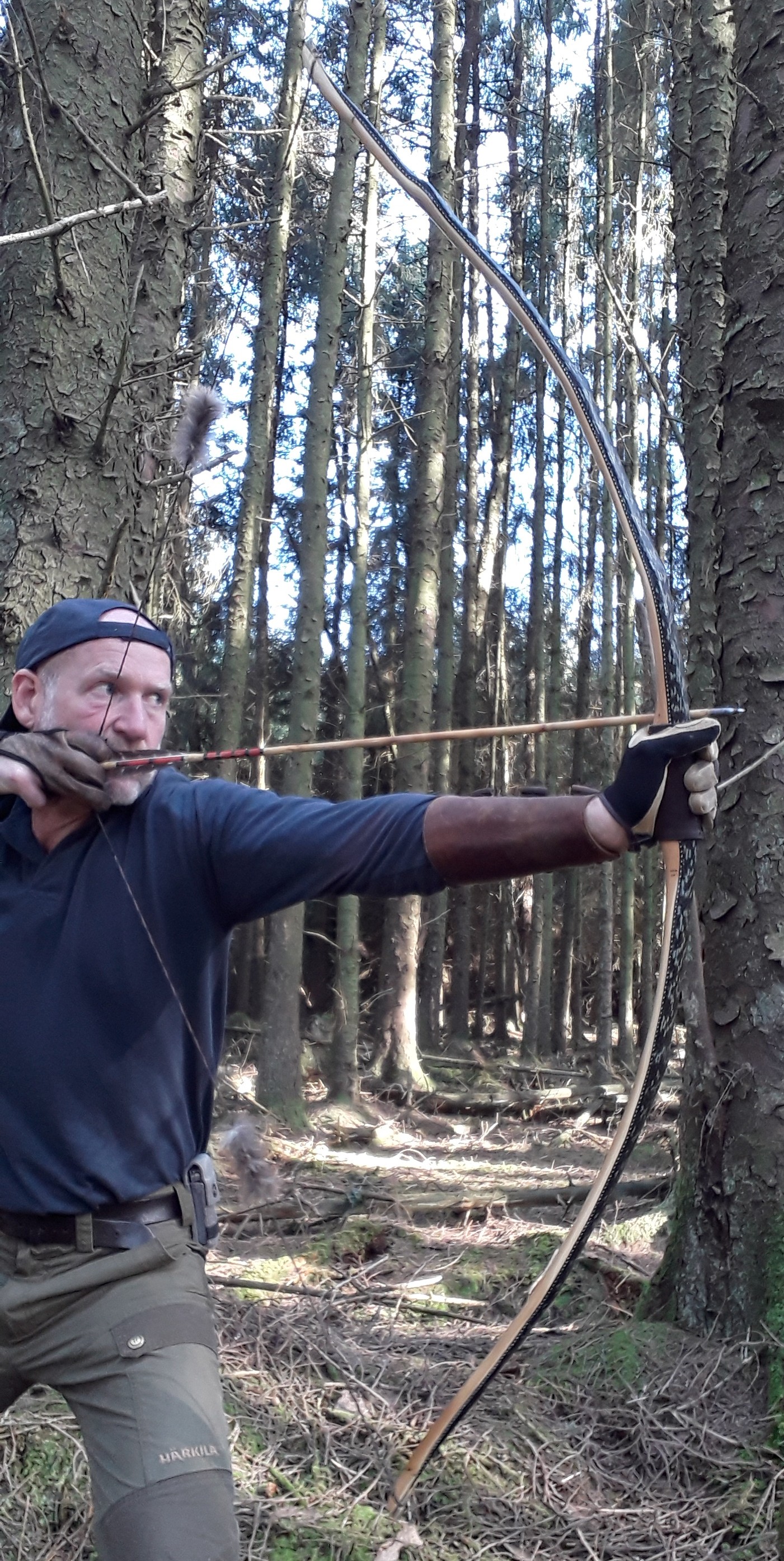
Once fully cured and cleaned up she tillered out to 45lbs at 28”. After tweaks, shooting in and sanding she finished up at 42Lb at 28”. She’s been a cracker to shoot and I had great fun putting a couple hundred arrows through her on my stump shooting forays. She’s sending 400 grain arrows over the chrono at 145fps at my draw length of 26” so I’m guessing at 28” she’ll be pushing 150+fps. She doesn’t stack and she doesn’t kick so she’s a real pleasure to shoot.

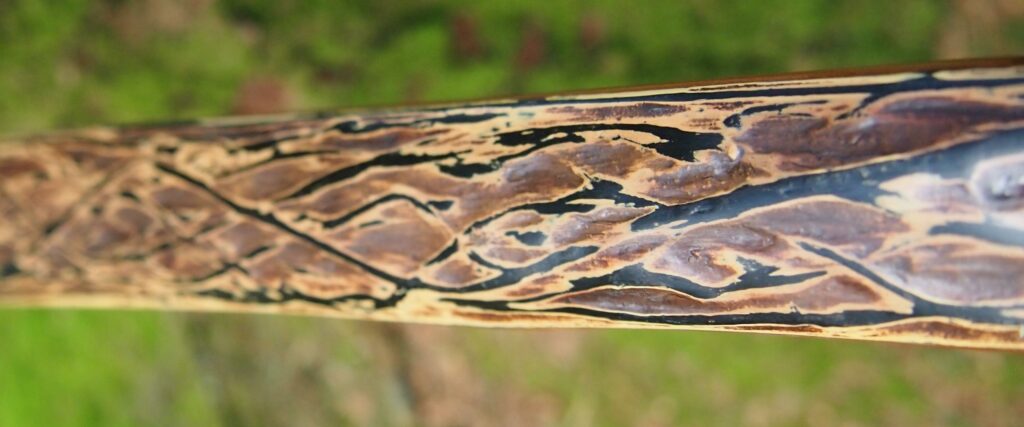
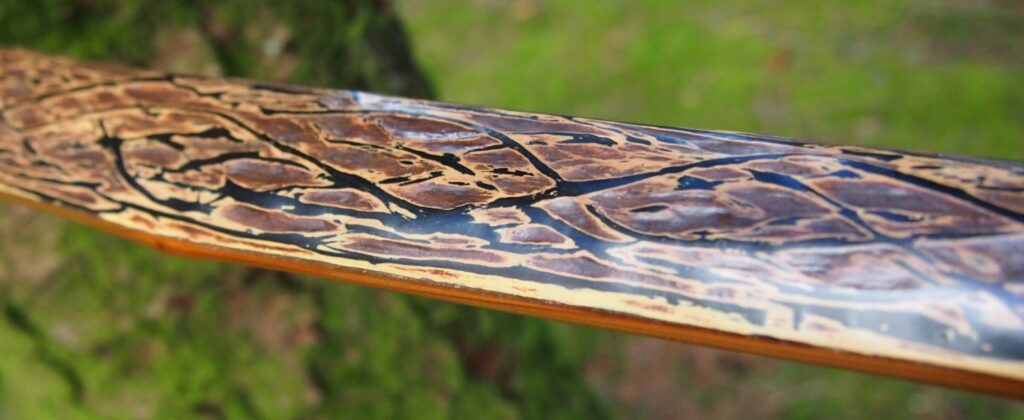
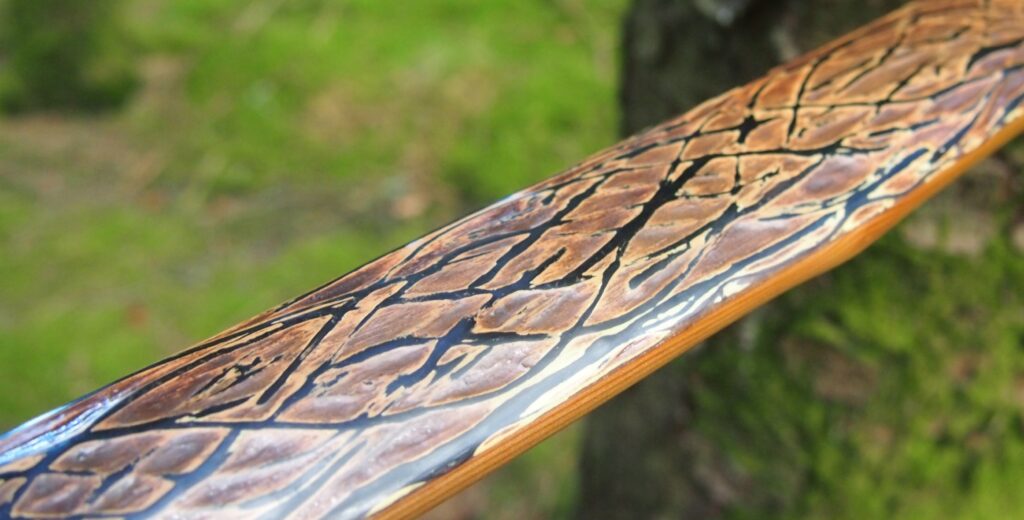
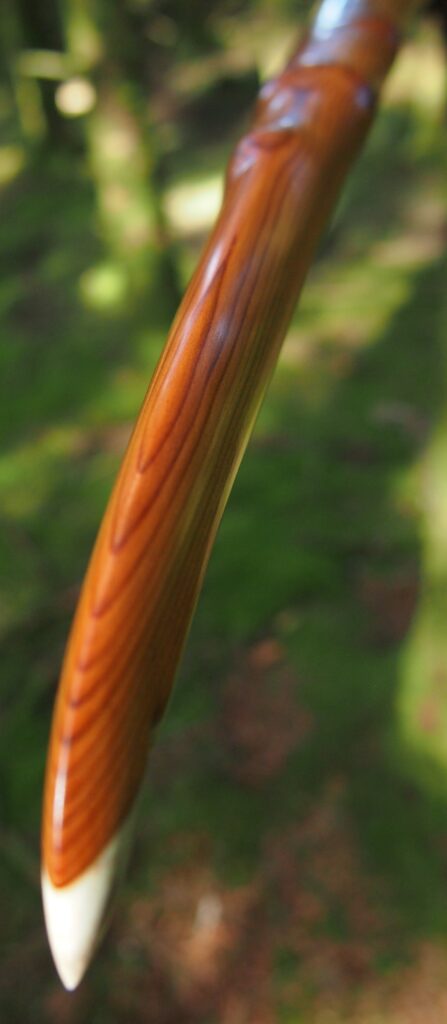
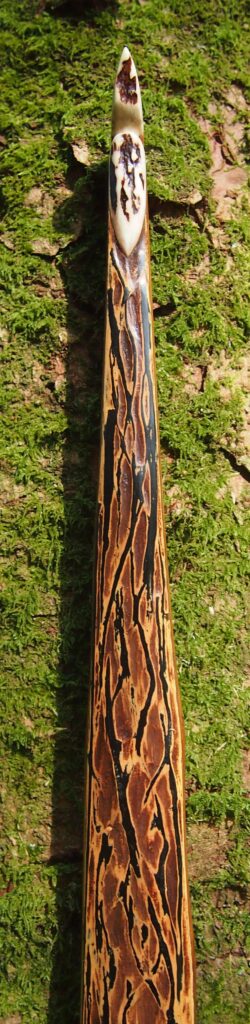
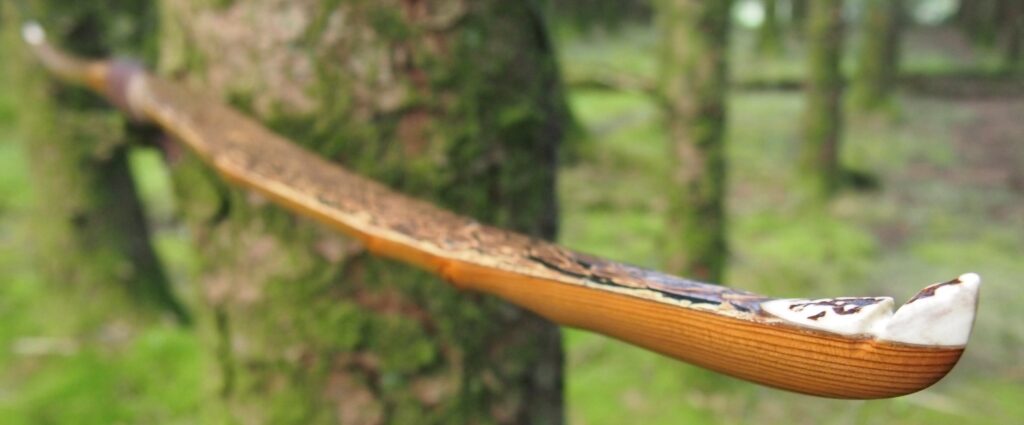
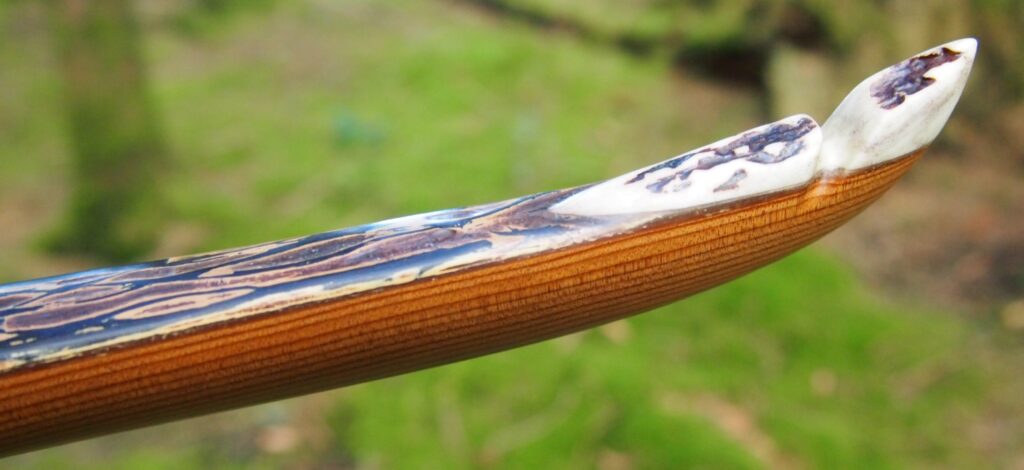
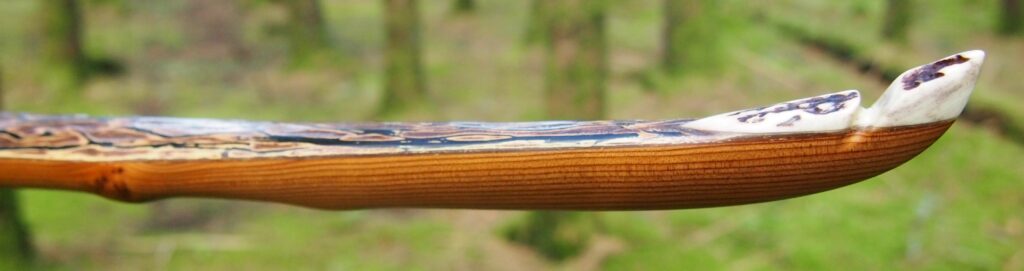
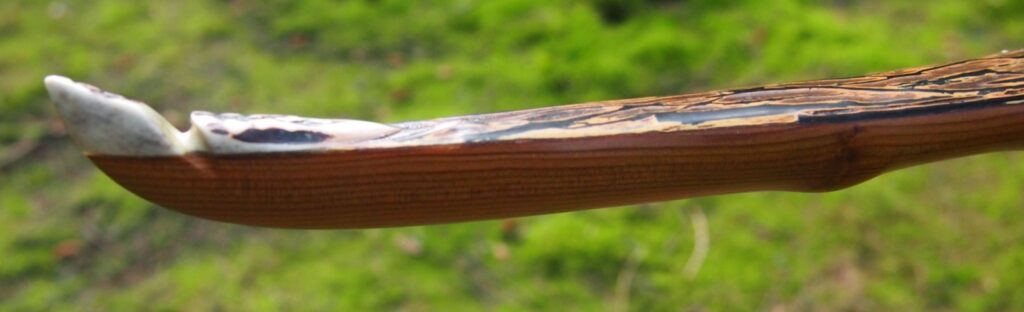
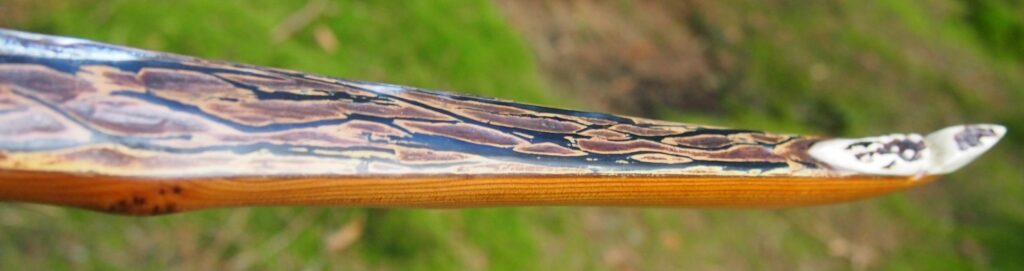
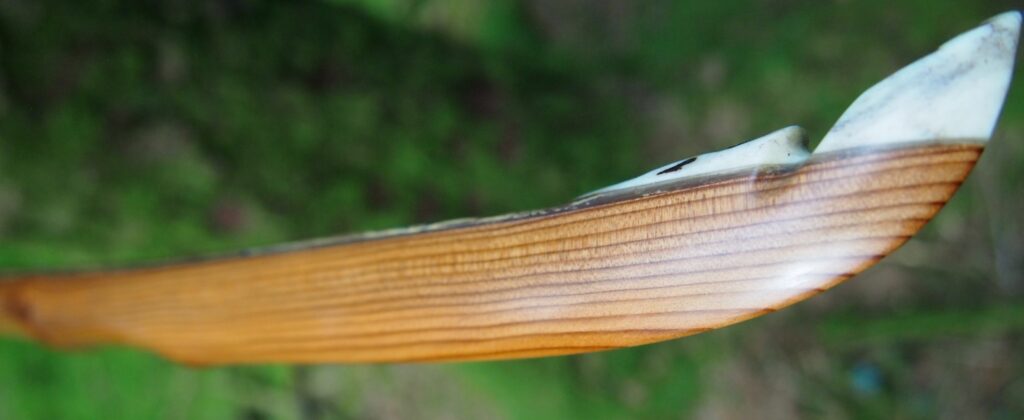
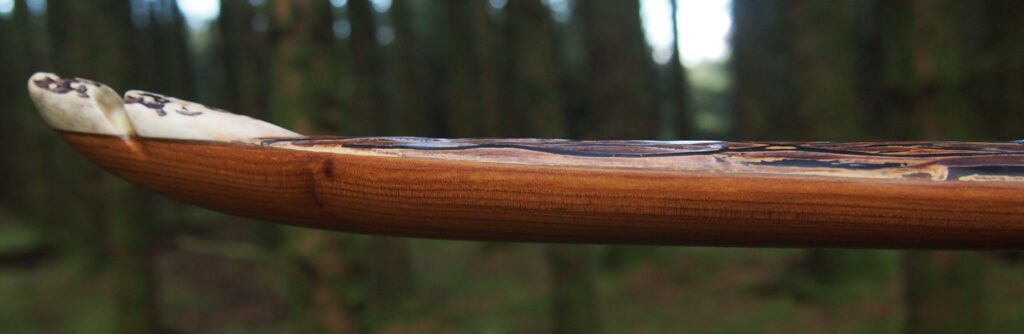
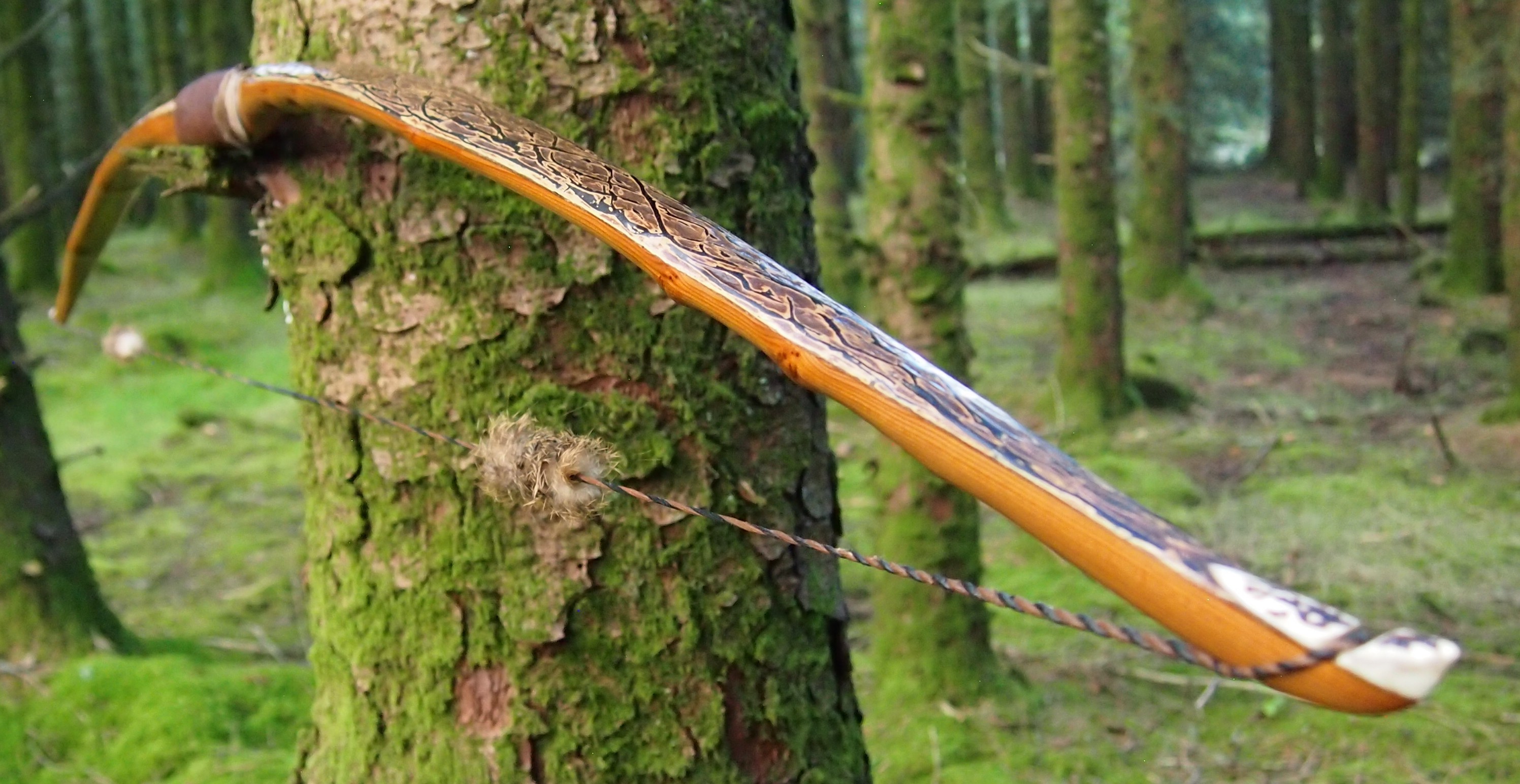
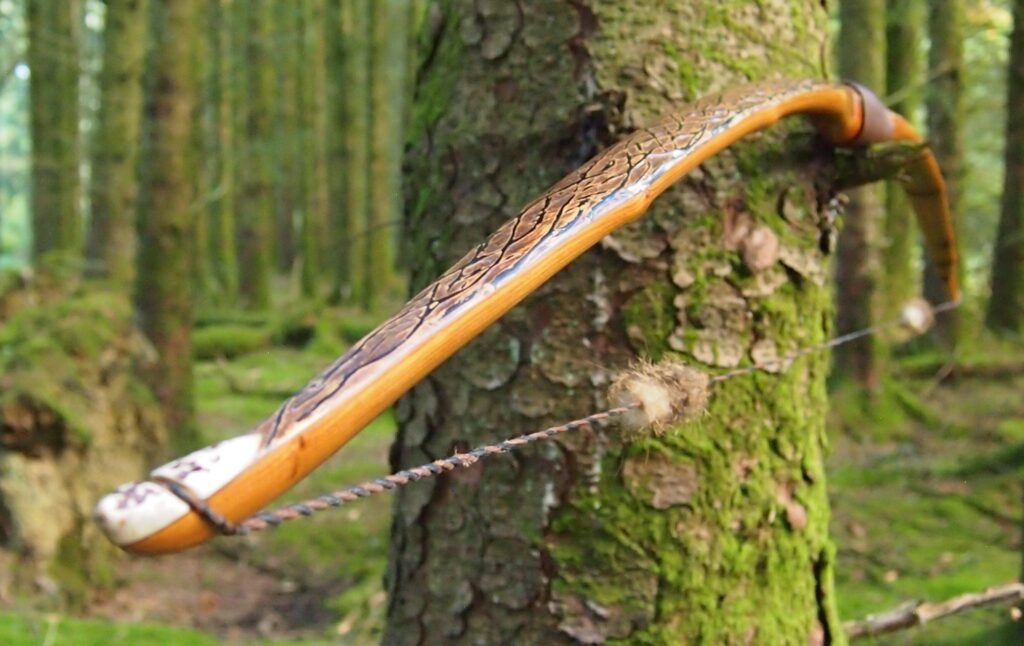
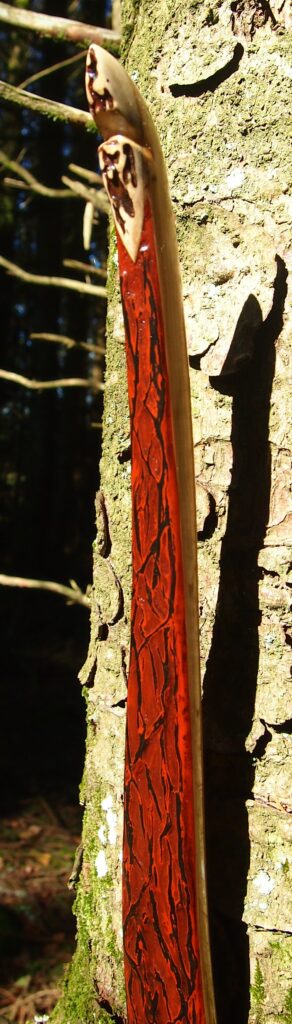
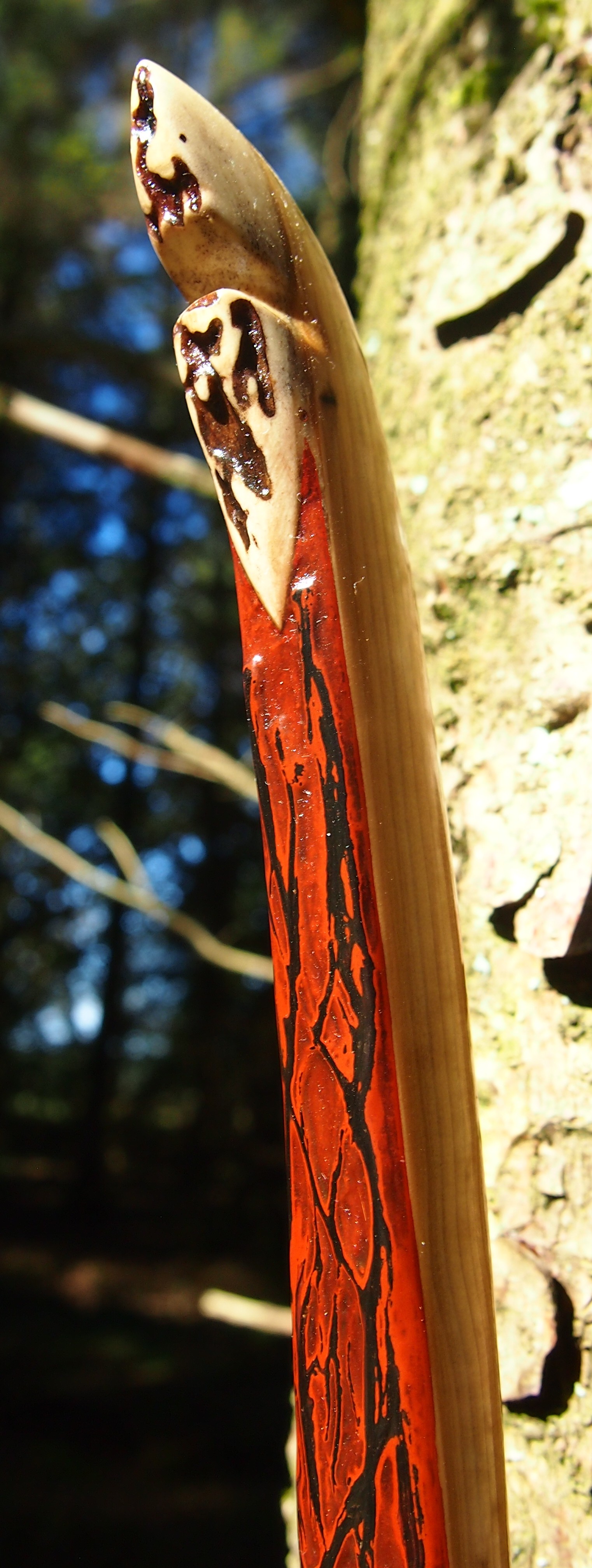
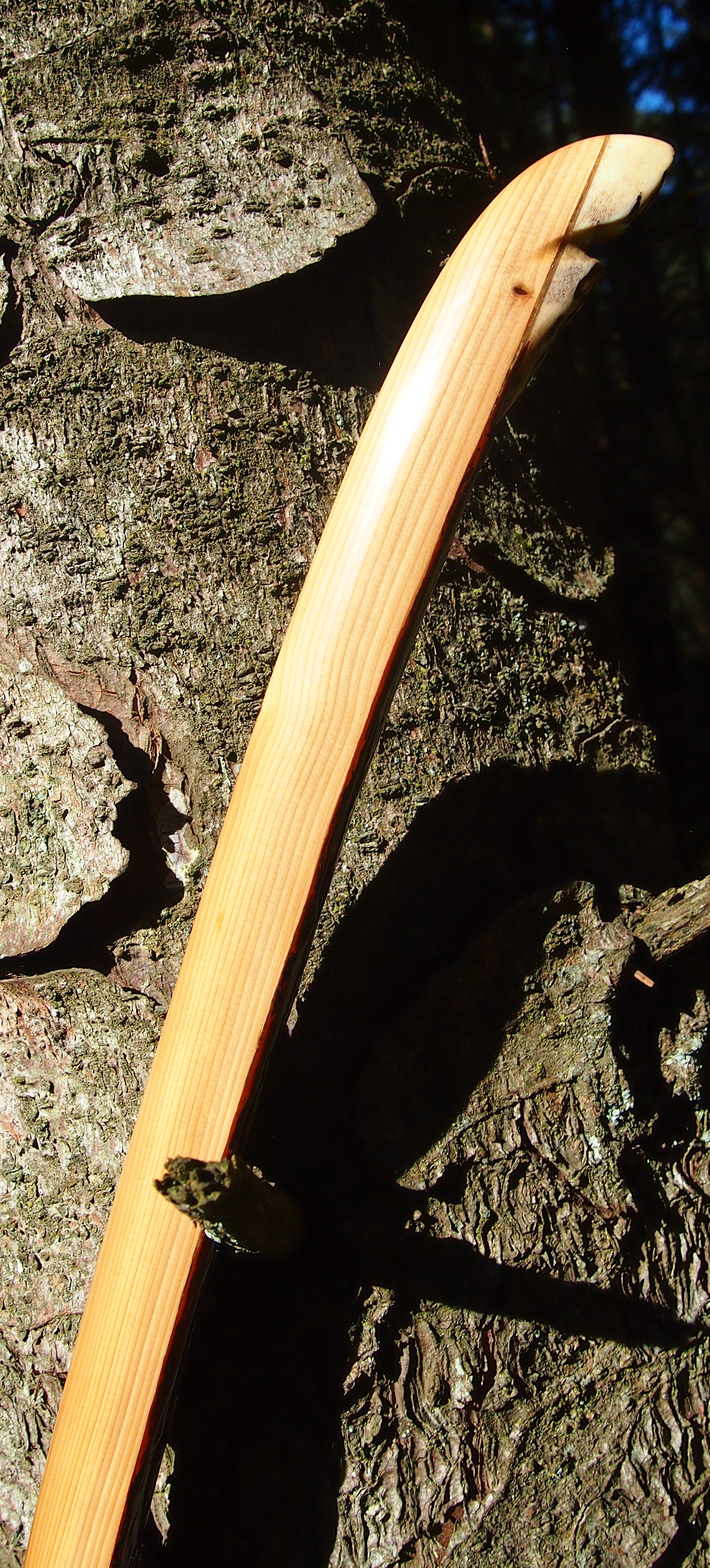
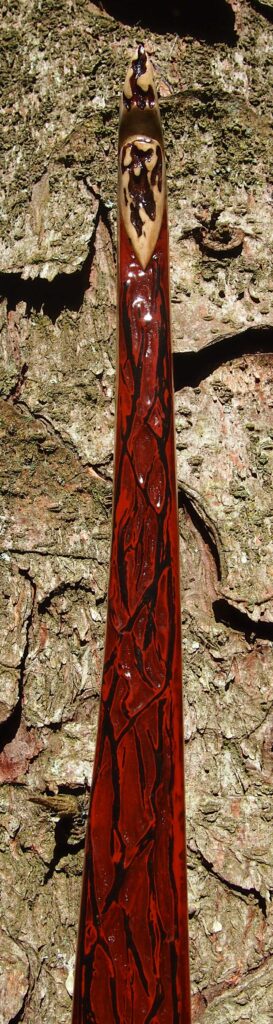
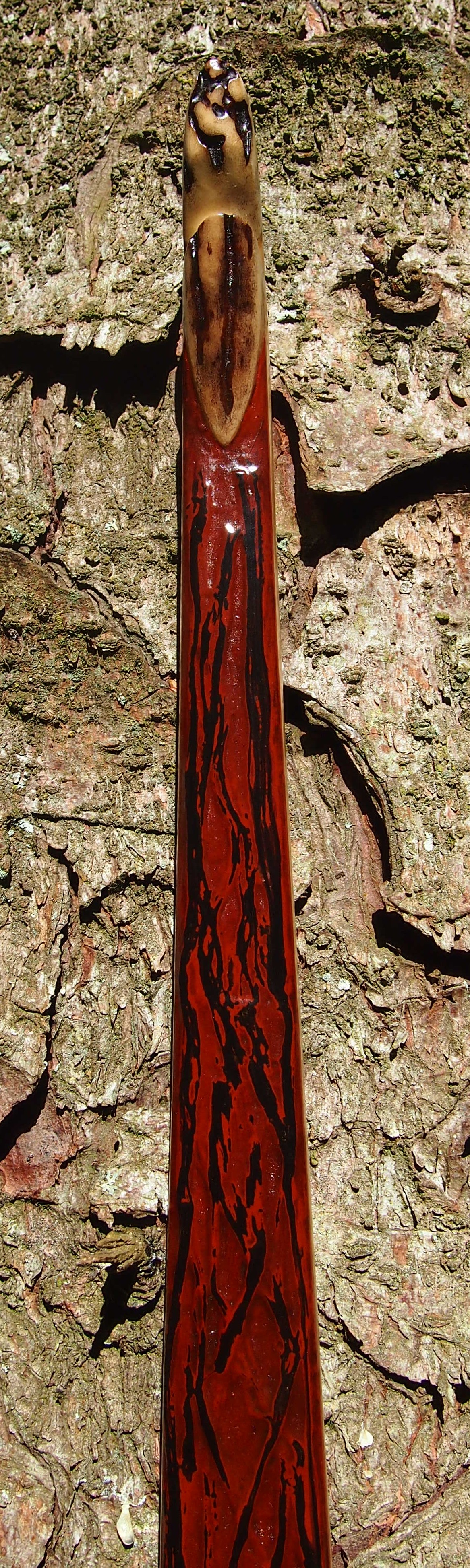
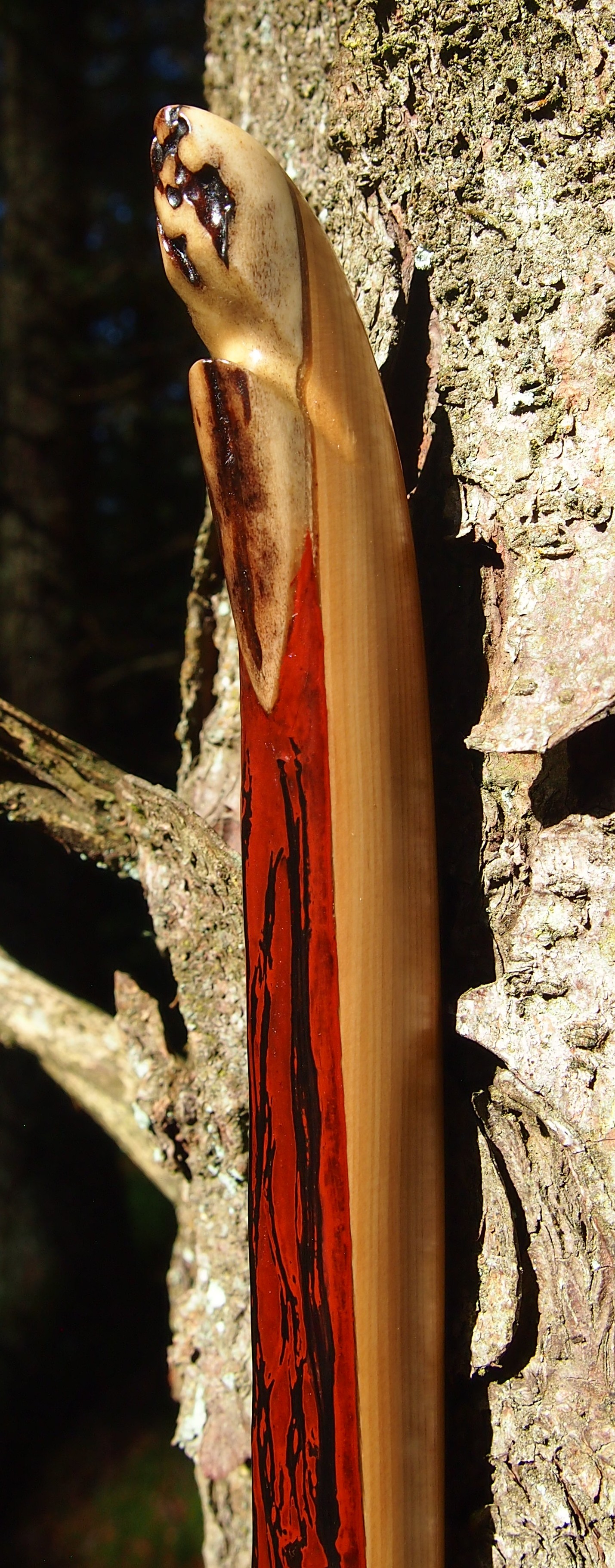
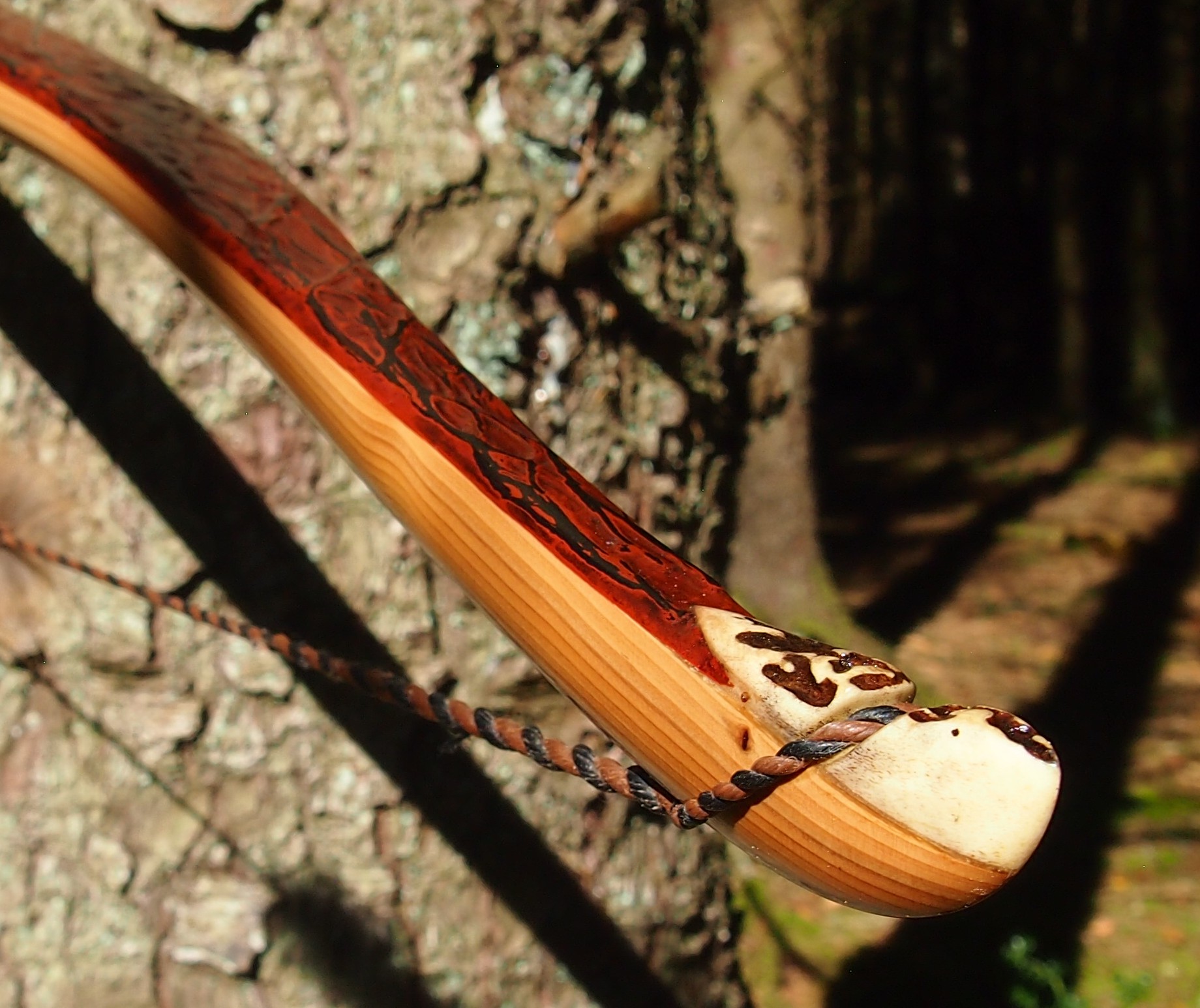
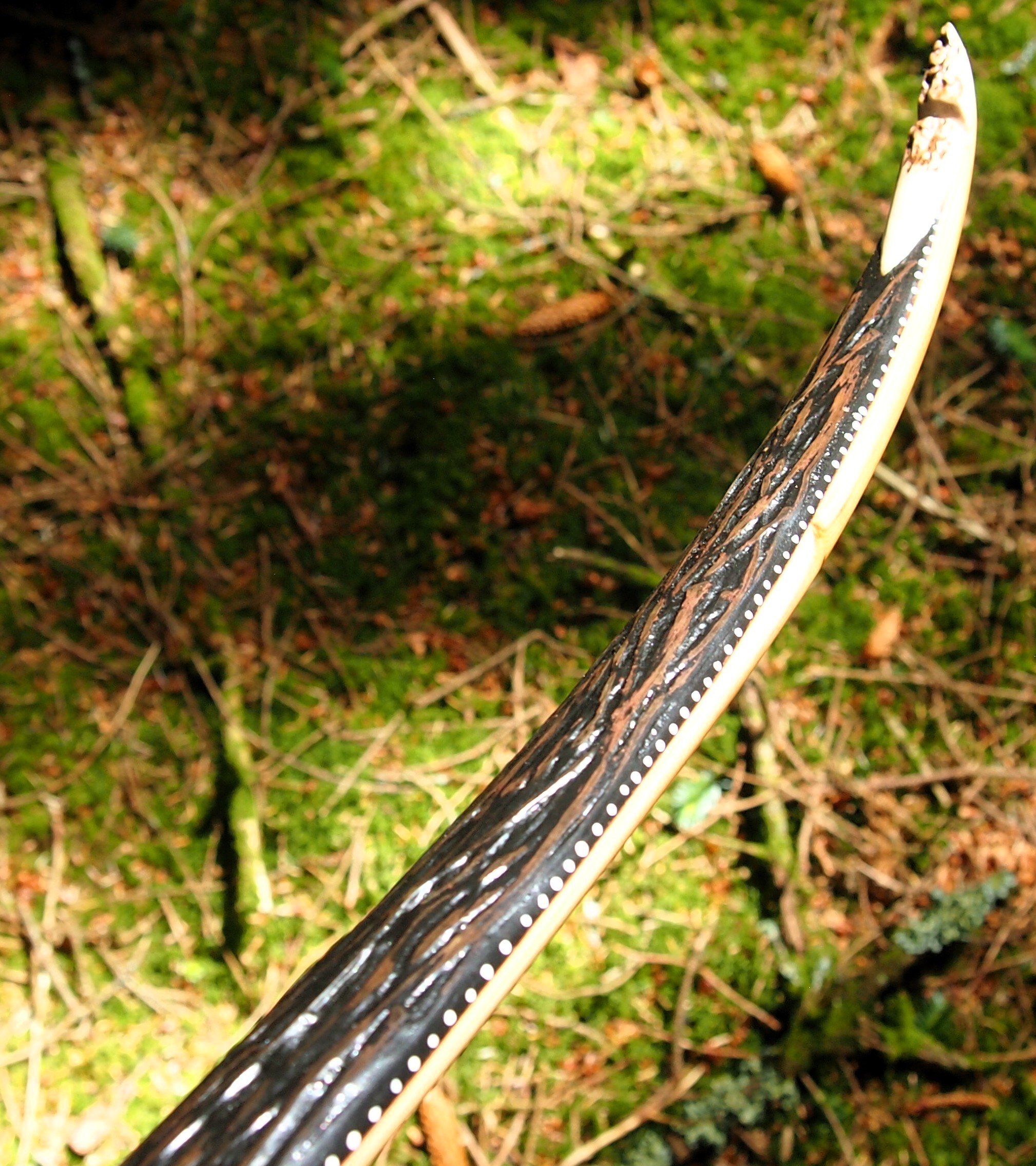
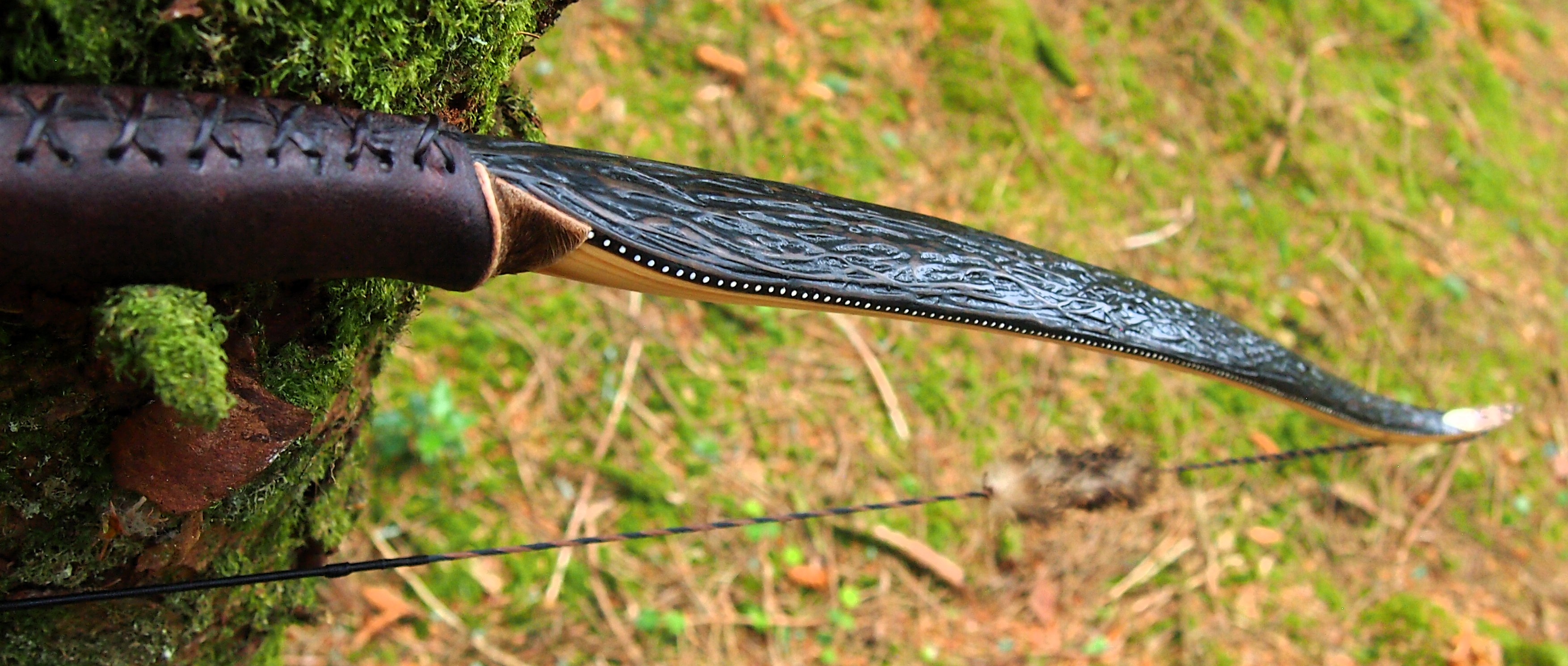
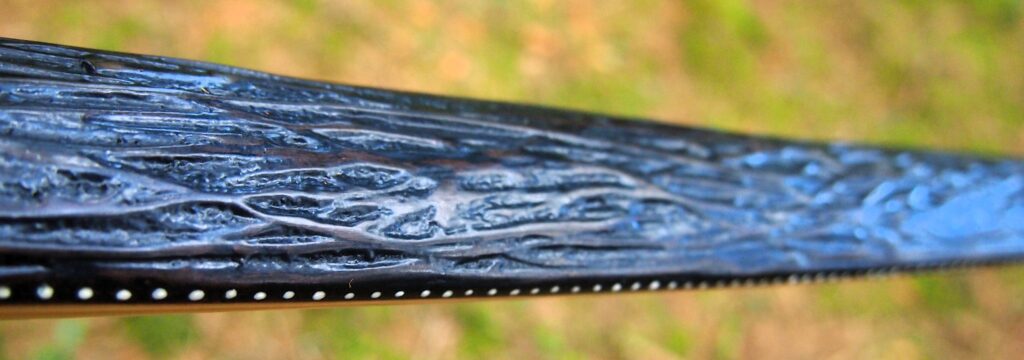
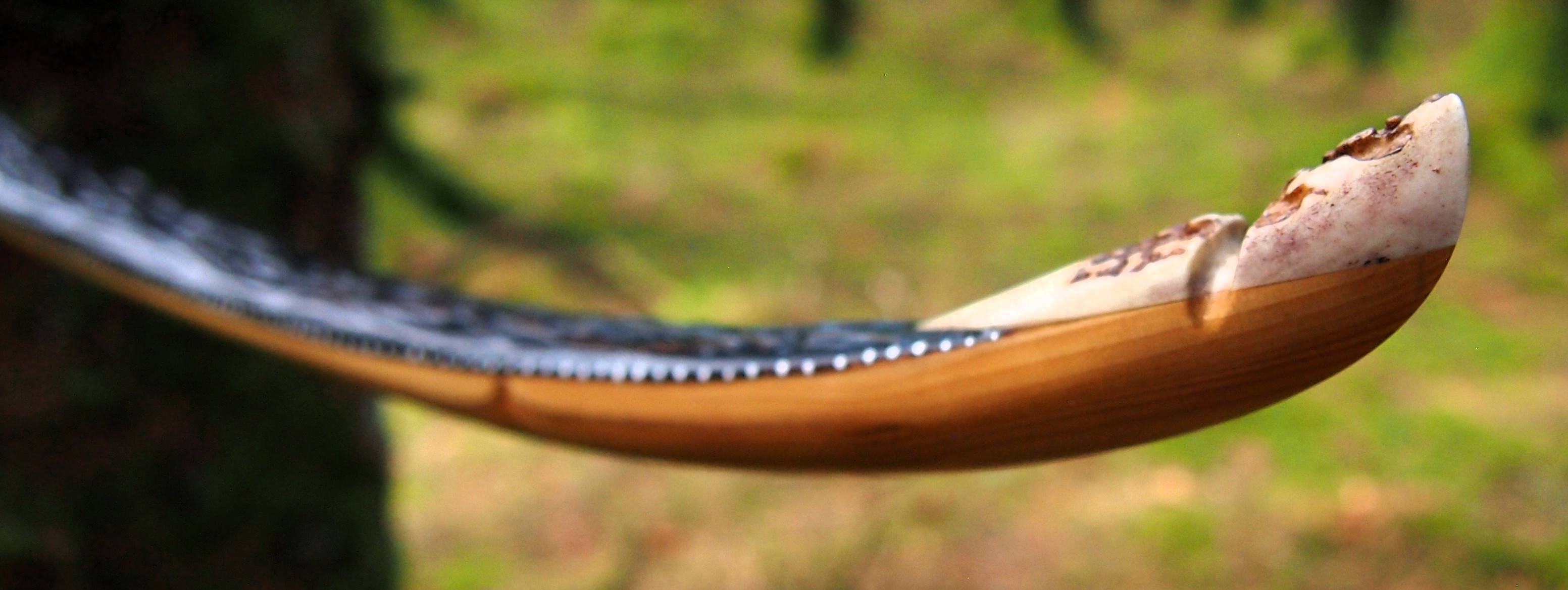
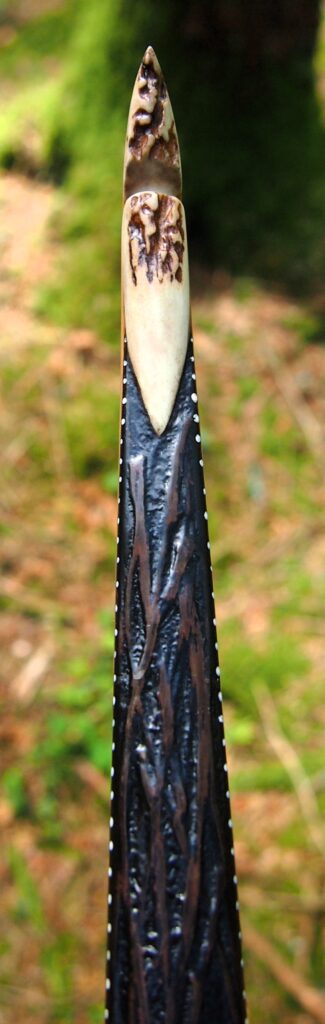
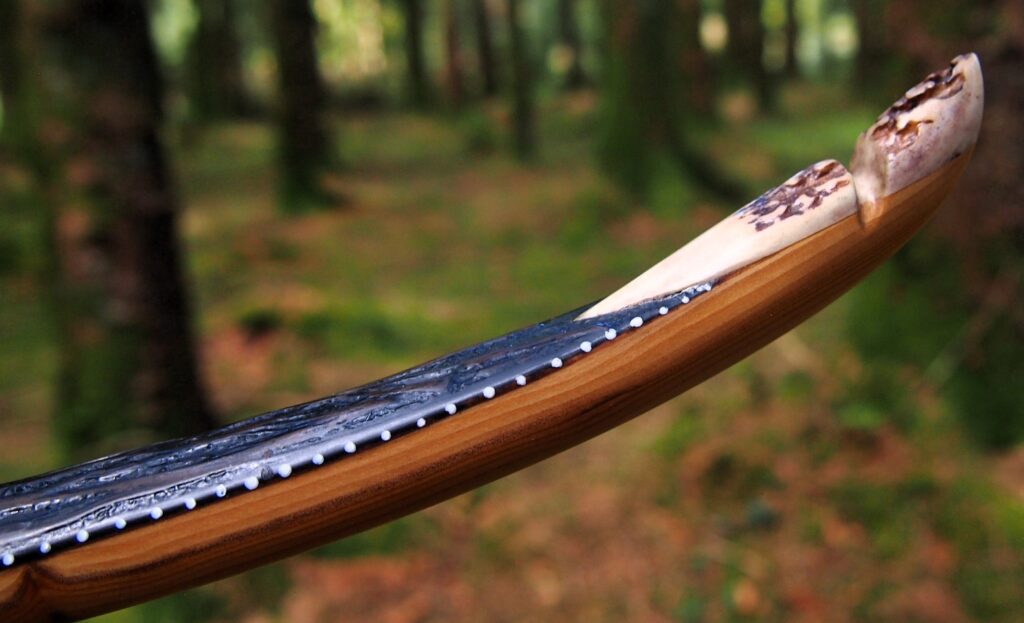
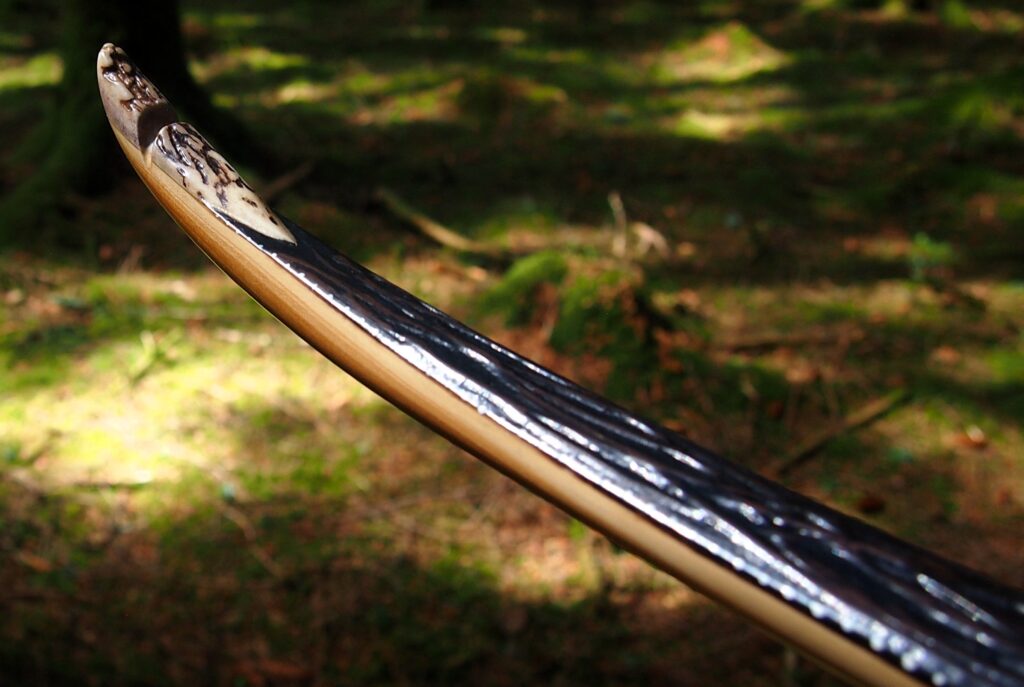
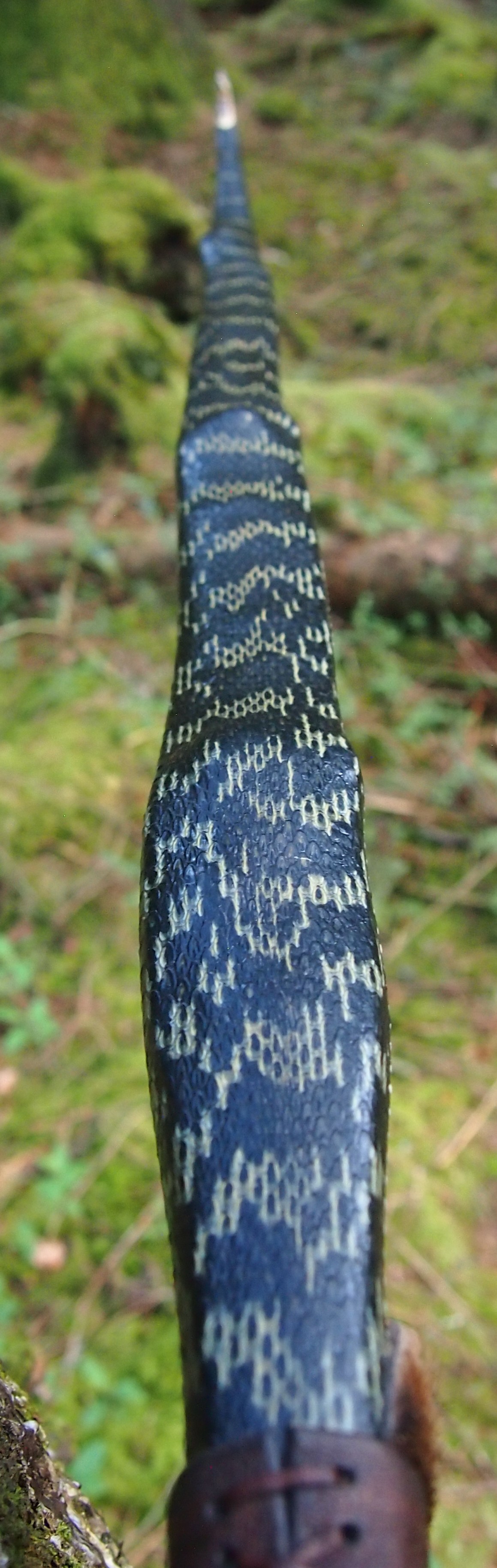
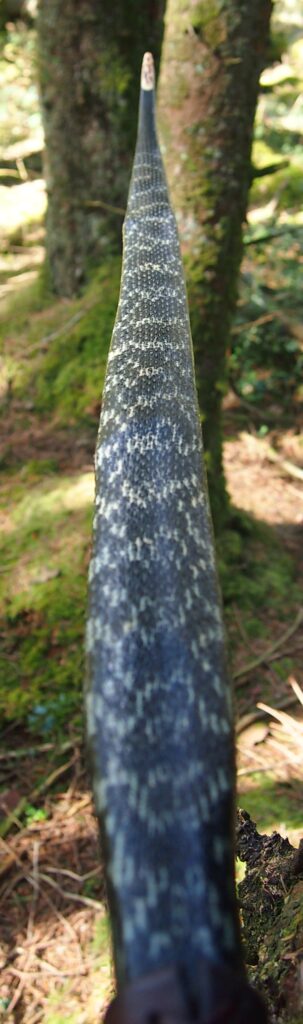
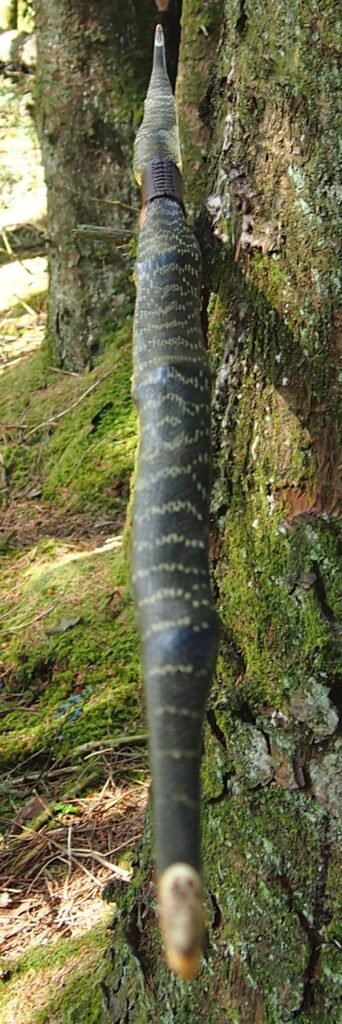
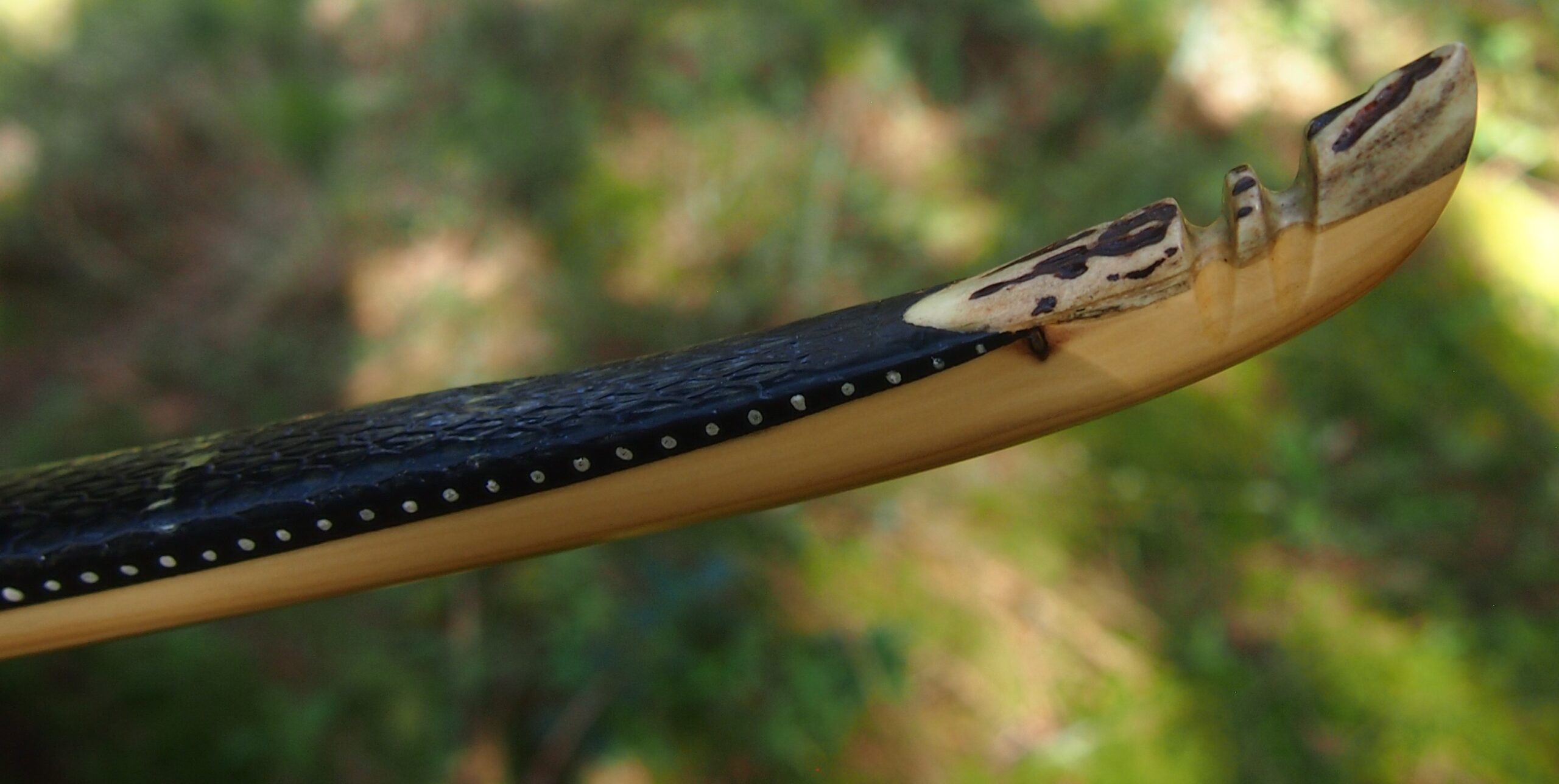
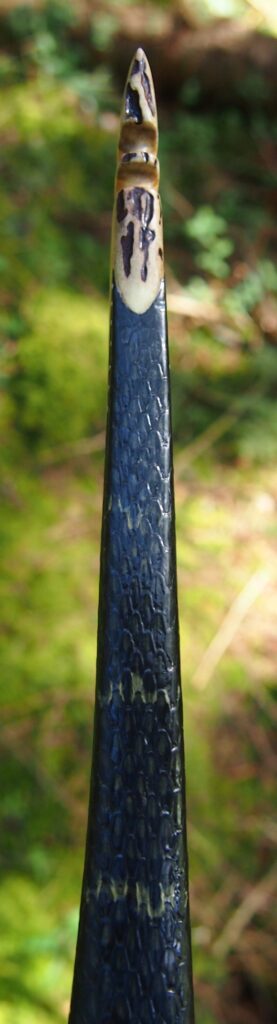
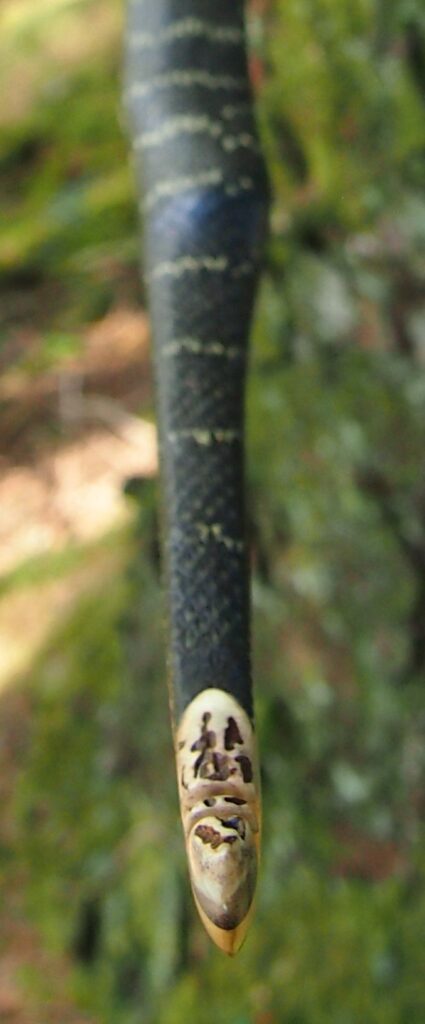
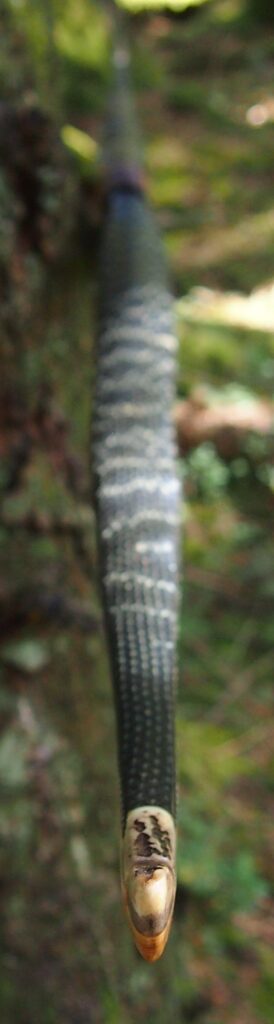
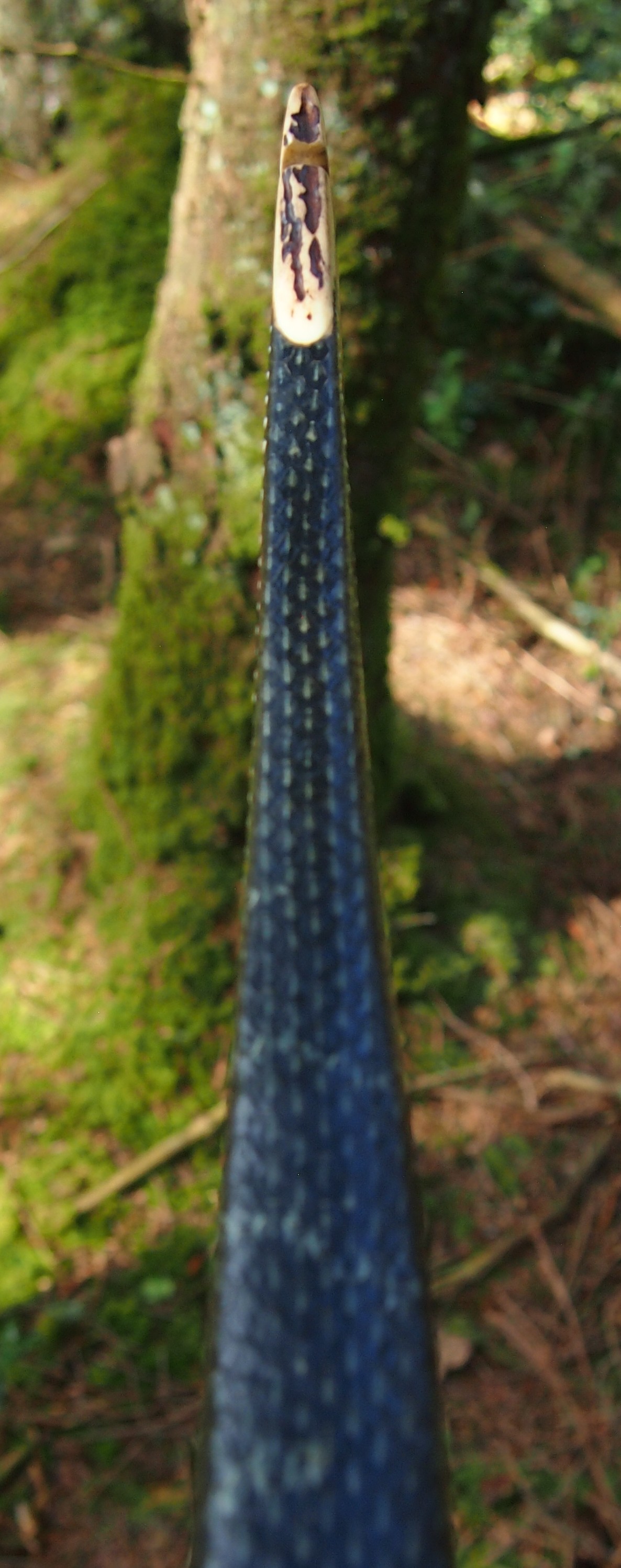
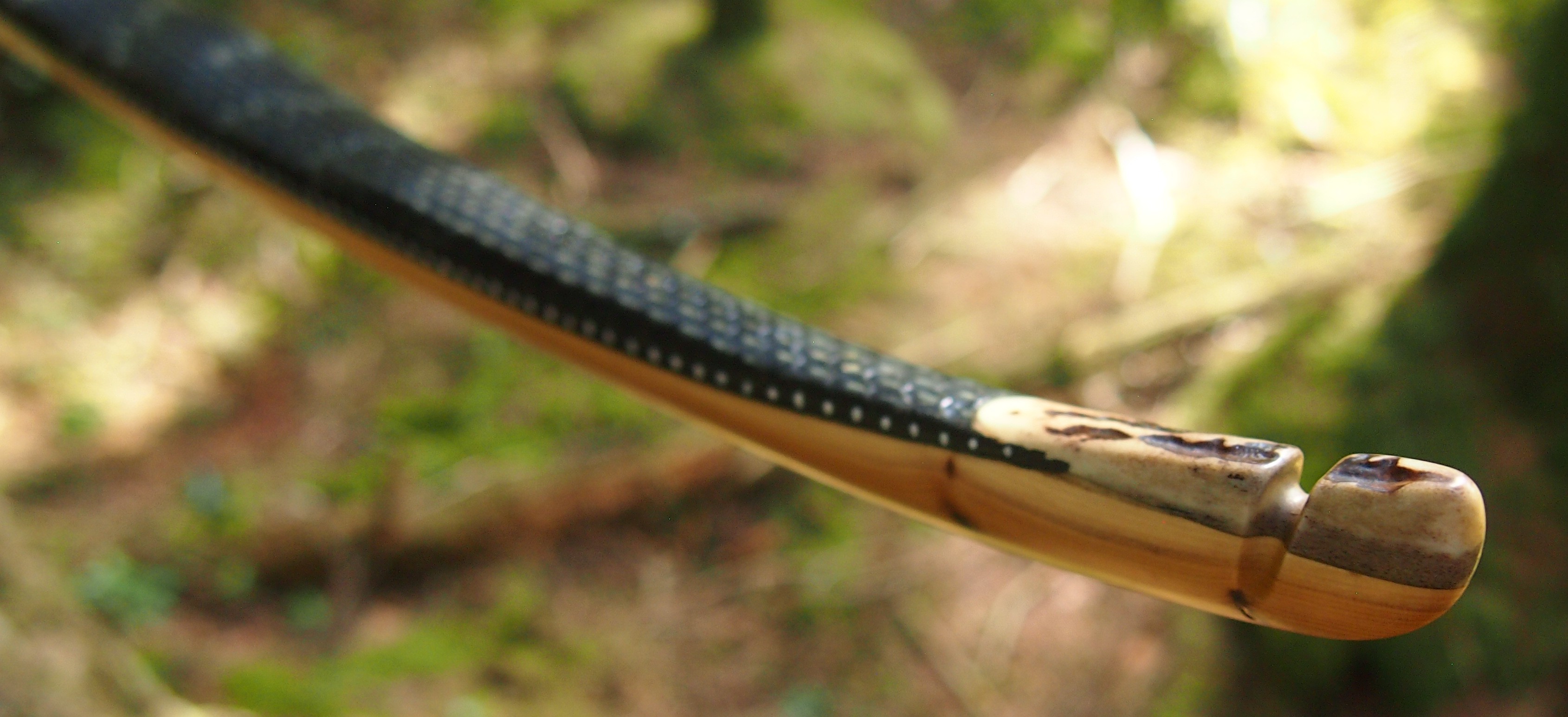
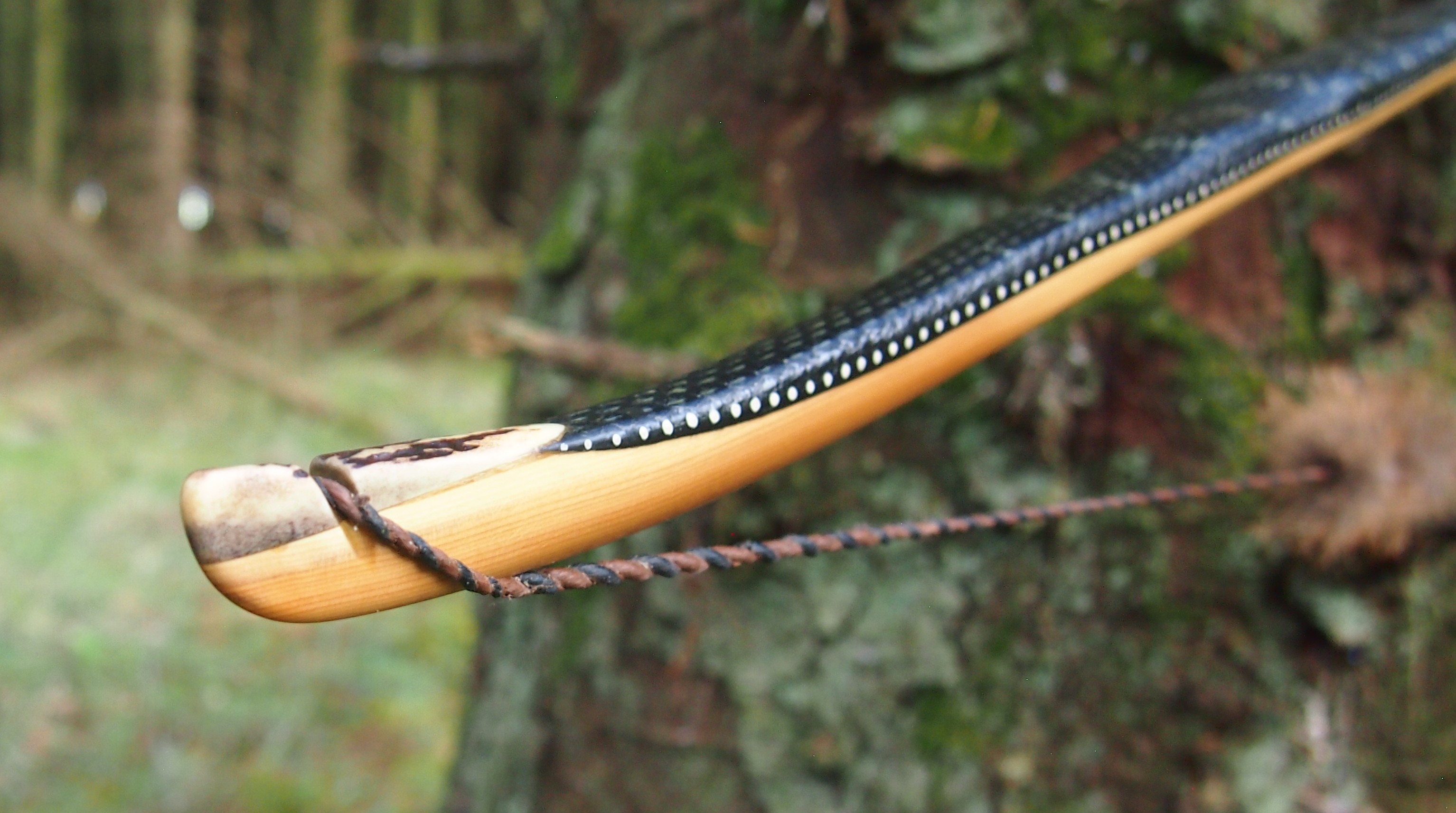
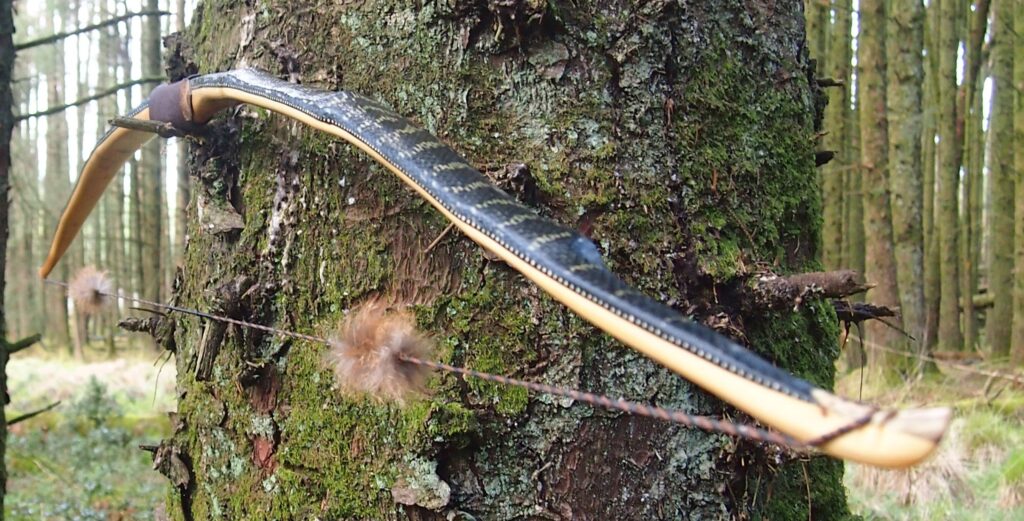
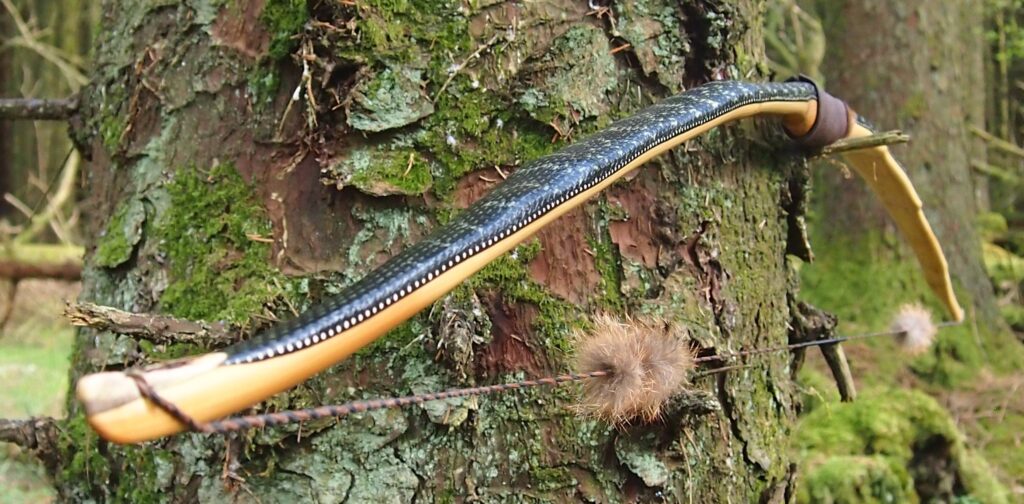
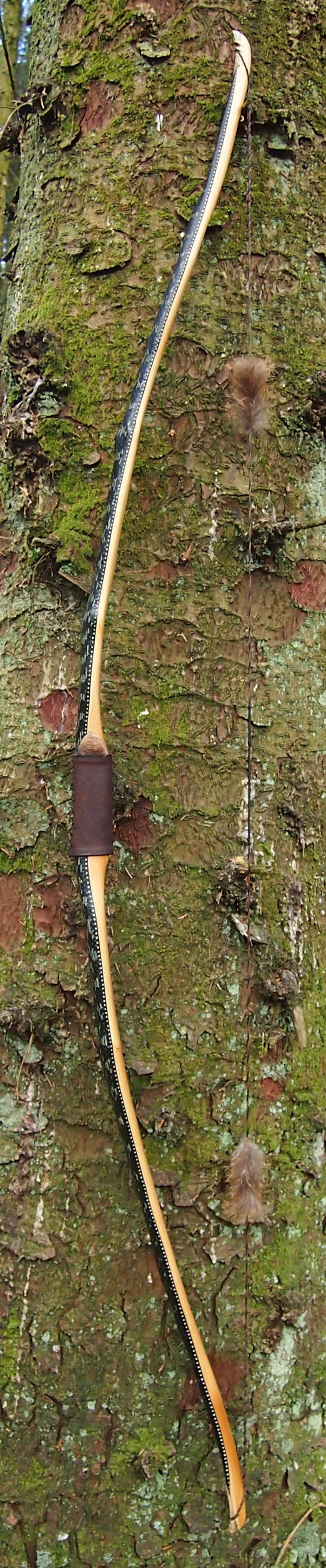
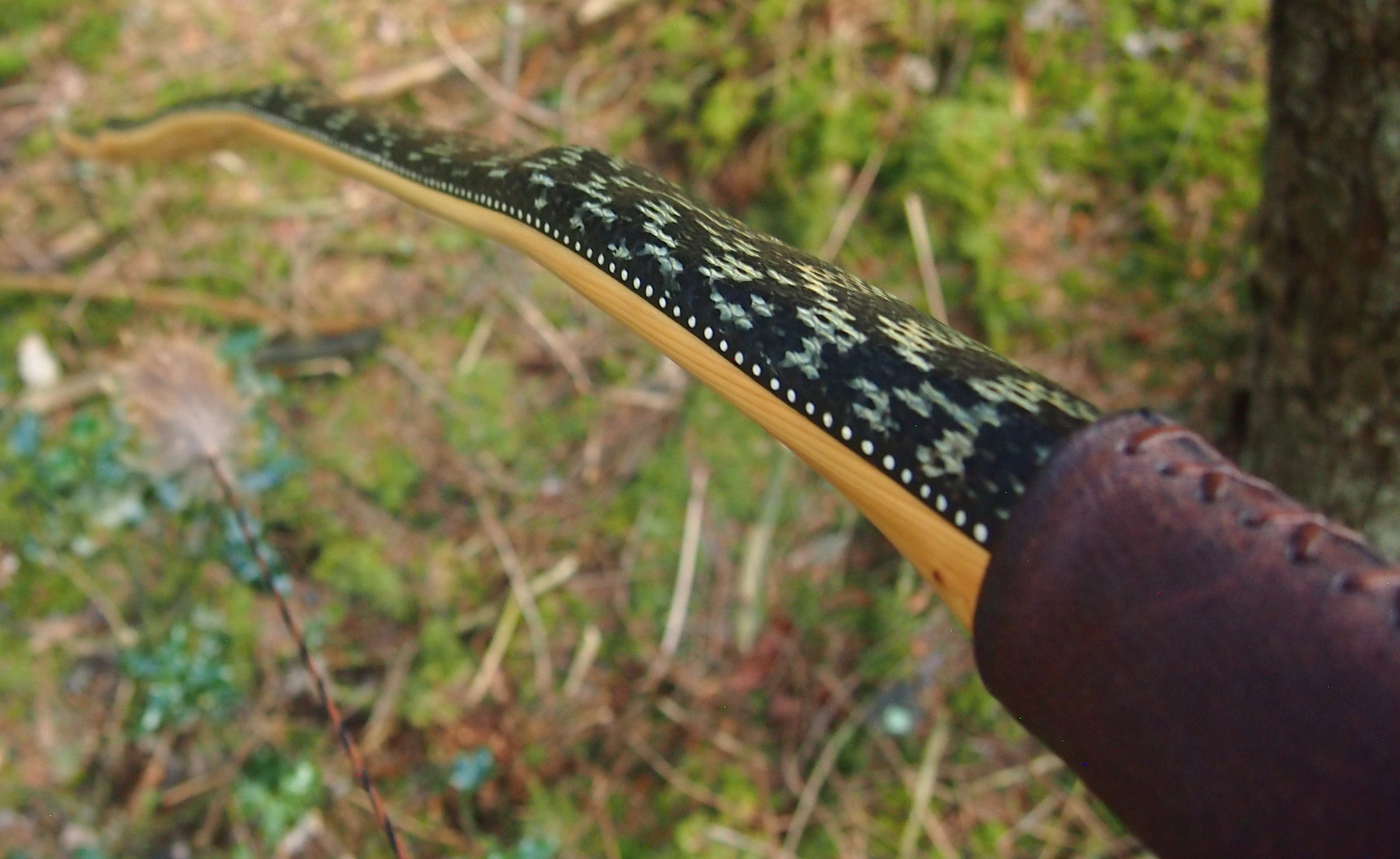
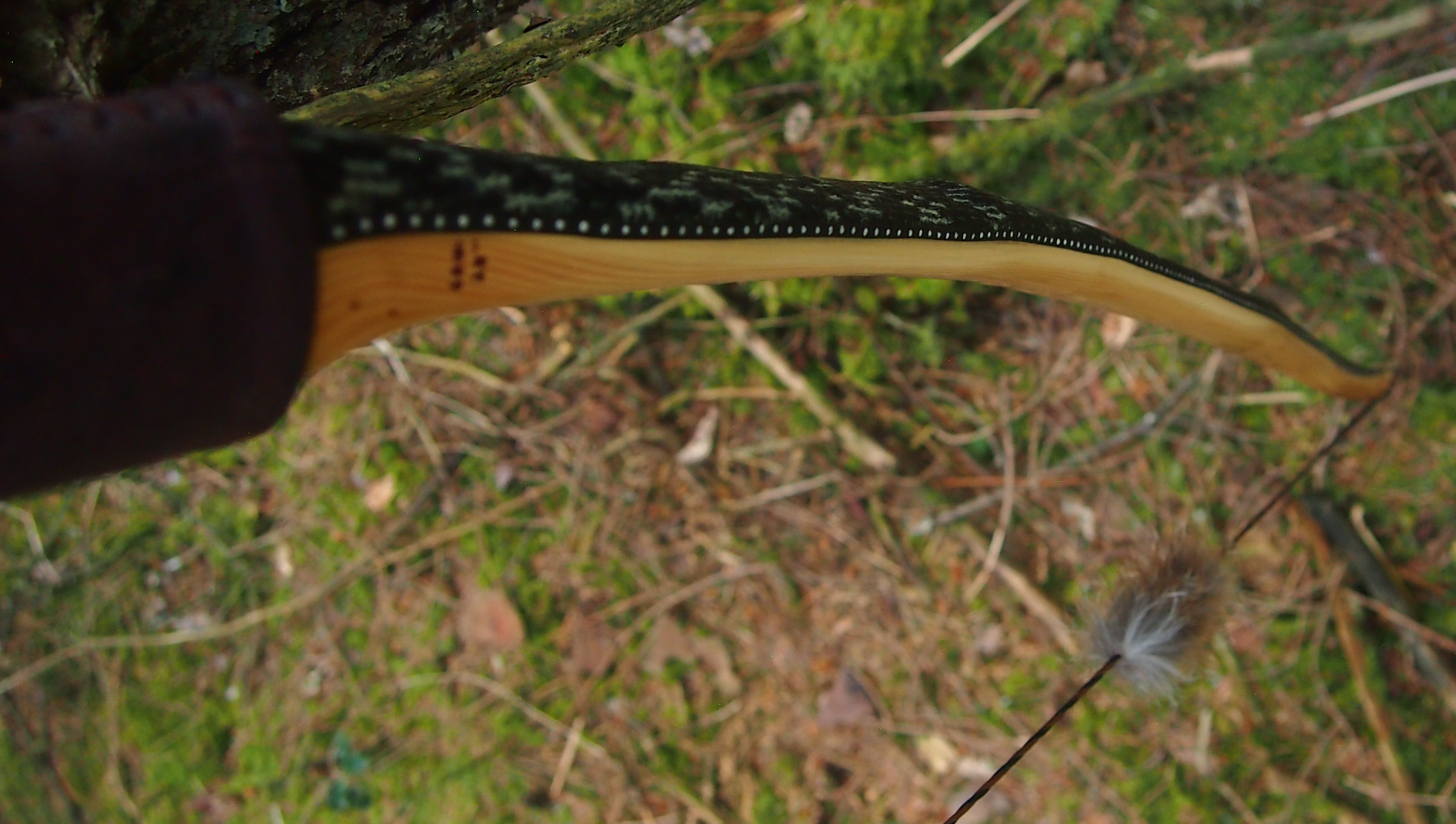
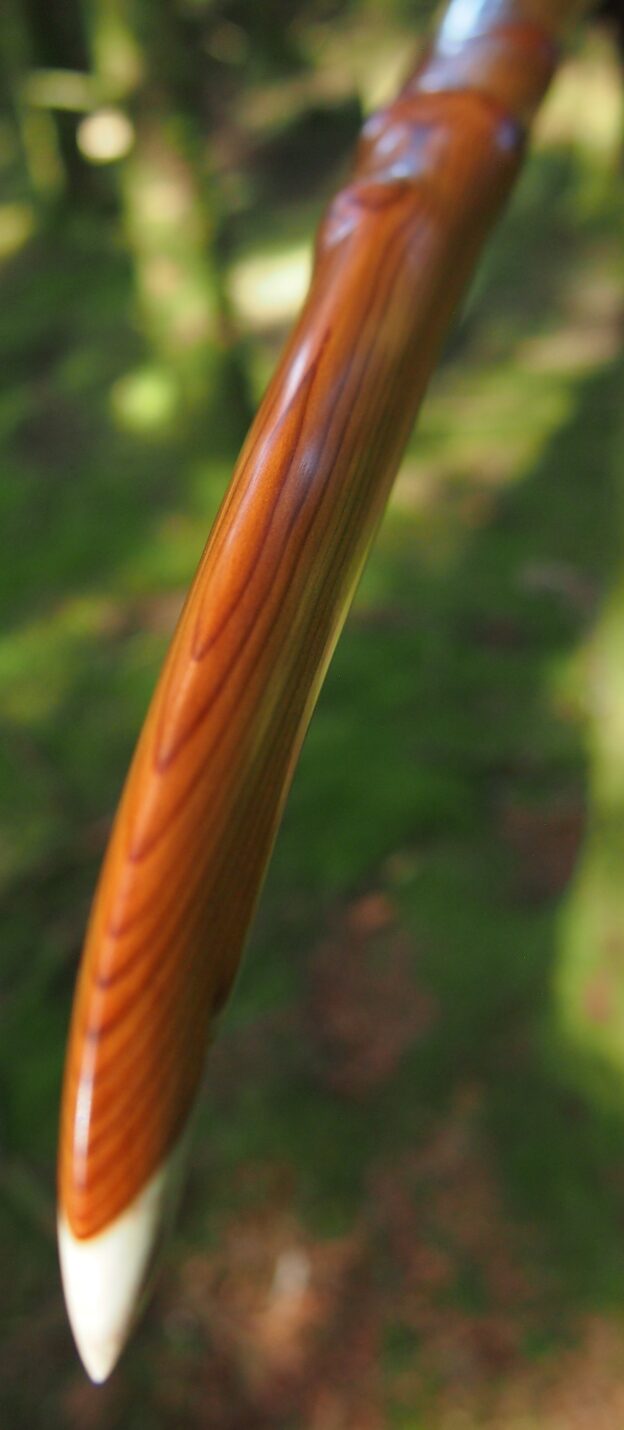
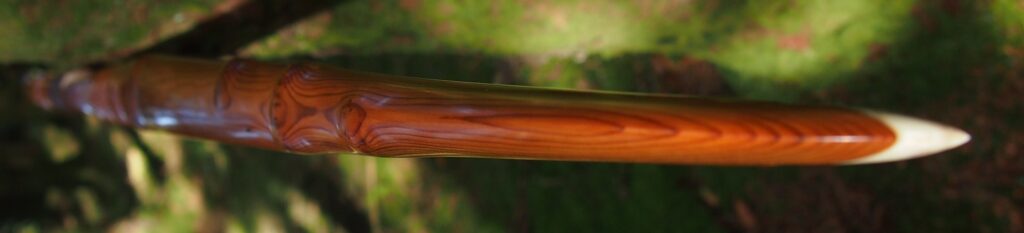
After refining the tips to minimise mass I fitted Wild English red deer antler tip overlays. I’ve also decorated the sinew backing in the exact same way as I’d described in my previous blog post which you can find here: Snakey Sinew backed Yew R&D Flatty (Zombie Killer) Bow No: 25 – Southmoor Bows

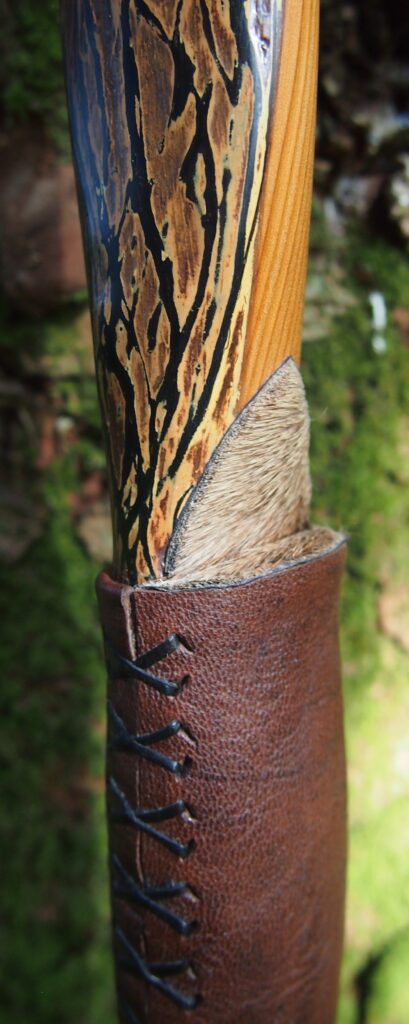
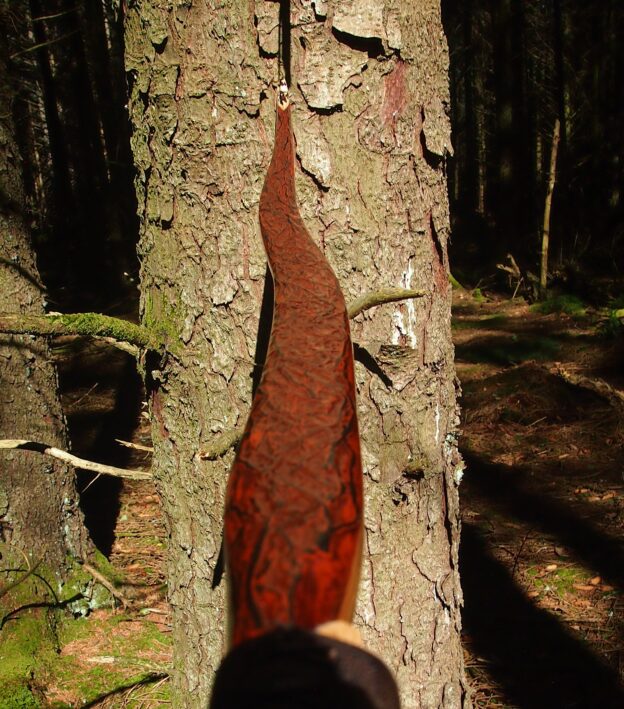
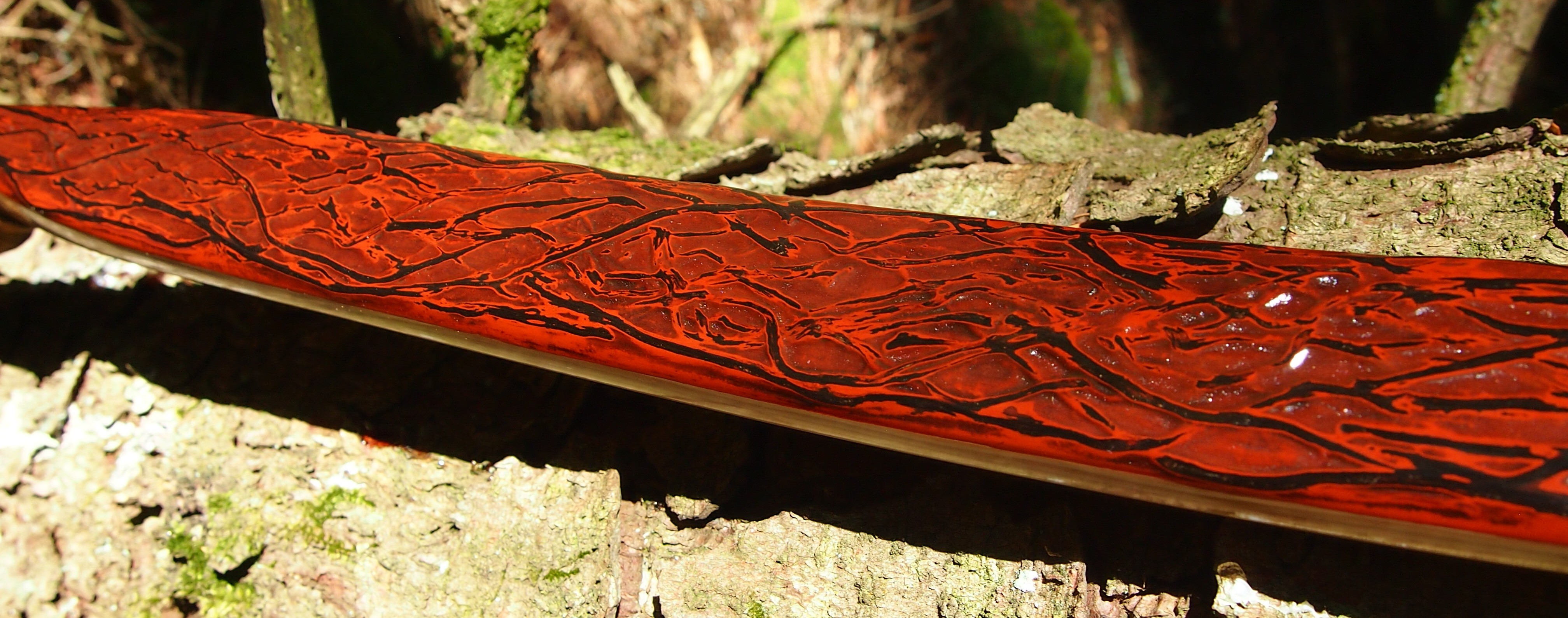
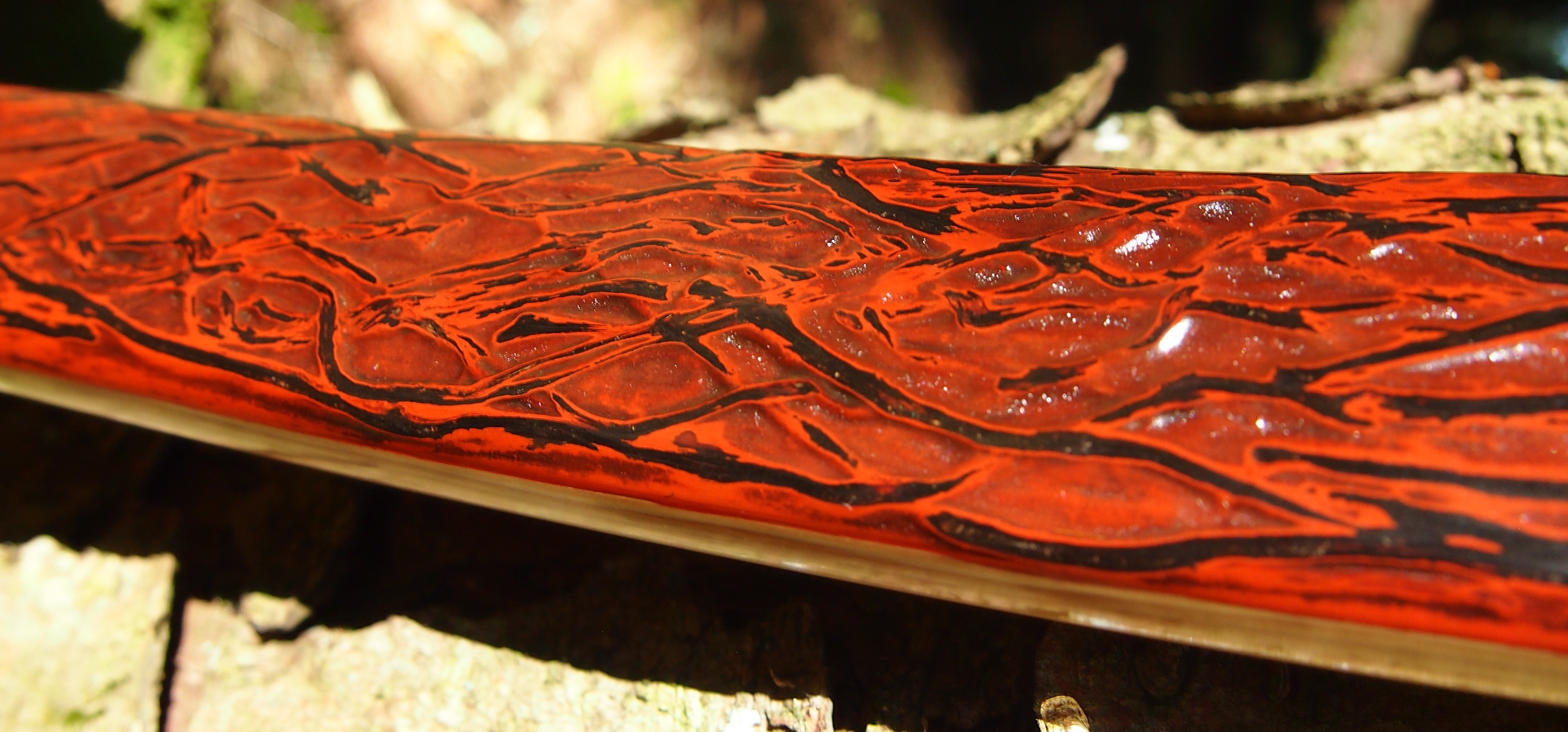
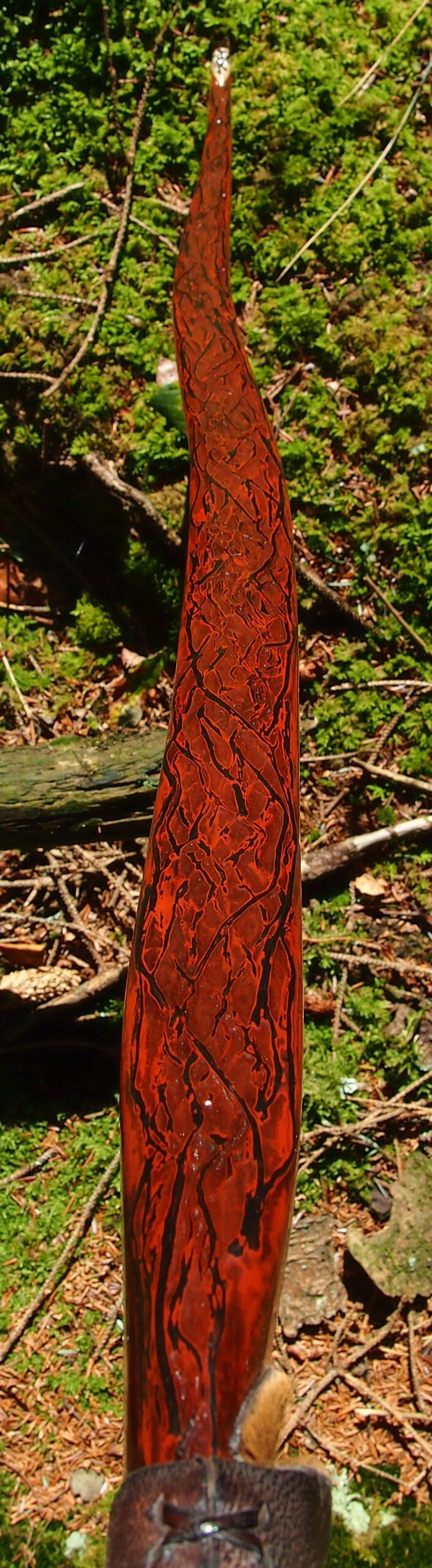
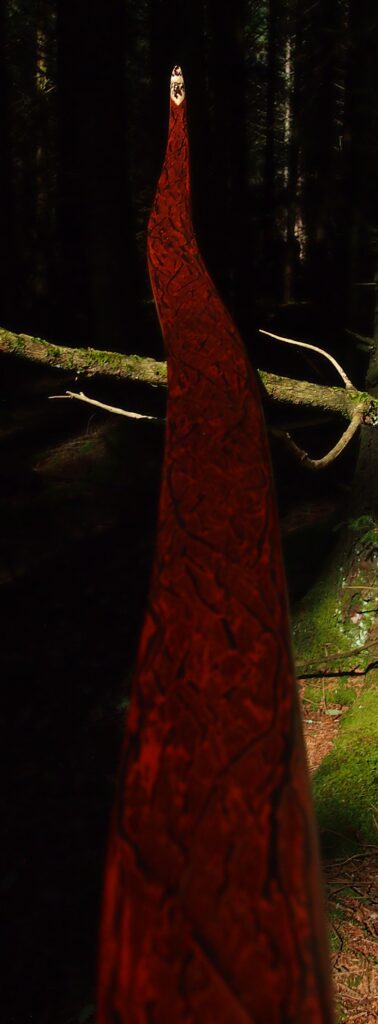
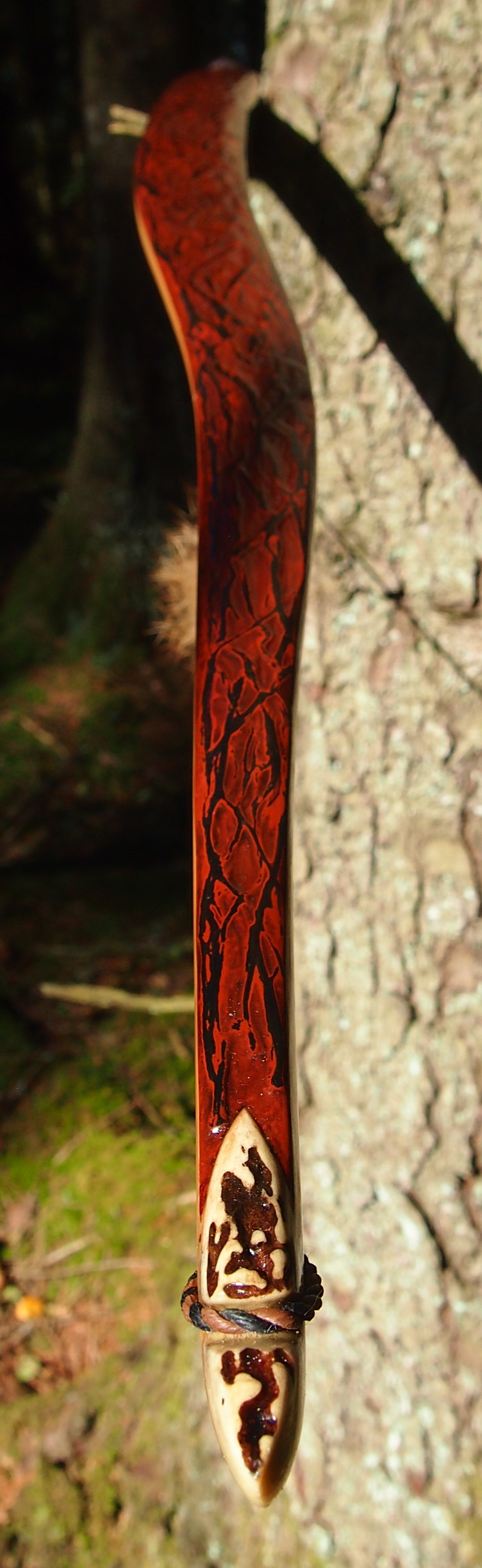
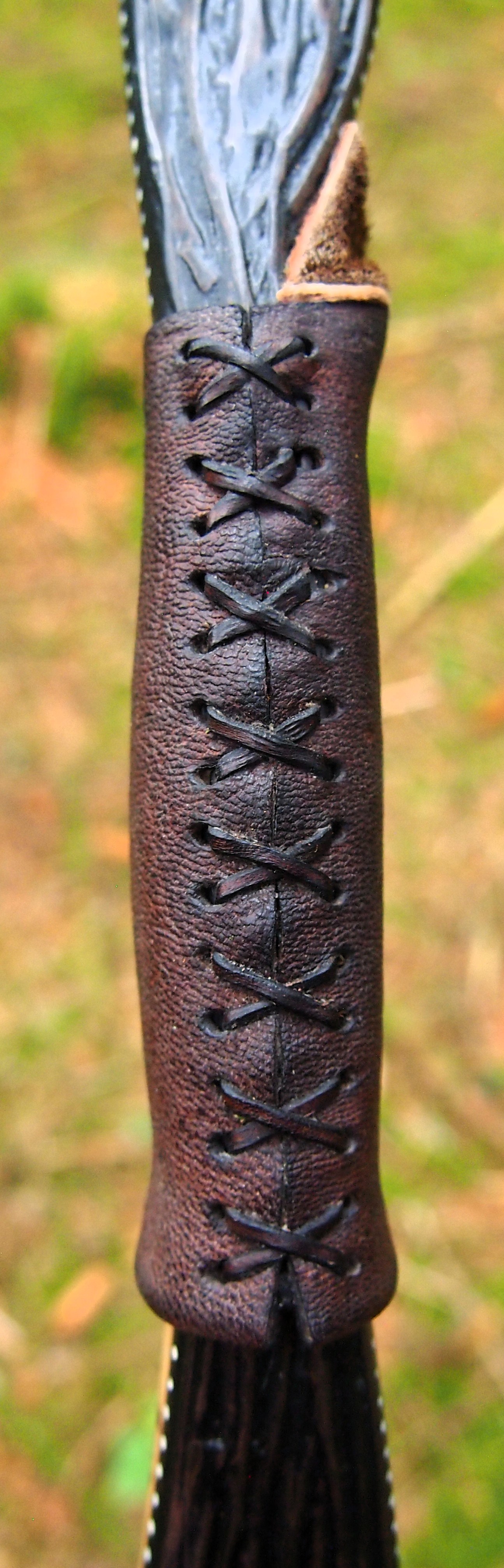
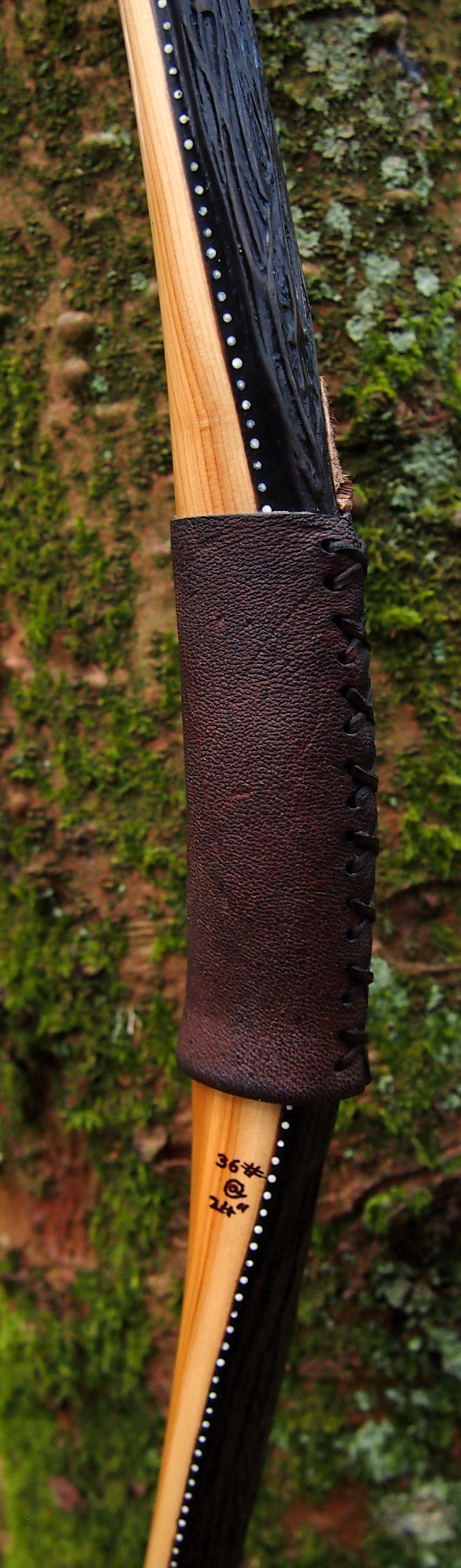
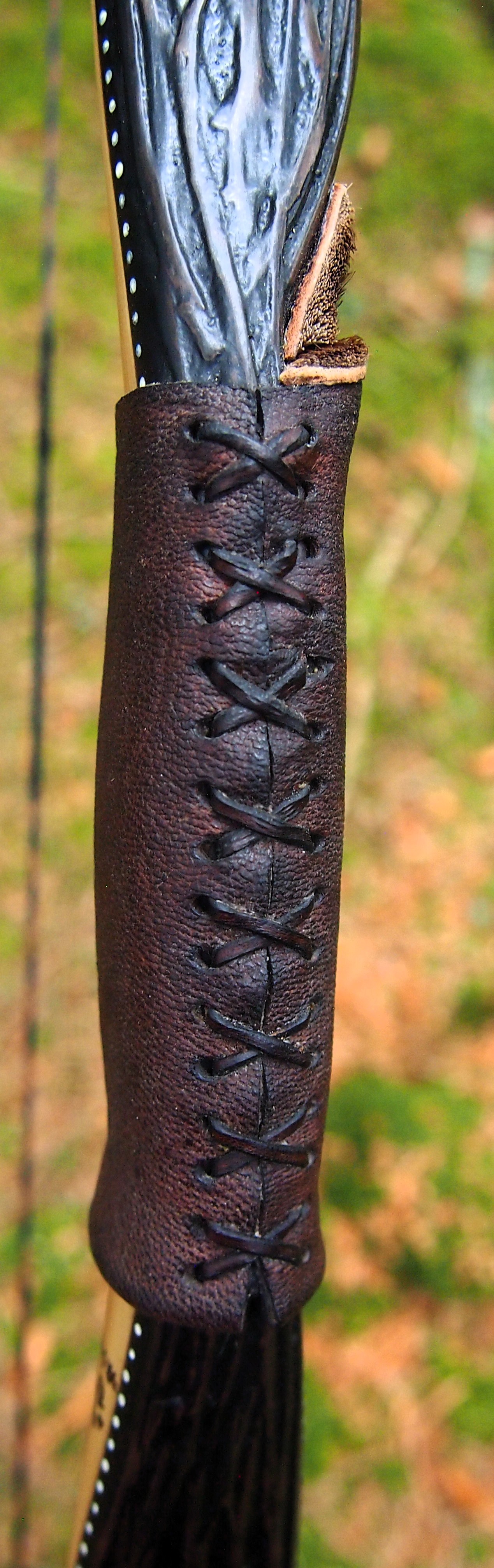
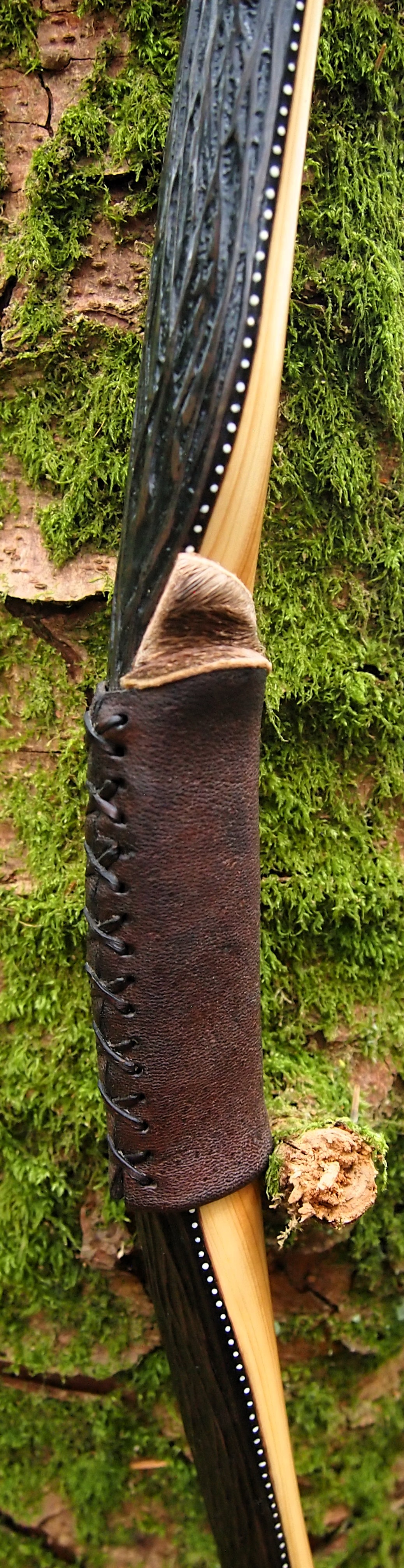
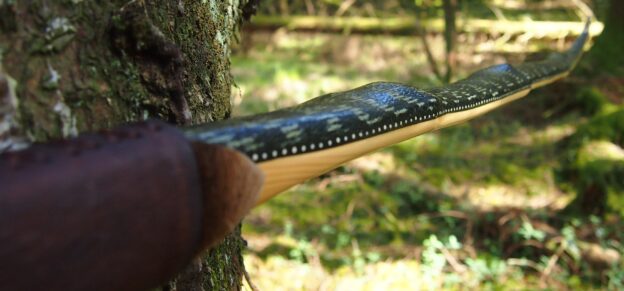
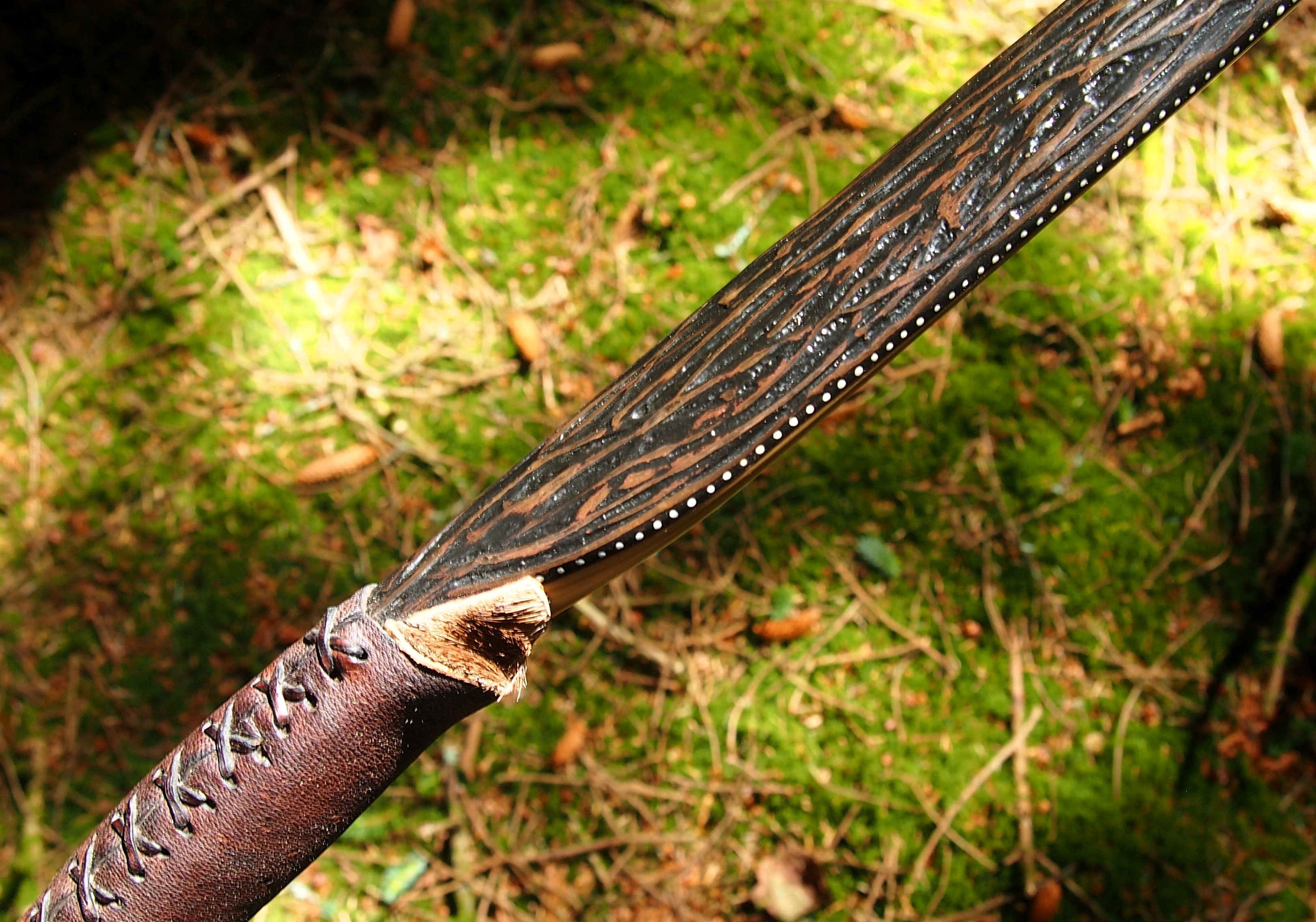
This time though I used a local Devon culm clay earth pigment as the underlying yellow/cream base colour. This contrasted wonderfully with the jet black sinew stands creating the mycelia look amongst the sinew backing. The tan wash to finish the look of the backing is once again concentrated spruce bark tanning painted on top of the creamy yellow clay pigment, then sanded/scraped through to expose the yellow/cream and dyed black sinew below. The tannin wash created a wonderful almost camo bark like affect on top of the creamy yellow, which almost looks like a natural creamy yew sapwood colour. This creamy yellow colour is fitting given the complete absence of any actual sapwood!

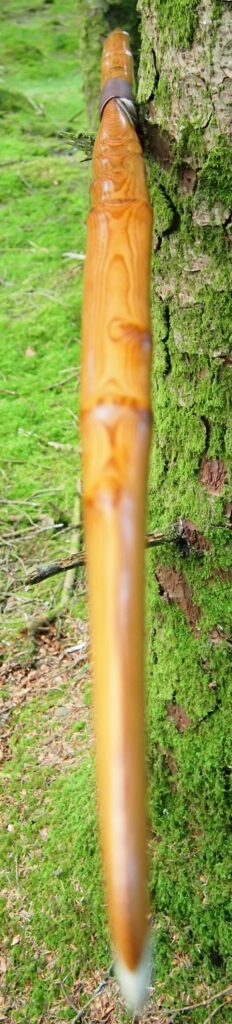
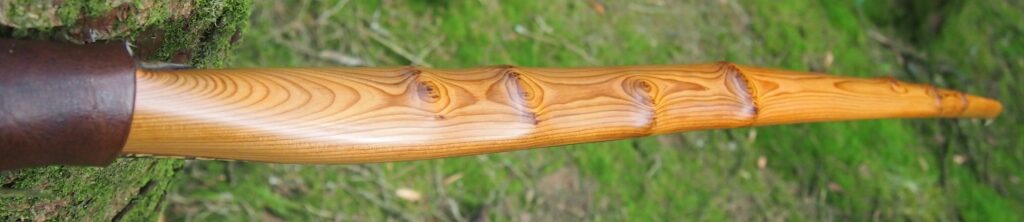
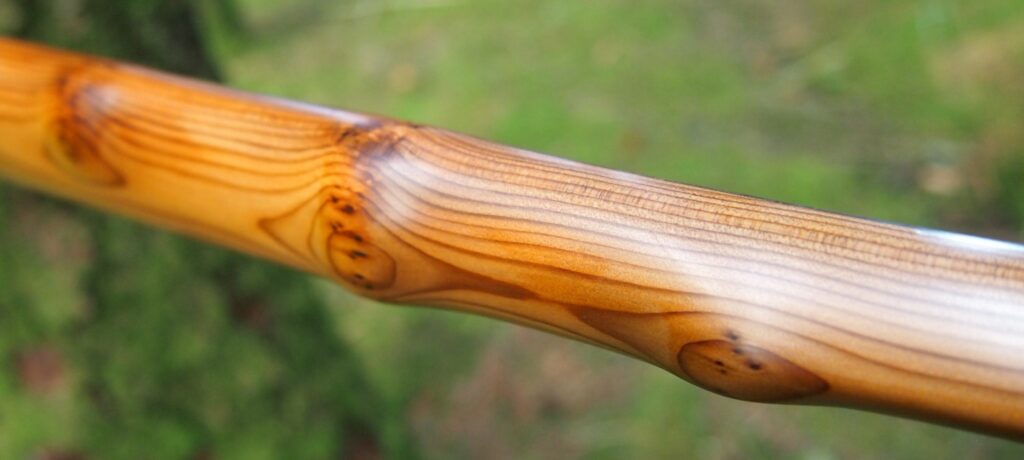
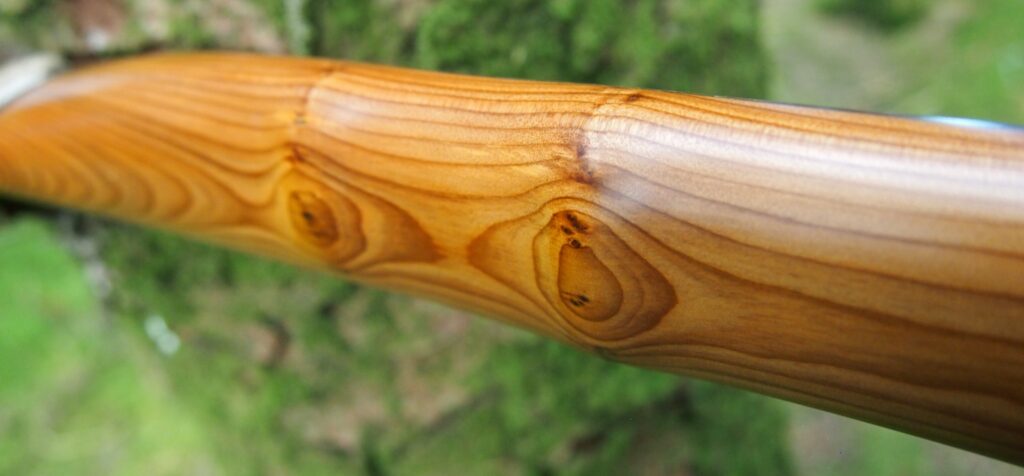
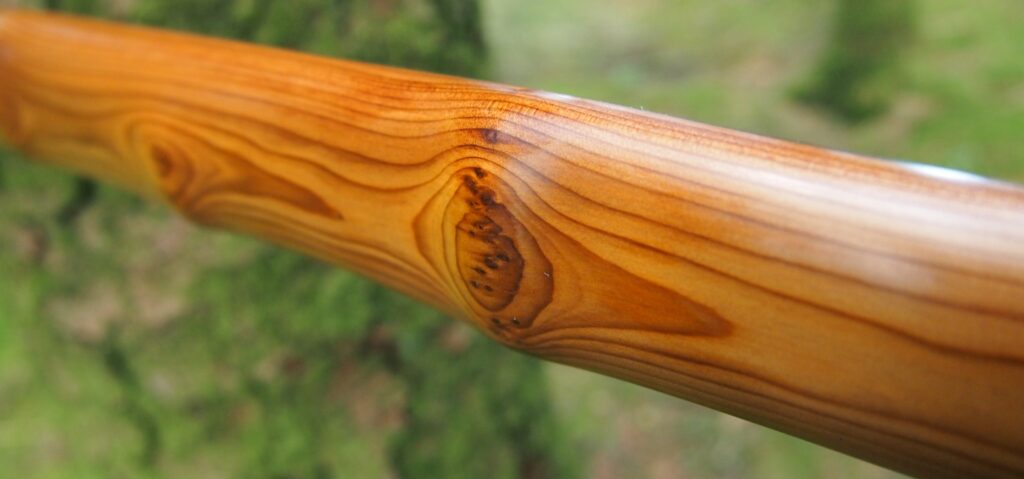
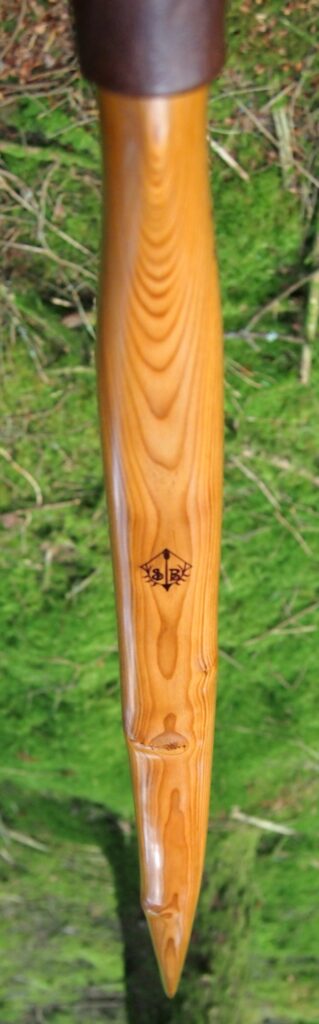
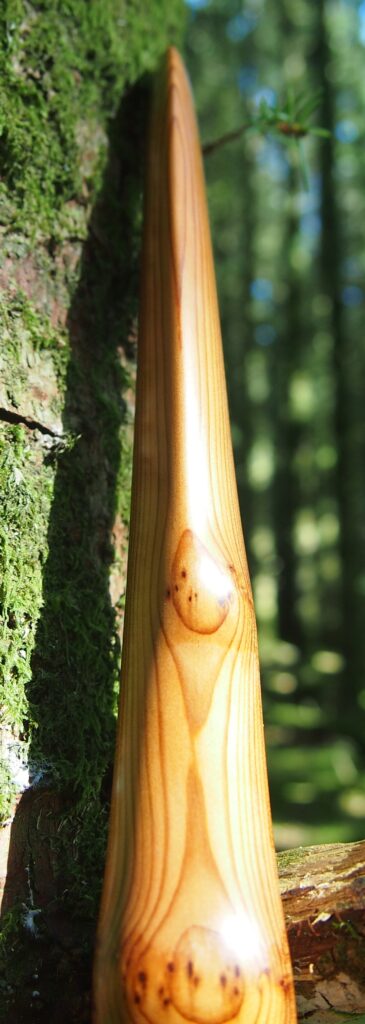
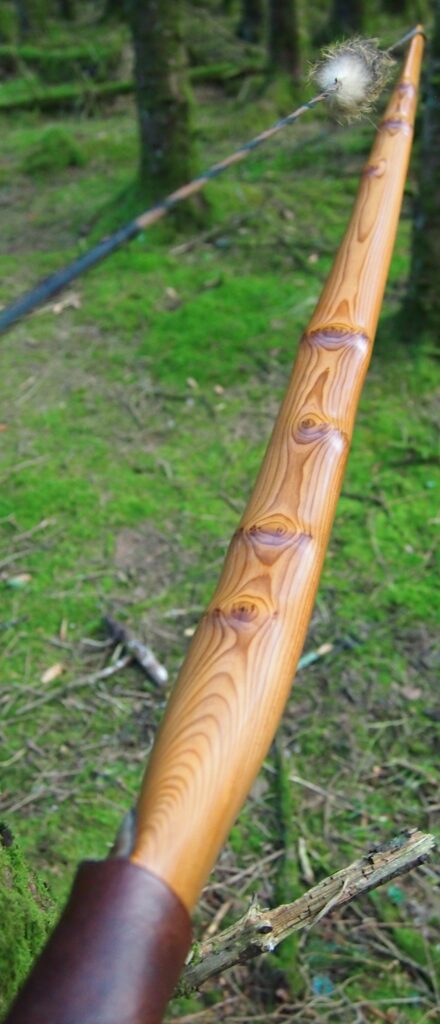
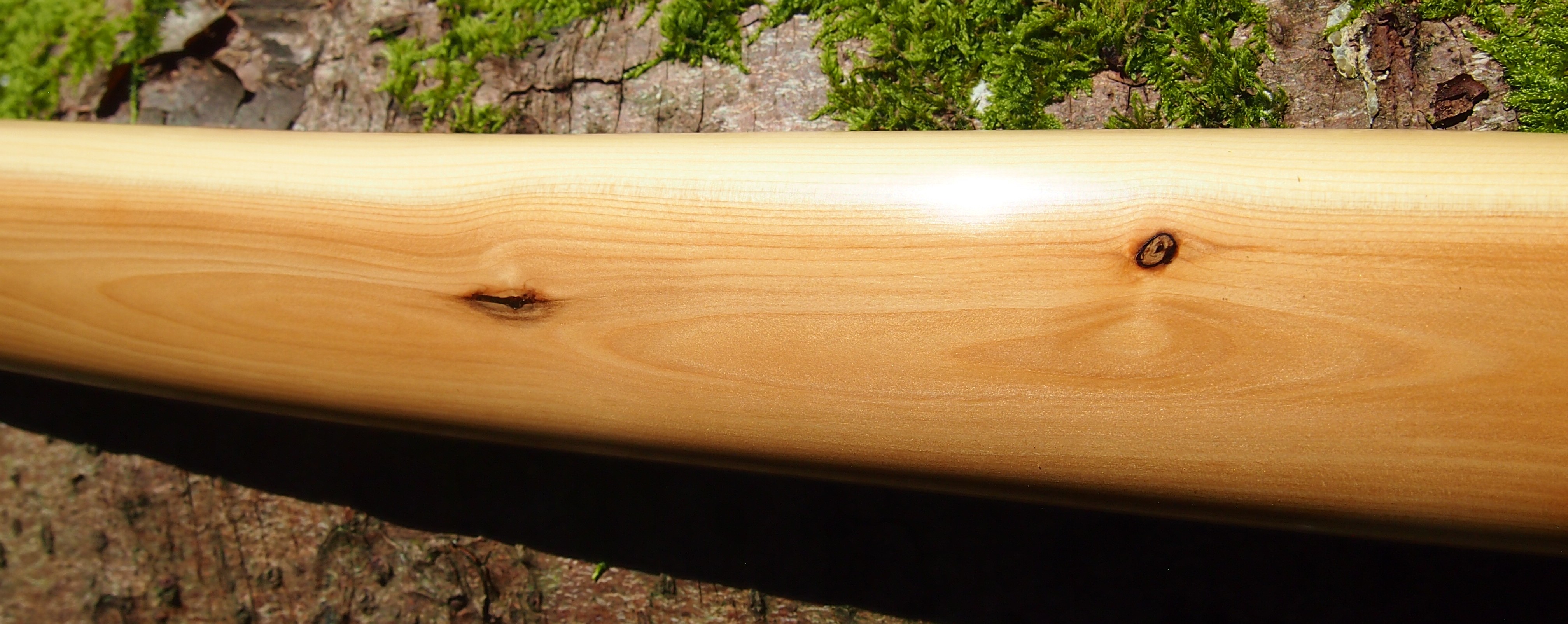
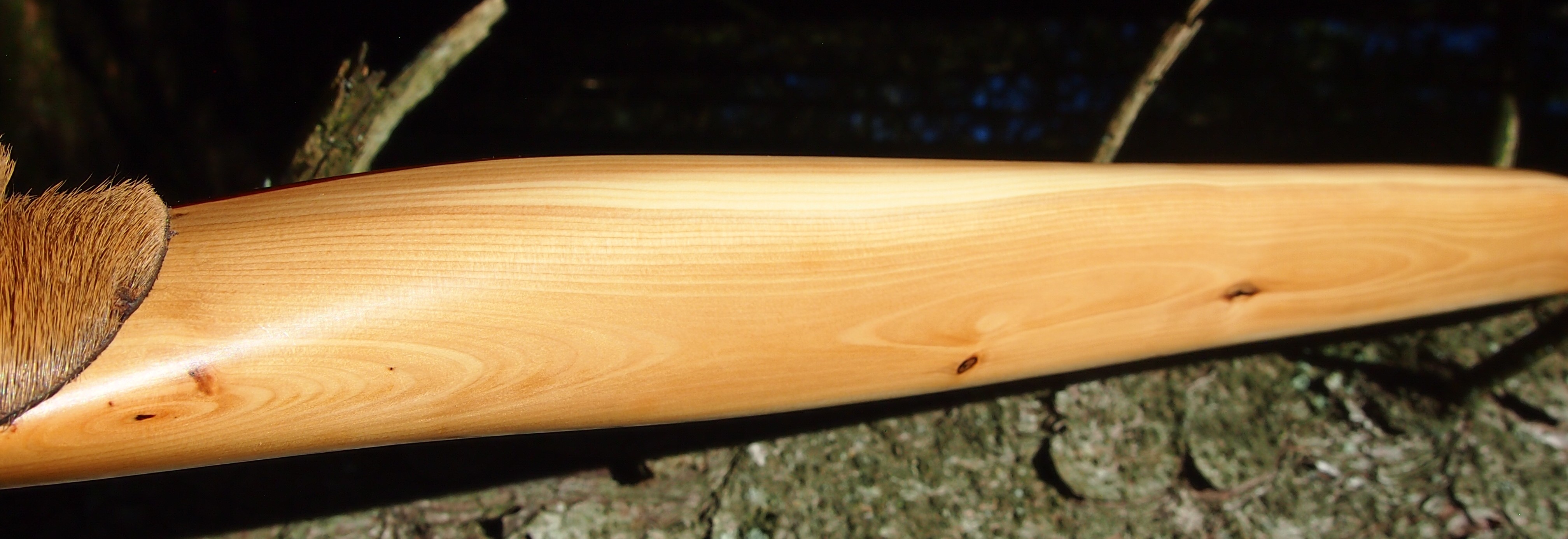
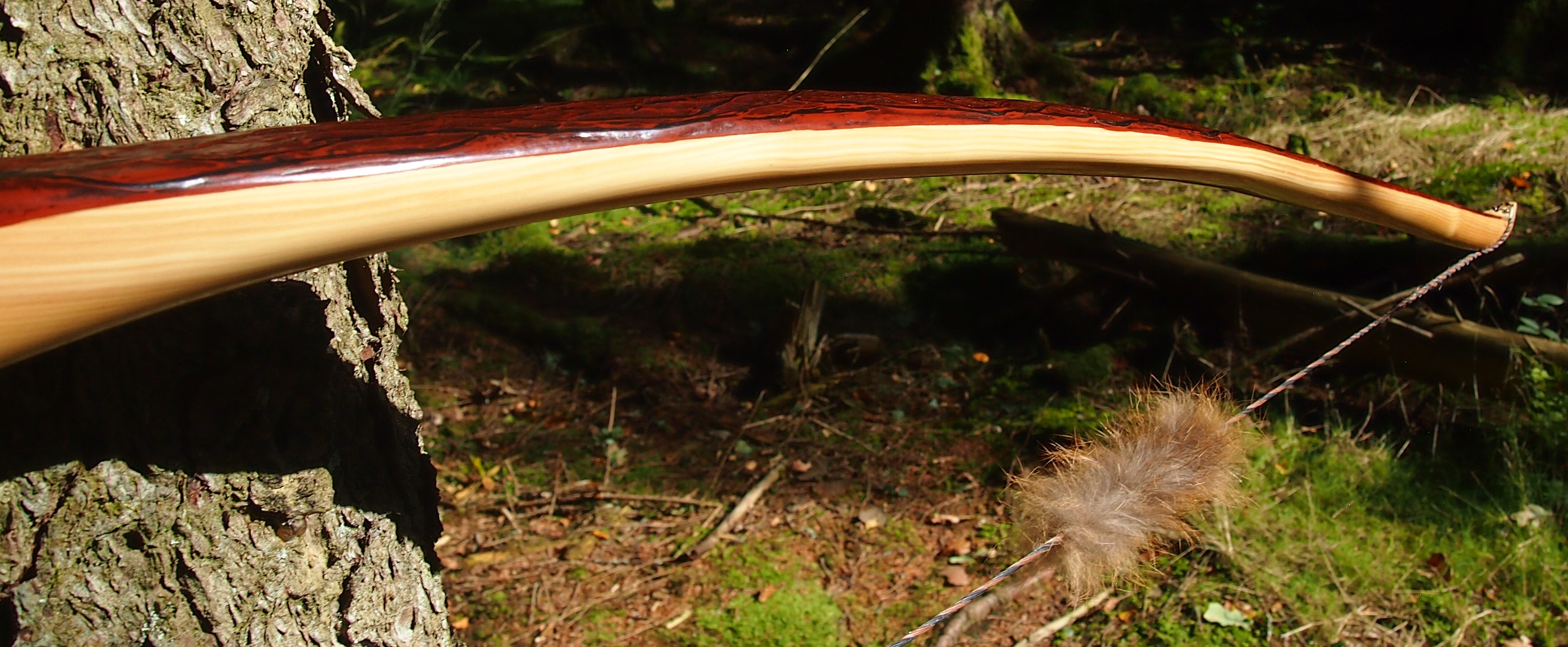
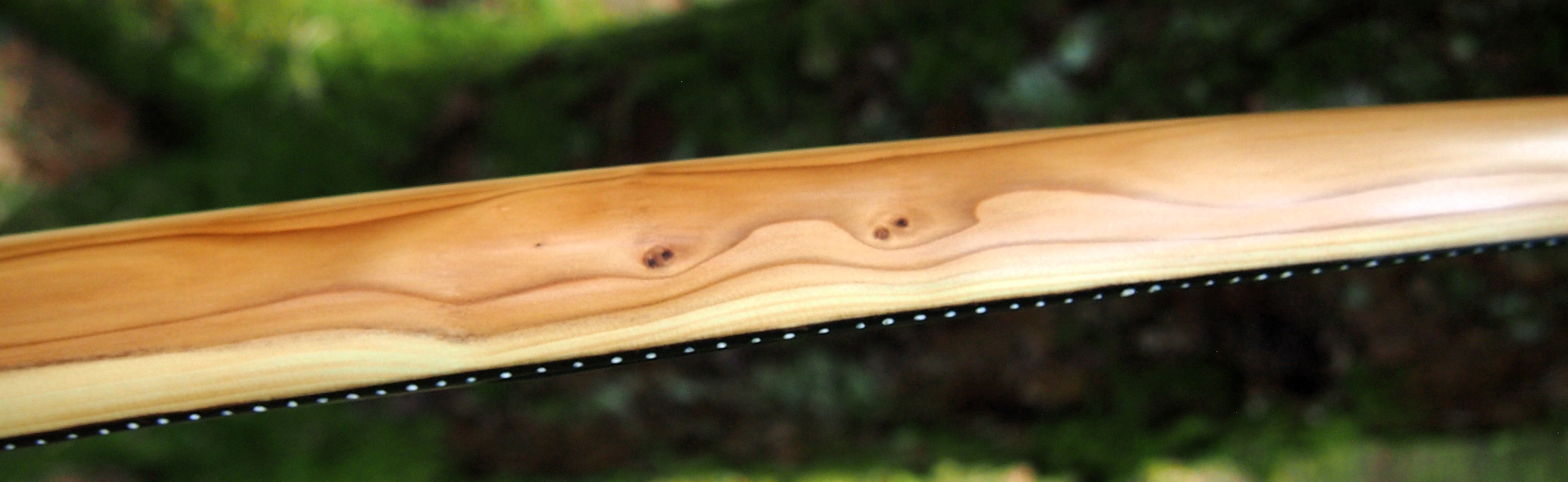
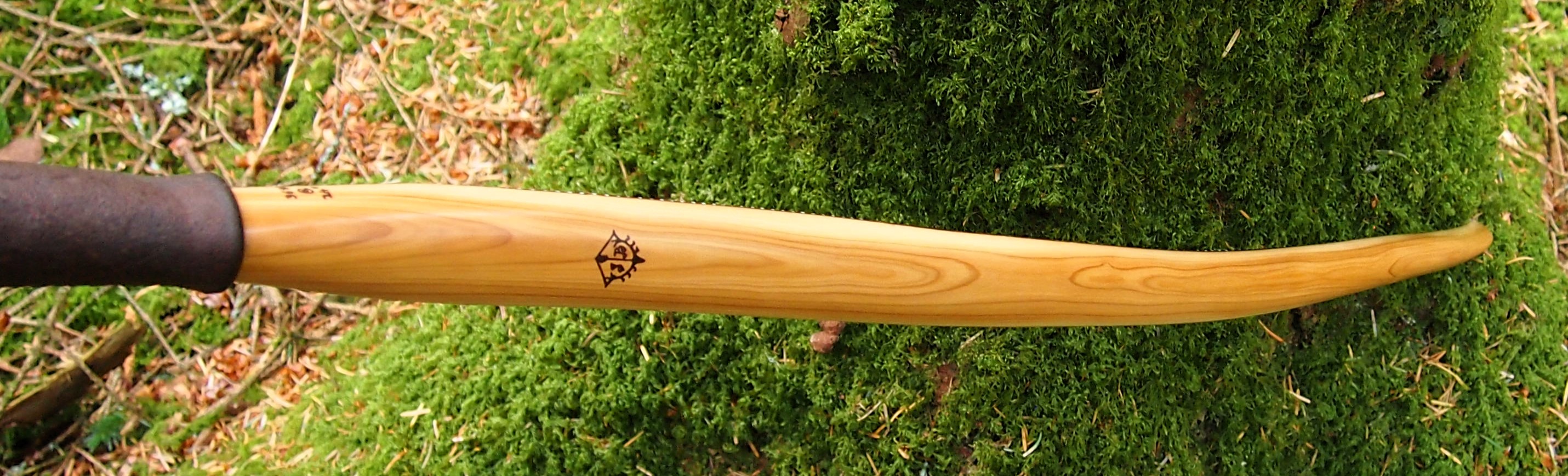
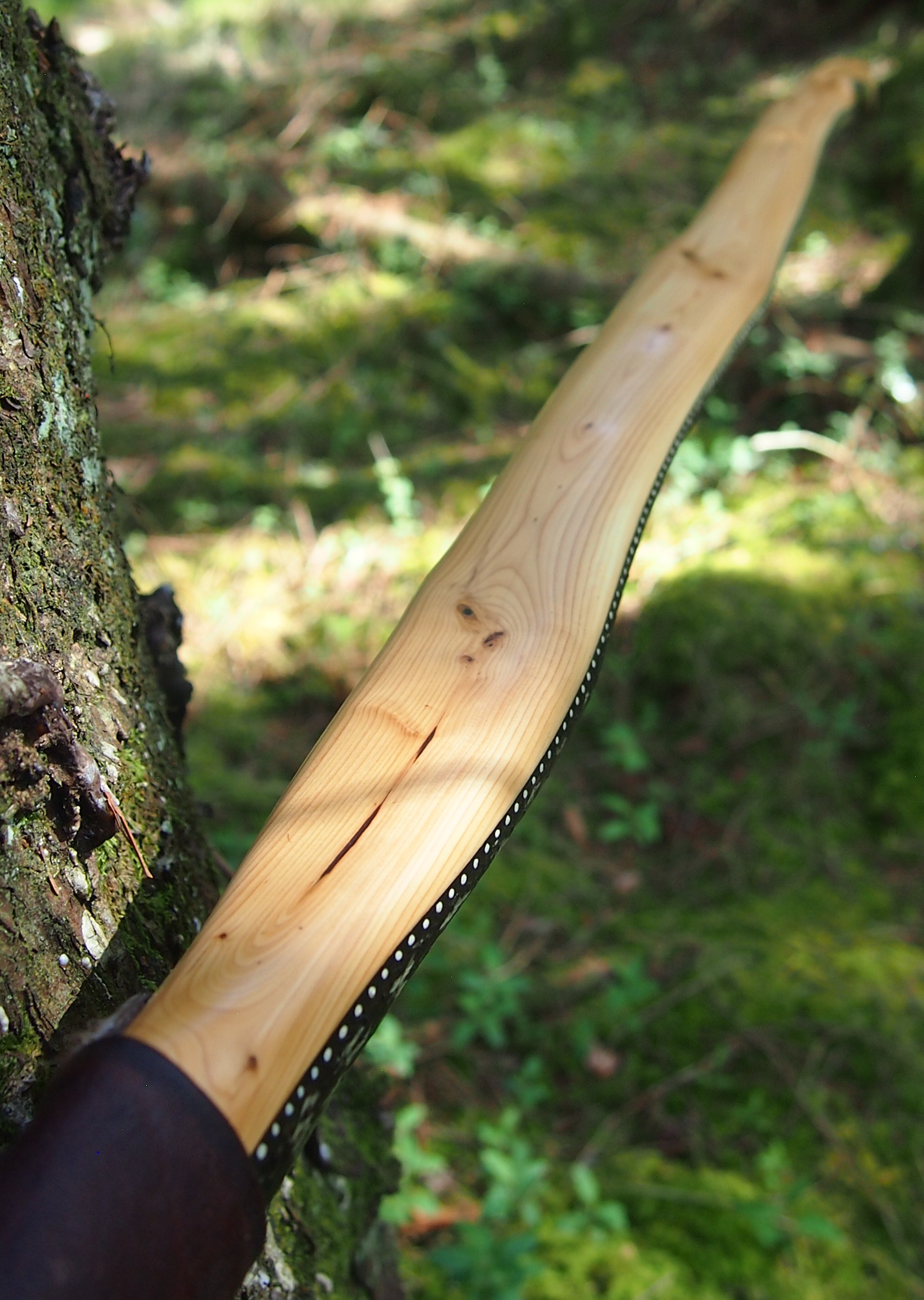
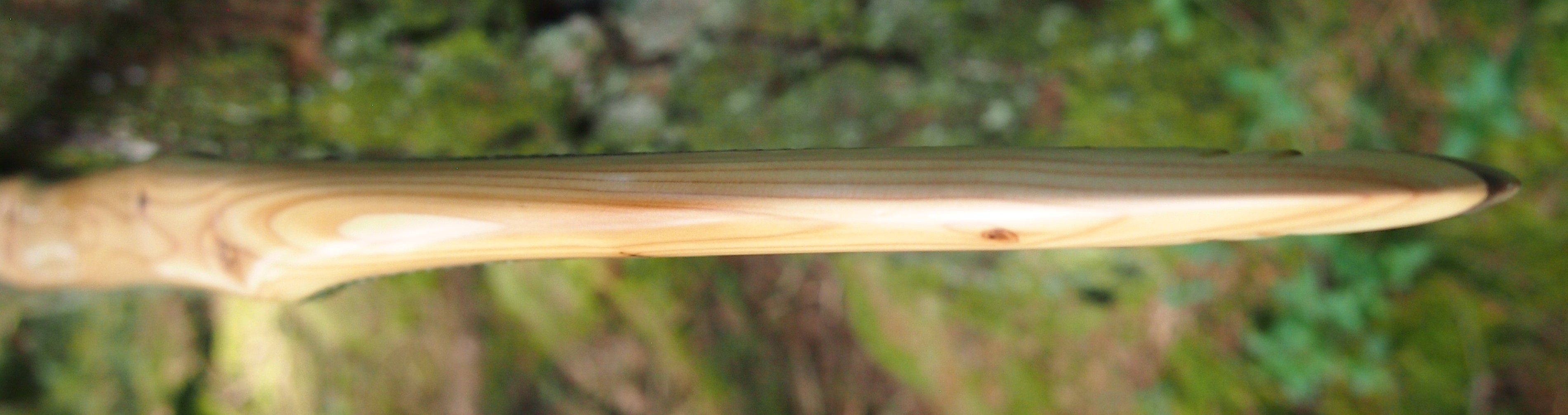
After sealing her up with many coats of shellac she got the polish and bees wax paste treatment leaving her with a wonderful satin sheen which realy make the rose gold almost translucent heartwood grain really pop. Especially beautiful are the pin whirls which I left nice a thick to remove any risk of pinching. The wood is a absolutely stunning even if I do say so myself!

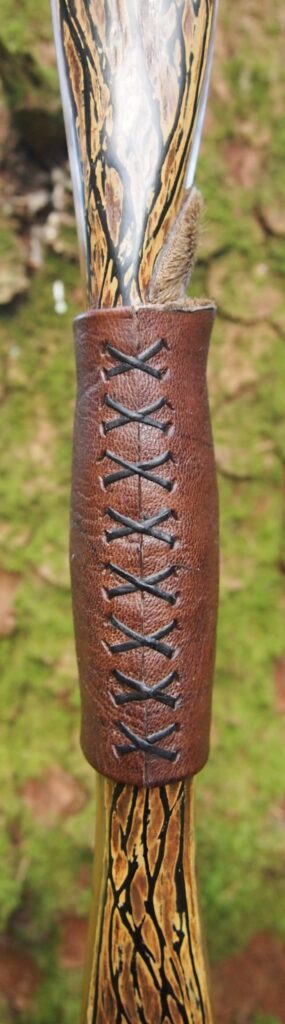
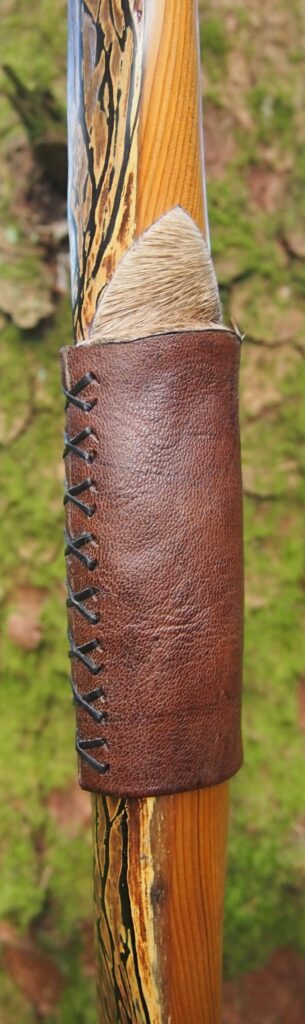
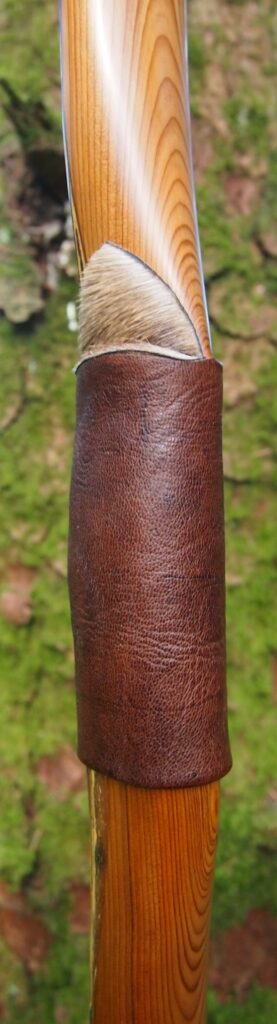
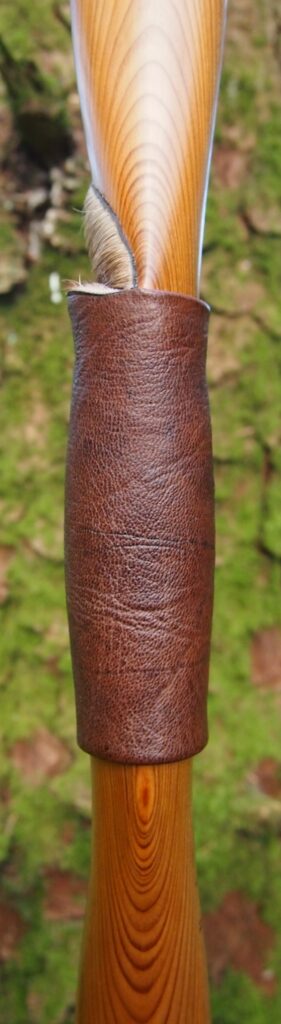
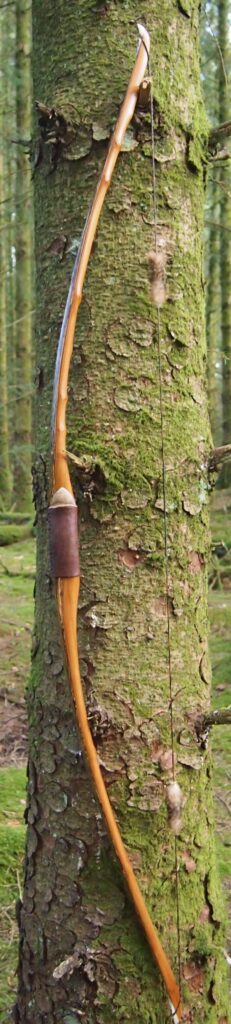
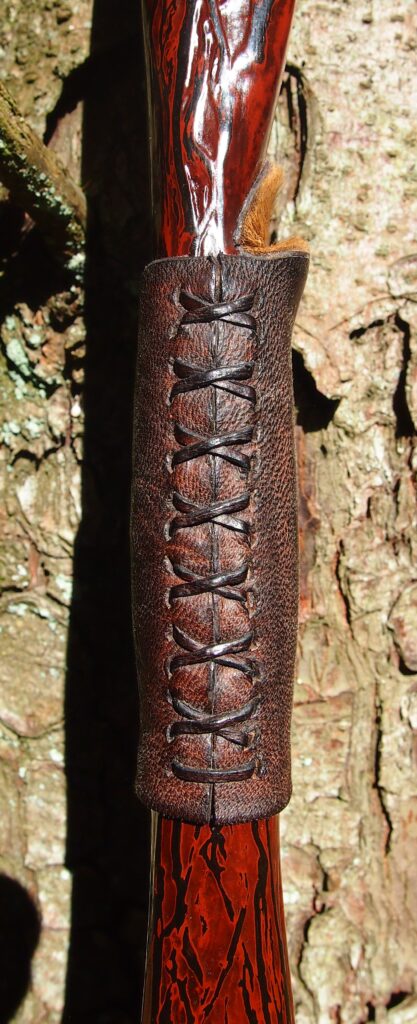
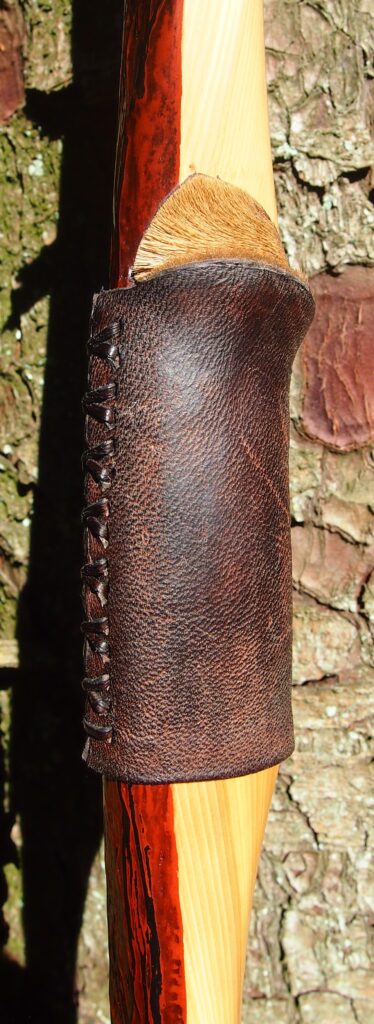
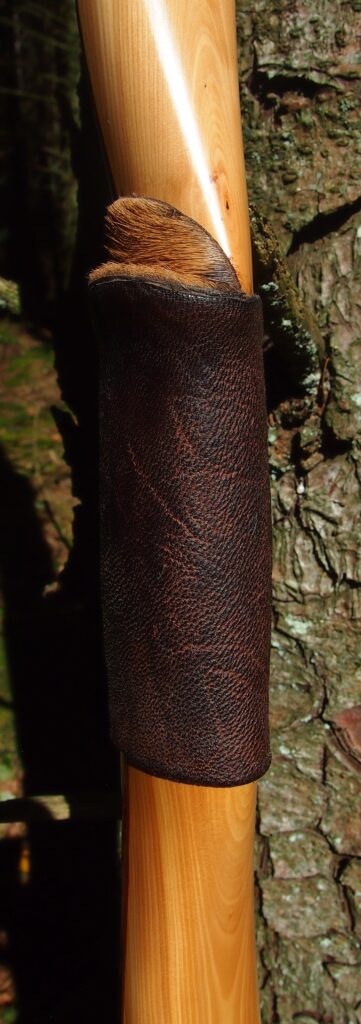
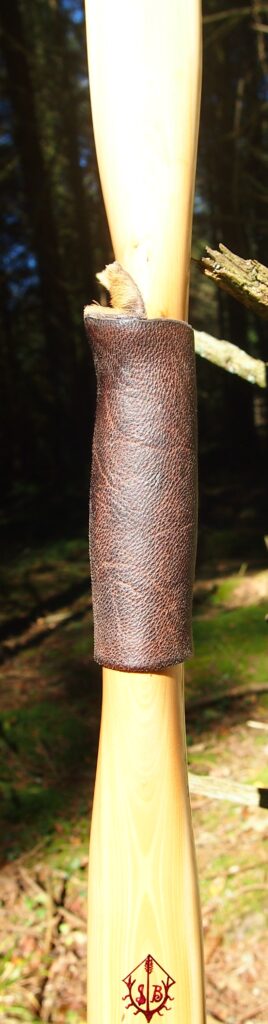
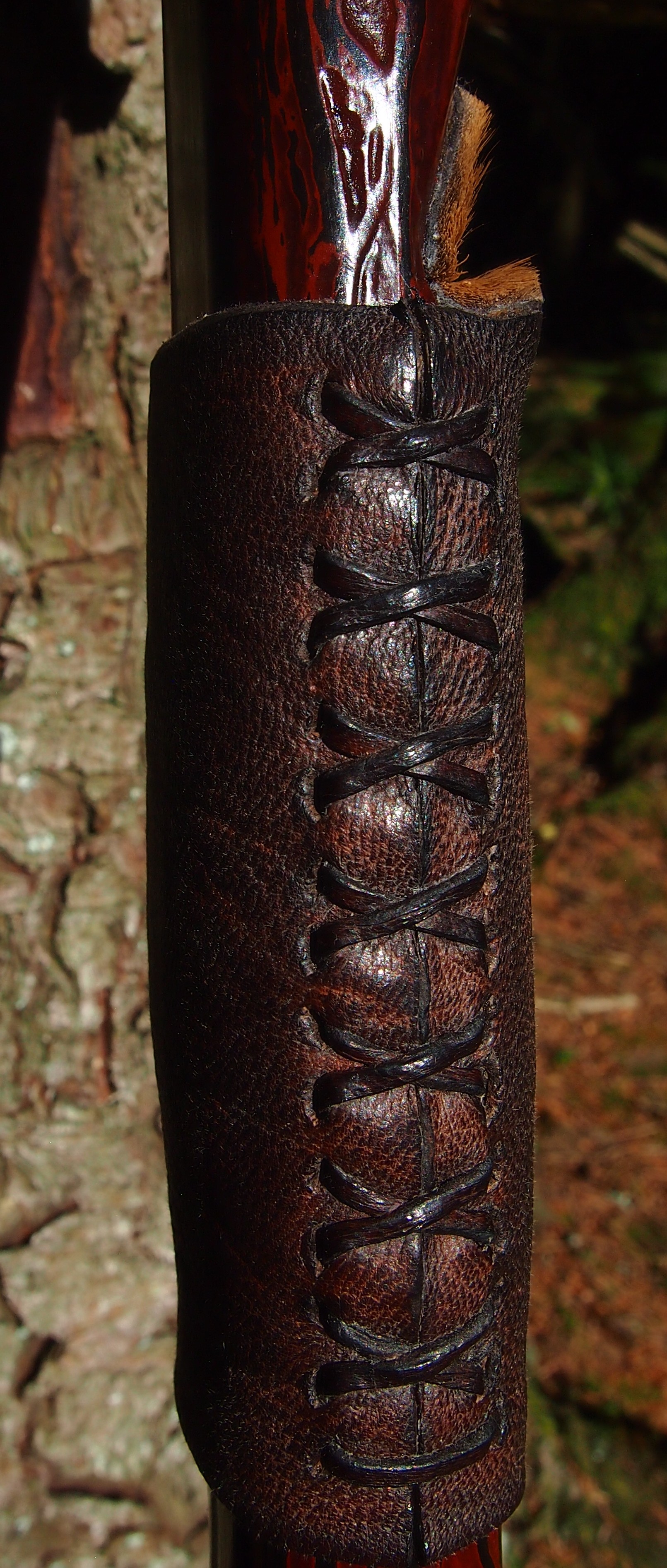
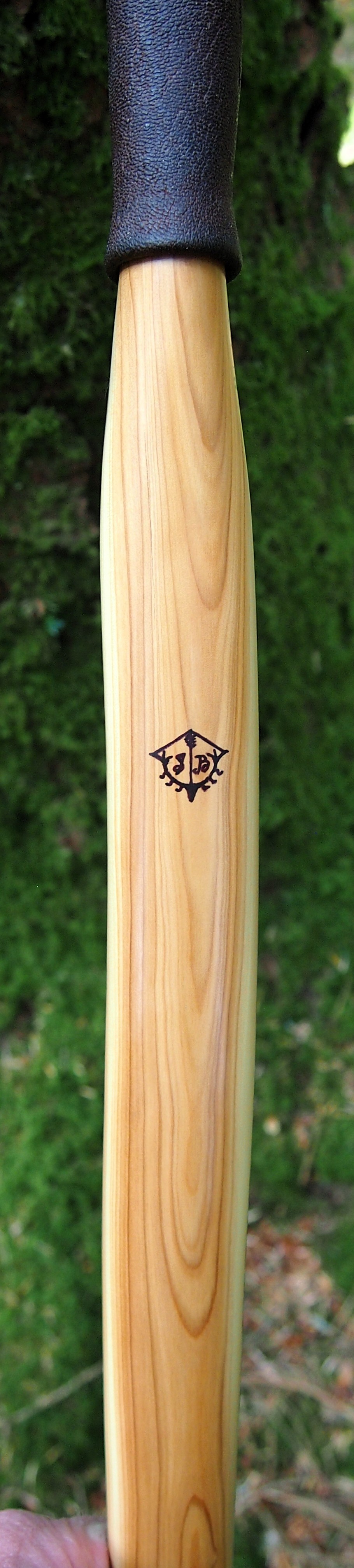
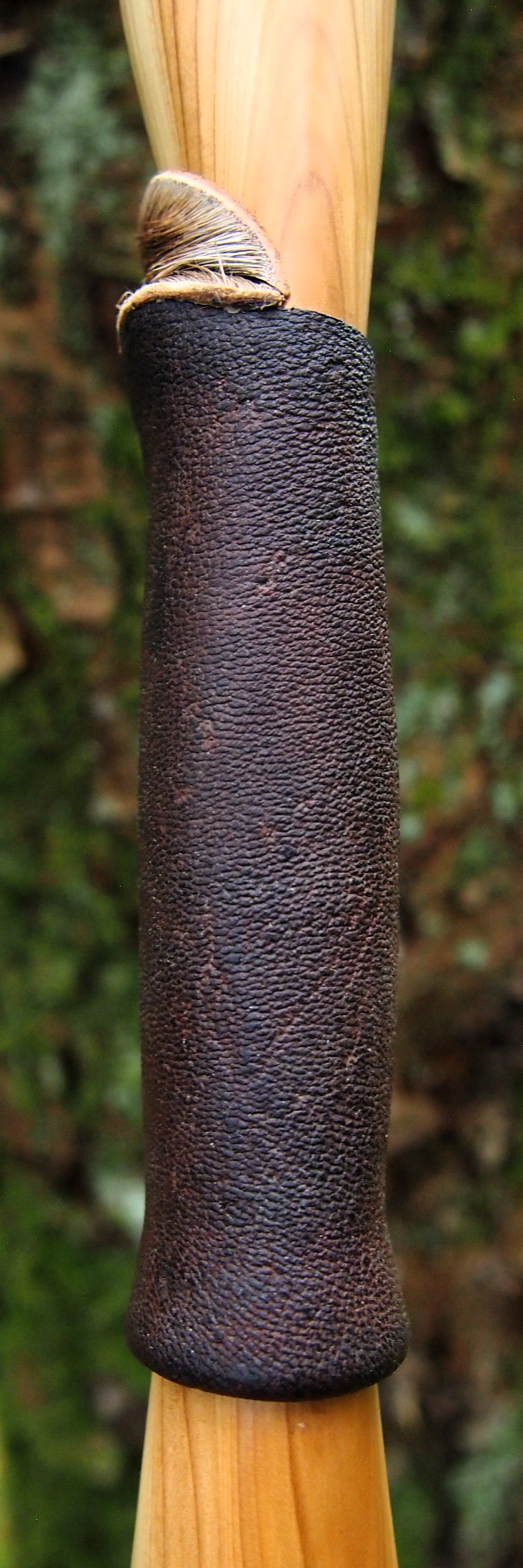
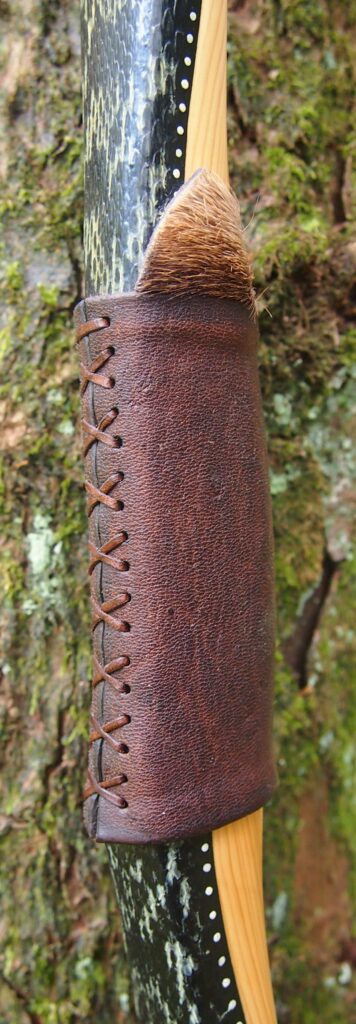
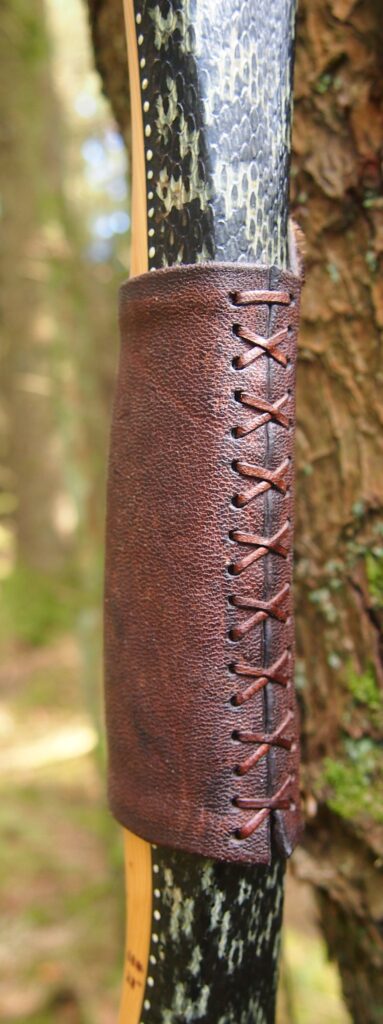
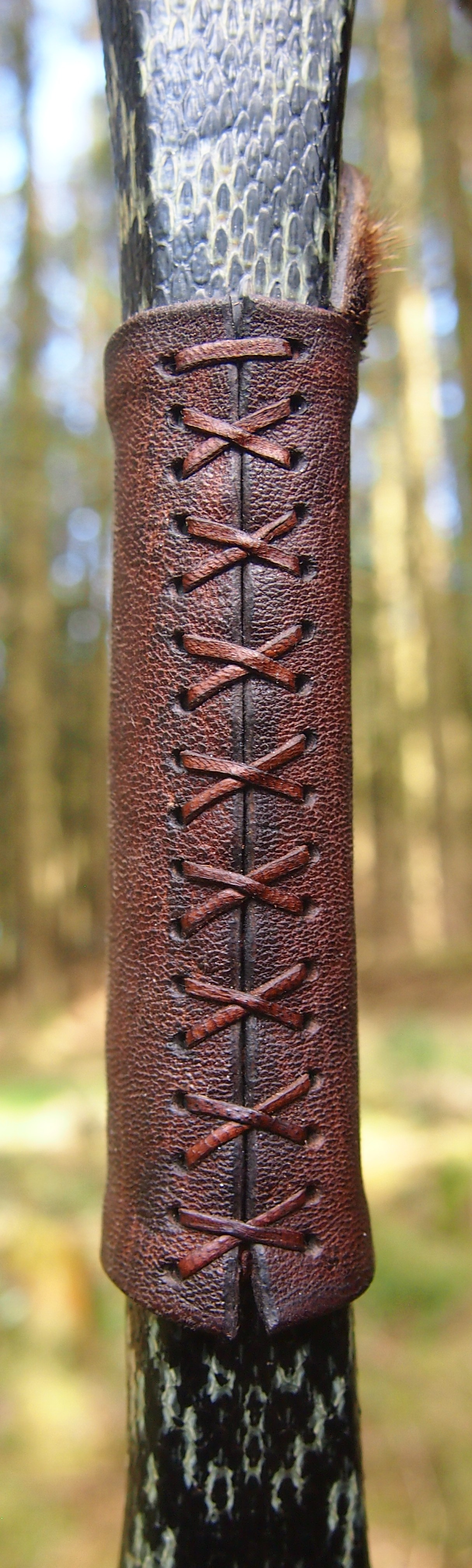
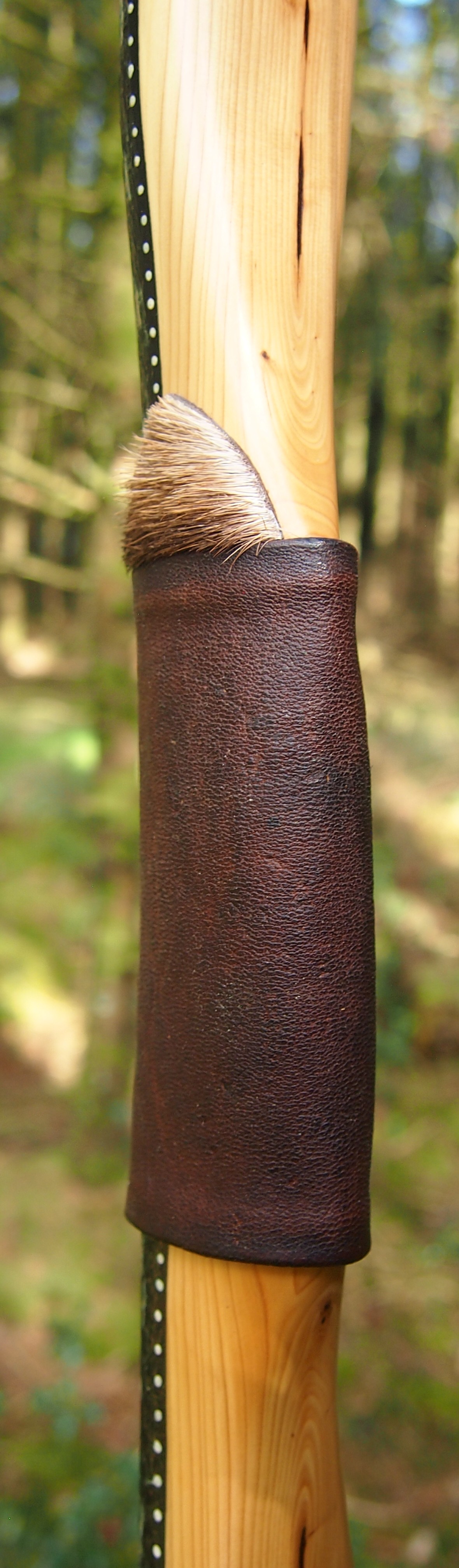
For the handle wrap and lacing I used some of my home produced spruce bark tanned red deer leather. And for the arrow shelf/pass I used my own produced bark tanned red deer hair on shin leather. I love this material for arrow passes as its both silent to shoot across and really hard wearing.

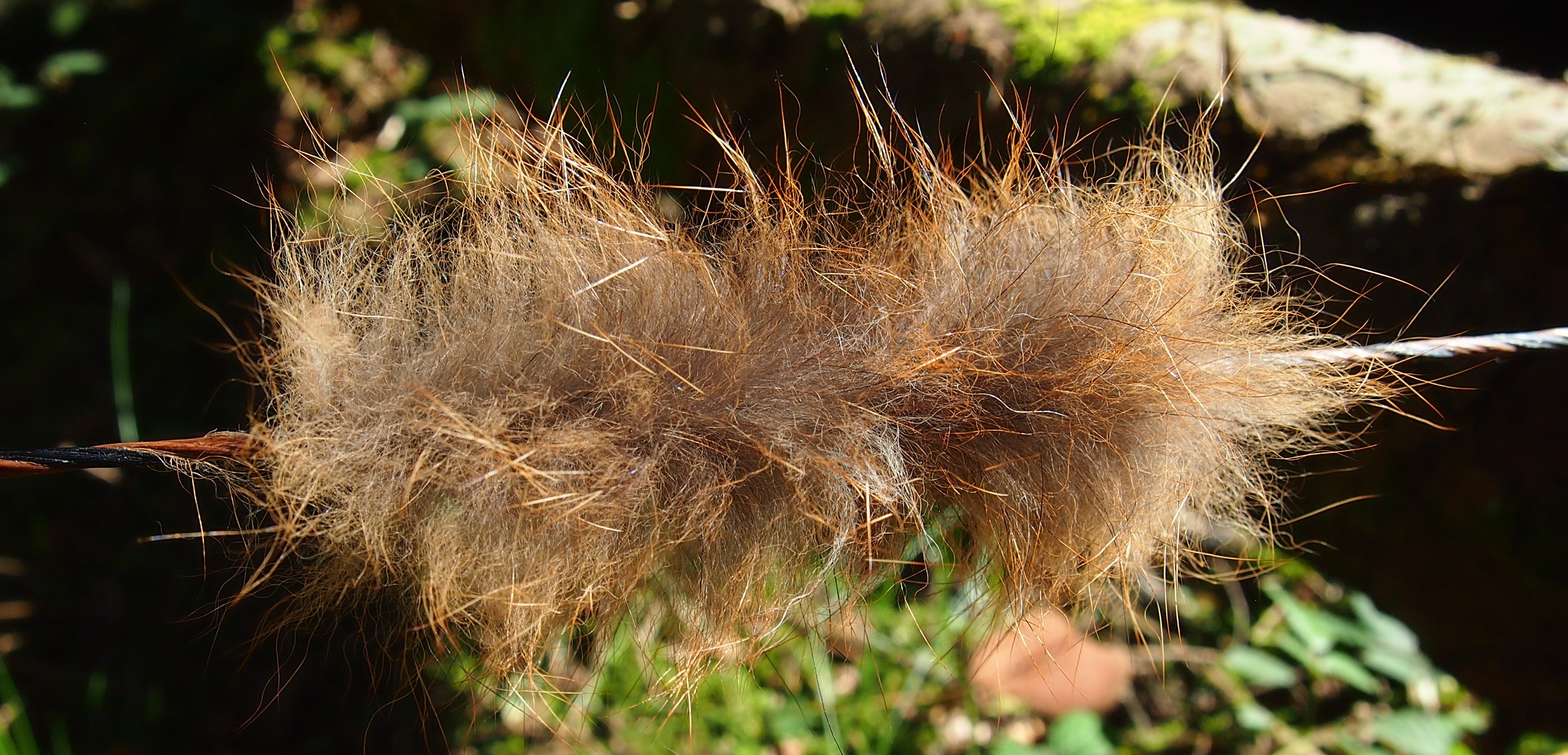
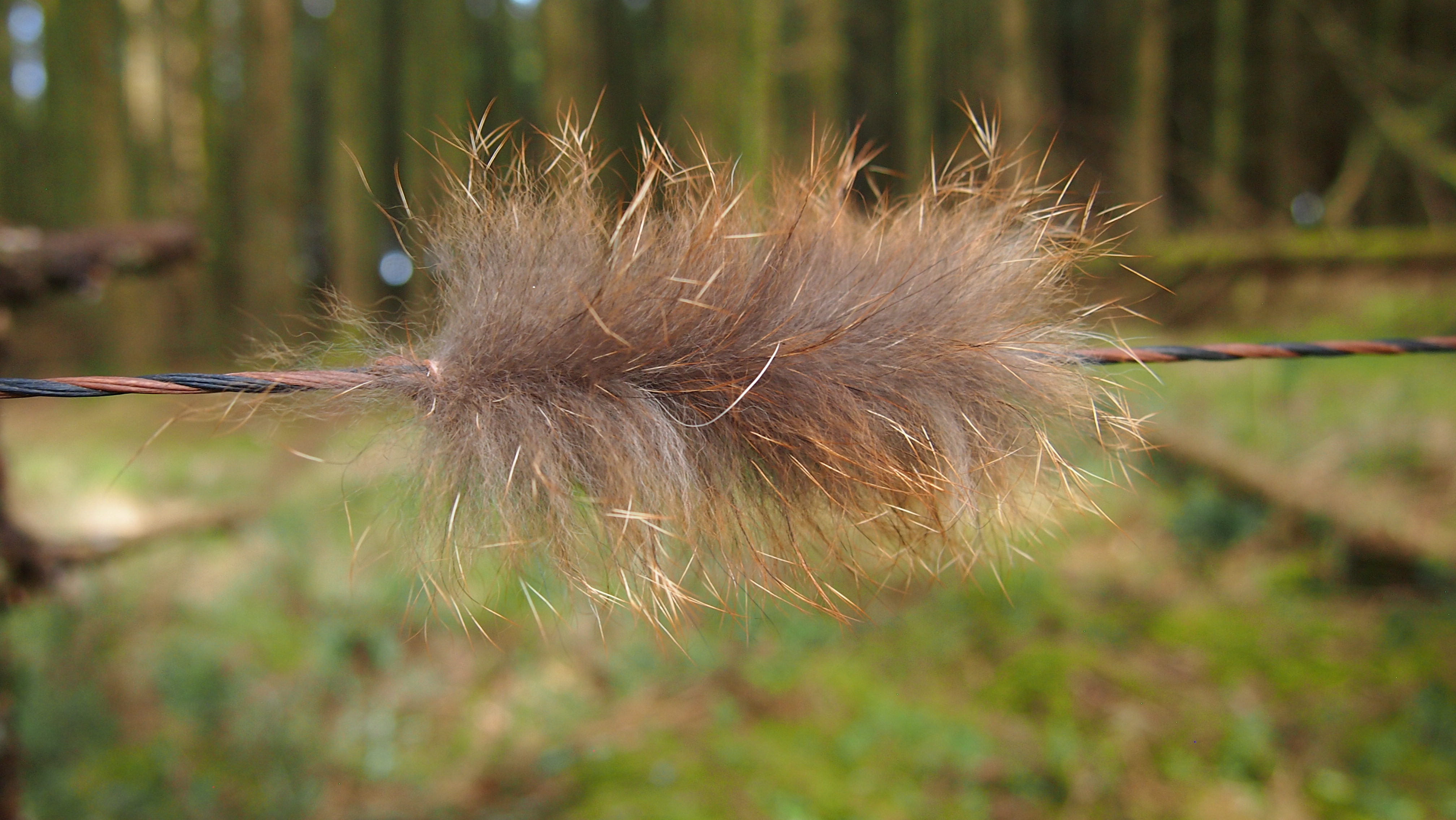
The string is 12 stands of B55 fitted with double loops and my own produced bark tanned wild brown hare fur puffs for silencers making this bow whisper quiet to shoot.

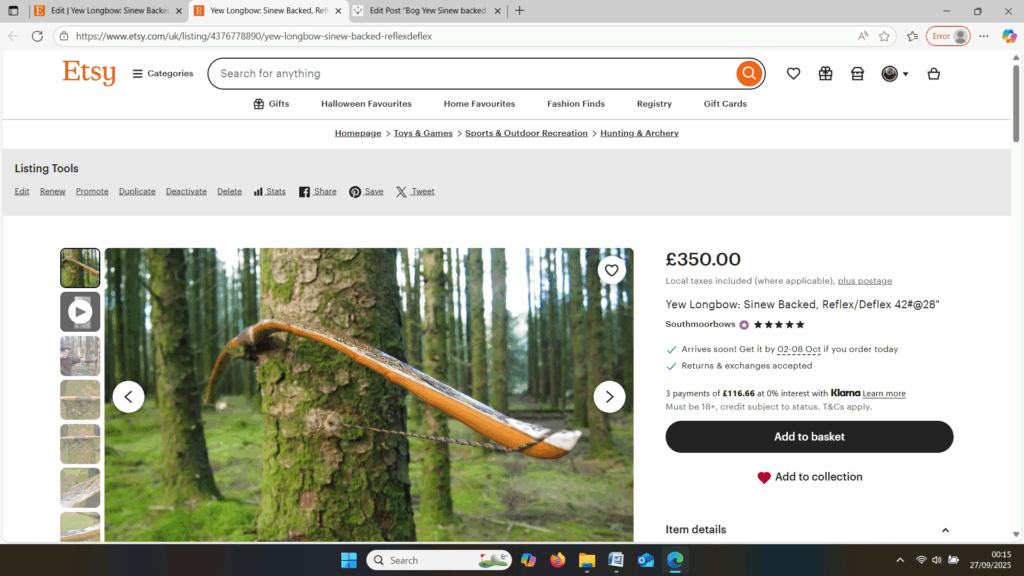
So here she is. I hope you enjoy the look as much as I do, and please feel free to leave a comment below telling me what you think. This bow is now available to purchase in my ETSY shop here: Yew Longbow: Sinew Backed, Reflex/deflex 42#@28″ – Etsy UK
Alternatively you can contact me directly through the Southmoor Bows contact page here: https://southmoorbows.com/contact/

Specifics are as follows:

Draw Weight: 42lbs at 28”

Mass: 970 grams

Length NTN: 65”

Width: 1 -5/16” at widest part

Tips: 6” static 3/8” wide at the nocks.

Back: lightly crowned with with a pyramidal face profile.

Belly Profile: Working limb sections D shaped, transitioning at the tips to ridged shaped cross section.

Tiller: Eliptical. 1/8” positive

Brace height: 5.5″

Snakey Sinew backed Yew R&D Flatty (Zombie Killer) Bow No: 25

This bow was built from a really nice clean English yew stave which had been put up in my barn rafters to season back in 2020. It measured 68″ in length and had about 8 inches of almost perfectly symmetrical distributed natural reflex running from end to end. This was obviously way too much reflex to be used as it was, but with some tweaking, I figured most of that reflex could be retained and put to great use.

The cleanest face on this stave was going to make the back of this bow and it only had a couple of tiny pins showing through the sap wood/bark. If it wasn’t for the fact that the sapwood was so thick, I could have just popped the bark off and called the back done. But I clearly needed to get the sapwood down from around 1/2″ thick to something more like 3/16″. This would maximise the potential to incorporate all the lovely heartwood this stave had to offer. Plus I intended to sinew back this bow so in all honesty sapwood retention wasn’t even necessary.

Knowing that the back of this bow was going the be backed with 3oz of Red deer leg tendon sinew, I didn’t have to worry about chasing a ring on the back. The sinew would make the back of this bow totally bomb proof so I just hogged off nearly all the sapwood leaving just a bit around the sides as an aesthetic compliment. I do like some sapwood on a yew bow, even if just to contrast against the heartwood in that classic “coffee with cream” composition. So I left enough sapwood around the edges so as to please the eye, but in truth this bow is comprised of mainly heartwood.

After flattening the back out evenly I laid out the bows face and thickness profiles so I could get the overall dimensions roughed out. For this build I planned on making a R&D pyramidal flatty but not too wide and with a slightly thicker rounded belly. So once the stave was roughly bow shaped I steamed the handle section and put the stave onto one of my R&D forms so I could bend a good bit of deflex into the handle. This was to reduce the overall reflex to something more manageable so it would be easy to string and less stressed at full draw.

Whilst the stave was on the form I used the heat gun to straightened out a slight issue with the string alignment. And I also took the opportunity to even up the reflex in both limbs so that they were as close to matching as possible. After a couple weeks for the handle section to dry out post steaming, I took the blank off the form and was happy with the overall shape and alignment.

With the deflex now added to the handle the blank was now carrying around 3″ of overall backset/reflex, which was far more realistic and functional. Next the blank was sinew backed, wrapped up and put away fixed to a drying form to retain the wonderful new shape and to allow the sinew to fully cure for 6 months.

After the sinew had cured out completely, the stave was inspected then very quickly tillered out to 26″. I find that blanks which have been shaped optimally prior to tillering are so much quicker and easier to tiller to full draw due to the even shape and profile achieved before the bow is asked to bend.

Once tillered to a point where the bow could be shot, I used it as my “stumping bow” for a couple of weeks of stump shooting out in the woods. The reflex held solid, as did the positive tiller and string alignment. Shot in she was registering 45 pounds of draw weight at 28″, which was exactly my intended target draw weight, so it was time to move onto finishing touches.

This stave was a very dense, high mass stave, and was noticeably heavier in the hand than other bows I’ve made of similar dimensions. So in order to minimise any kick that high mass limbs can produce upon string release, I opted to reduce the width of the limbs outer thirds as much as I dared in order to reduce the mass in the tips as much as possible and tame any kick felt in the hand.

This new narrower face profile in the outer thirds was achieved without running the risk of losing the static nature of the tips as I’d left the tips plenty deep enough in thickness to resist any bending. And fine tips of course need overlays to protect them adequately, so I opted to fit some lovely red deer antler overlays shaped to compliment the now adjusted and refined grace and flow of the outer limbs.

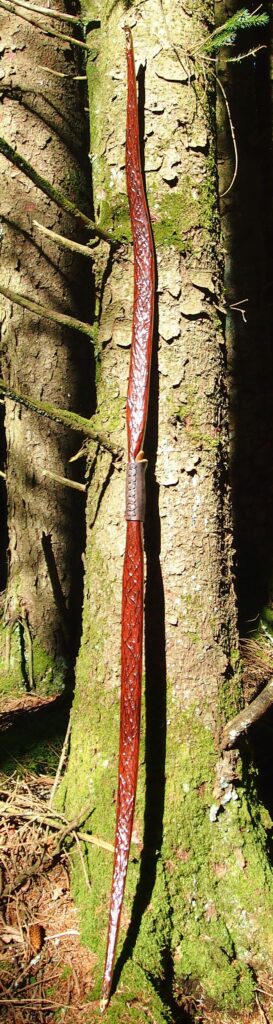
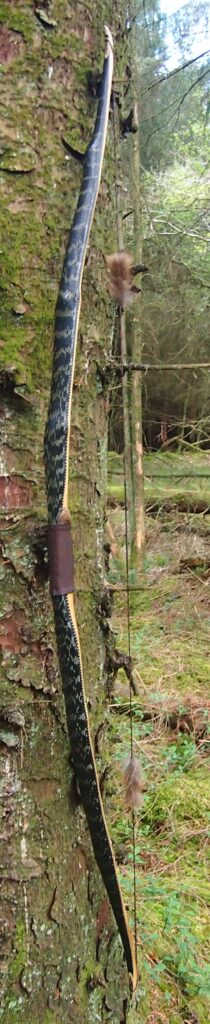
To decorate the bows back I fancied trying something a bit different. I’d been inspired recently by a pile of old beech logs which were full of that beautiful “spelted” black creeping web like fungal mycelia. I wanted to re create this creeping black fungal “mycelial” pattern and texture on one of my sinew backed bows, but using sinew threads dyed black to represent the mycelial component, set amongst a background of contrasting colour to represent the “growing medium”.

The primary colour I’d chosen to compliment the black of the sinew mycelia was a really nice dark red which I could create using a mix of my local iron oxide and carboniferous earth pigment. This combination of earth pigments creates that dark red blood colour, akin to what you’d find dried onto your sword after a busy day slaying a bunch of zombies! 🤣Perfect!

So I added a thin surface layer of new sinew threads to the already cured, established sinew backing. These new sinew threads however had previously been soaked in spruce bark tannin solution rather than plain water in order to hydrate them. And once fully hydrated with tannin they were then added to a little iron chloride solution which I make myself from wire wool and white vinegar. The chemical reaction which takes place between the tannin and the iron chloride resulted in the sinew threads instantly turning a stunning jet black colour.

These jet black sinew threads could then be glued onto the plain established sinew backing layer in a web like weaving pattern, just like those black fungal mycelia veins weave through a hunk of spelted beech wood.

Once these black weaving sinew threads were fully dry, I then painted the whole back with my dark red earth pigment paint mix. This dark red layer was then followed by a coating of concentrated spruce bark tannin solution to provide a slight chestnut brown overlay to the dark red paint below it.

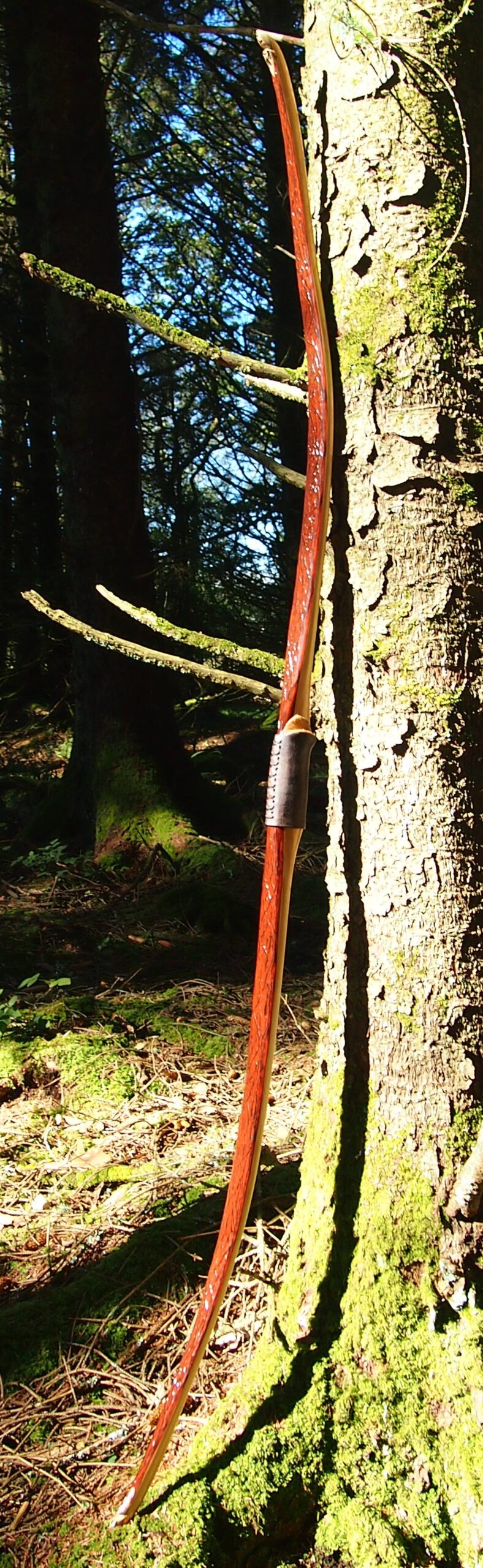
Once it was all dry I then scraped through the chestnut tannin stain, and the dark red paint below that to expose the jet black sinew threads on all the high spots. This left the low spots red and tan coloured, and all the high sinew spots presenting as inky black veins weaving up and down the entire length of the the limbs. I was really pleased with how it came out and I intend to finish several more sinew back bow this same way, but with a variety of different colours and shades.

Once the back was all finished and the overlays/wood was all sanded up, I sealed her up with shellac. And after polishing her up she was treated to a nice satin beeswax/linseed paste wax finish. For the handle I fitted a lovely piece of my own home produced bark tanned roe deer leather stitched up with the same leather cut thin for lacing. And the arrow pass/shelf were both fitted with a couple of pieces of my bark tanned hair on roe deer shin leather.

I love the shape and finish of this bow and really enjoyed shooting her. She does not stack one bit, and despite all that reflex she is easy to string and silky smooth to draw. There is a slight kick upon release due to the high limb mass previously mentioned, but I got used to it after a couple of arrows and didn’t even notice it once I’d altered my grip a bit.

I found this bow very comfortable to hold at full draw, so was able to take a little more time shooting my full shot cycle. Subsequently I was able to shoot this bow with great accuracy over and over again. Across the chrono she was also performing how I’d expect too, sending a 400 grain arrow at around 150 FPS, which is what I’d expect from a 45lb primitive bow.

So here she is. I hope you enjoy the look as much as I do, and please feel free to leave a comment below telling me what you think. This bow is now available to purchase in my ETSY shop here:

https://www.etsy.com/uk/listing/4375183128/yew-longbow-sinew-backed-reflexdeflex

Alternatively you can contact me directly through the Southmoor Bows contact page here: https://southmoorbows.com/contact/

Specifics are as follows:
Draw Weight: 45lbs at 28”
Mass: 995 grams
Length NTN: ” (symmetrical limb layout)
Width: 1 9/16″” at widest part
Tips: last 8” static reflexed, 1/2” wide
Back: Flat: Pyramidal face profile
Belly Profile: Working limb sections rounded D shaped, transitioning at the tips to a ridged cross section.
Tiller: Elliptical. 1/4” positive
Brace height: 5.5″
Sinew backed Yew Ladies/Teens R&D 36#@24″ (Bow No.24)

This lovely little bow is the sister stave to the bow I previously wrote about here: https://southmoorbows.com/yew-sinew-backed-rd-primitive-for-ben-3022-bow-no-21/ Which I built for my son back in the early spring.

This twin stave had many of the same qualities as the previous stave, so I opted to build this one the same way. The Deflex and the sinew backing would cater for the short length by reducing stress at full draw. And the reflex would counter the power loss created by the deflex, plus reduce any stack felt towards the end of the draw cycle.

I kept the tips almost static for the last 4 or 5″ and reduced the width as much as I dared to remove mass and potential vibration post string release. 3″ fades and a 4″ very slightly dished handle maximised the length of working limbs whilst retaining a functionally none working riser with elegant lines which maximised the aesthetics as best as possible.
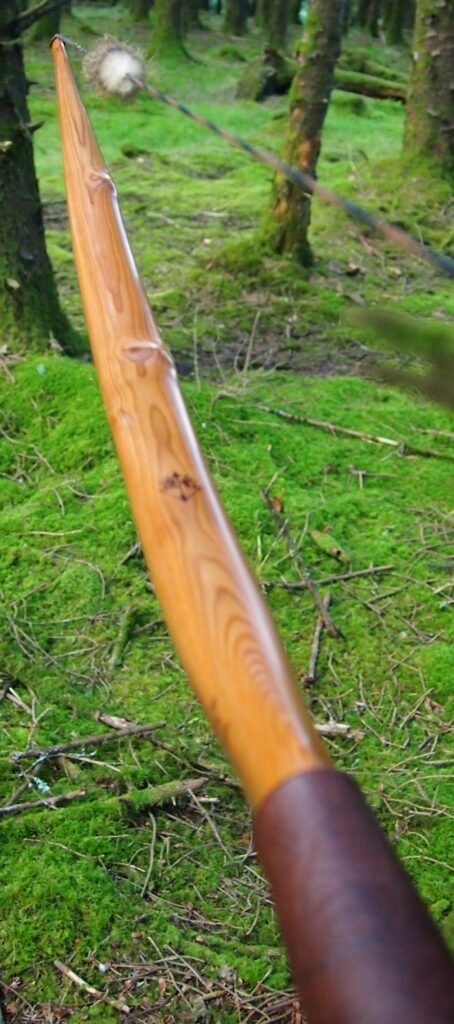

The rustic sinew effect of the backing was created by painting the whole backing black with my local earth pigment, then sanding the high spots to expose the natural dried bronze sinew colour. I think it looks pretty neat. The edge work is bone dust mixed with shellac applied by hand with a sharpened stick.

Tip overlays are red deer antler. The handle wrap is wild Roe deer bark tanned leather laced up with more of the same wonderful stuff. The arrow shelf/pass is bark tanned hair on red deer shin leather.

The finish is a Danish oil/Shellac caped off after polishing with my own bees wax/linseed oil mixed as a paste wax to give a lovely satin finish.

I had great fun shooting this little bow in over a couple of weeks. To settle her in I used a bunch of 35# spin 380 grain stumping arrows I made up for my sons bow. They shot great and despite the short draw length preventing me from hitting my usual anchor, I had no difficulty hitting my spot almost every time.

She shoots quietly and without any noticeable kick or hand shock and would make for a really beautiful and functional light weight introductory bow to anyone looking to enter into the world of primitive archery.

This bow turned out far too heavy for either of my daughters, so I’ve decided to put this bow up for sale and build them something much lighter instead. So this bow is now for sale in the Southmoor Bows ETSY shop and can be purchased here: https://www.etsy.com/uk/listing/1852784488/yew-longbow-3624-sinew-backed-primitive

Hope you like the photos and video below. Here are the stats:

Draw Weight: 36lbs at 24”
Mass: 510 grams
Length NTN: ” (symmetrical limb layout)
Width: 1 5/16″” at widest part
Tips: last 4” semi static reflexed, 1/2” wide
Back: Lightly crowned with undulations. : Pyramidal face profile
Belly Profile: Working limb sections rounded D shaped, transitioning at the tips to a ridged cross section.
Tiller: Eliptical. 1/8” positive
Brace height: 5″
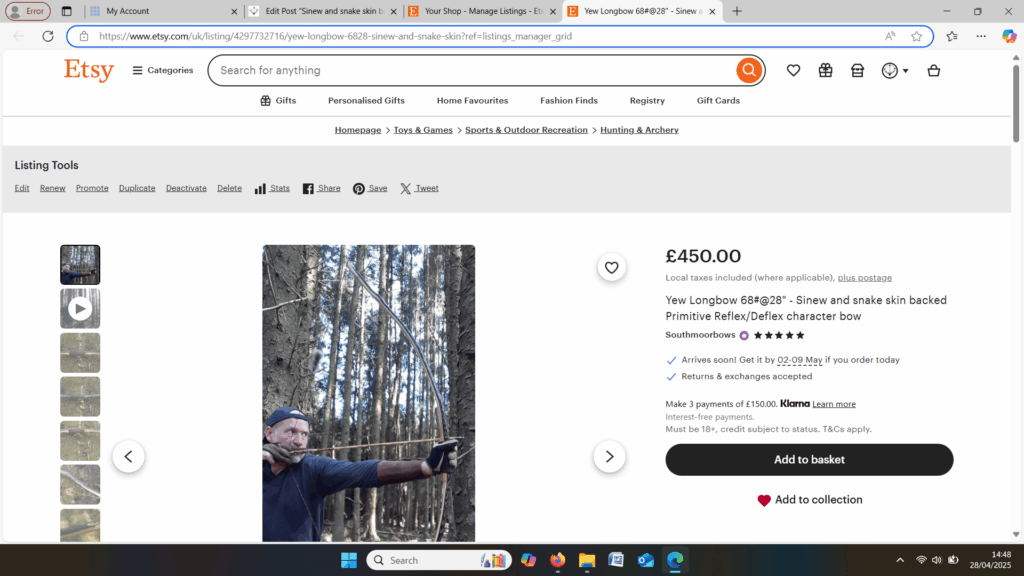
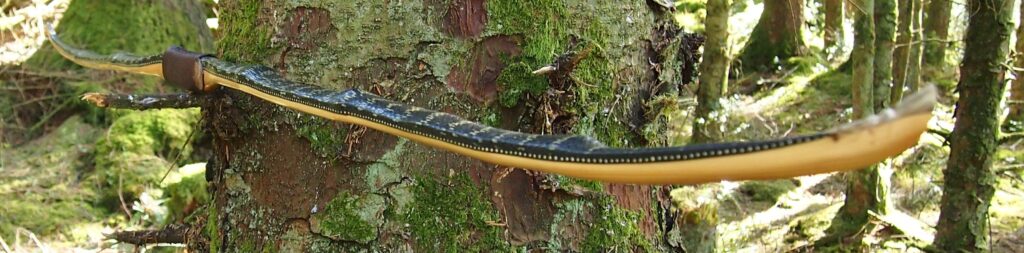
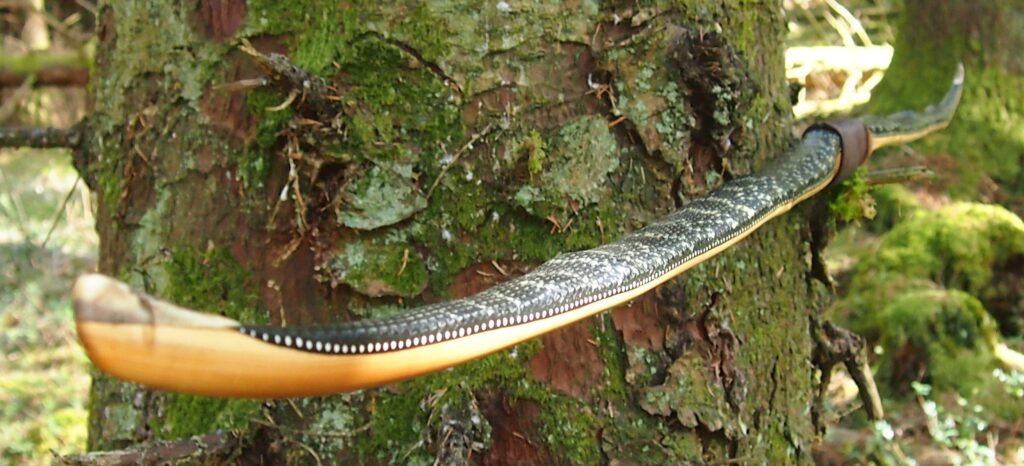
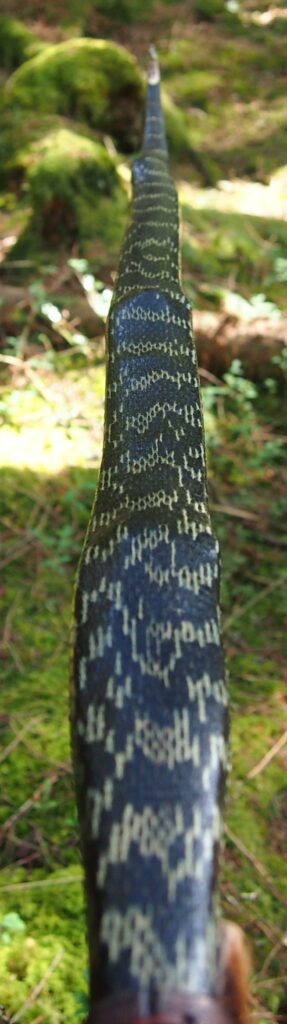
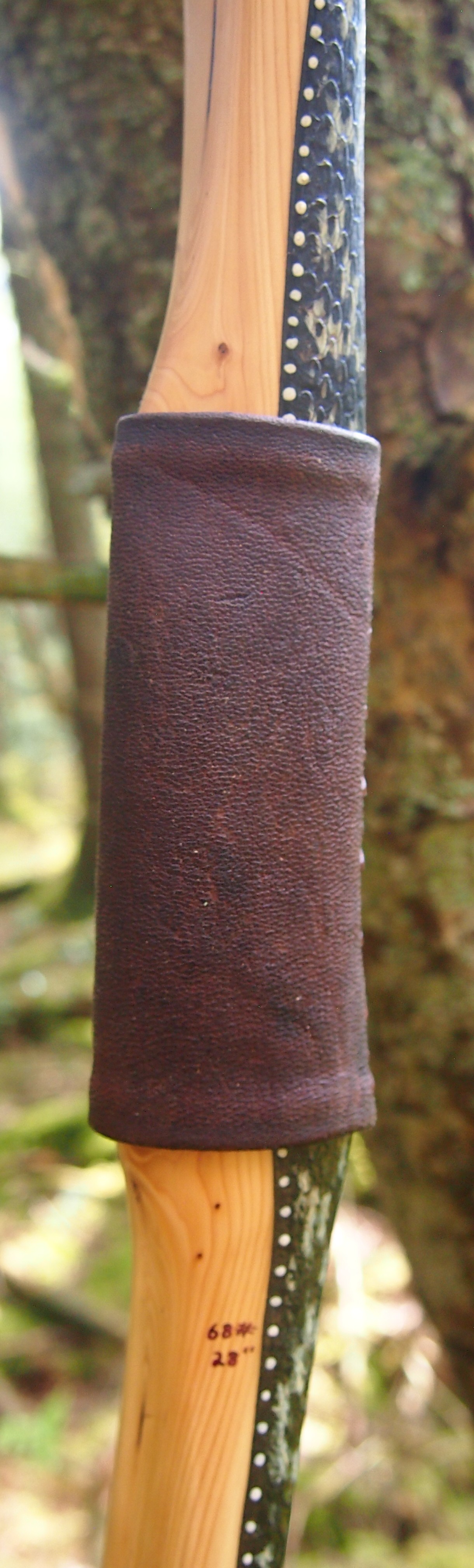
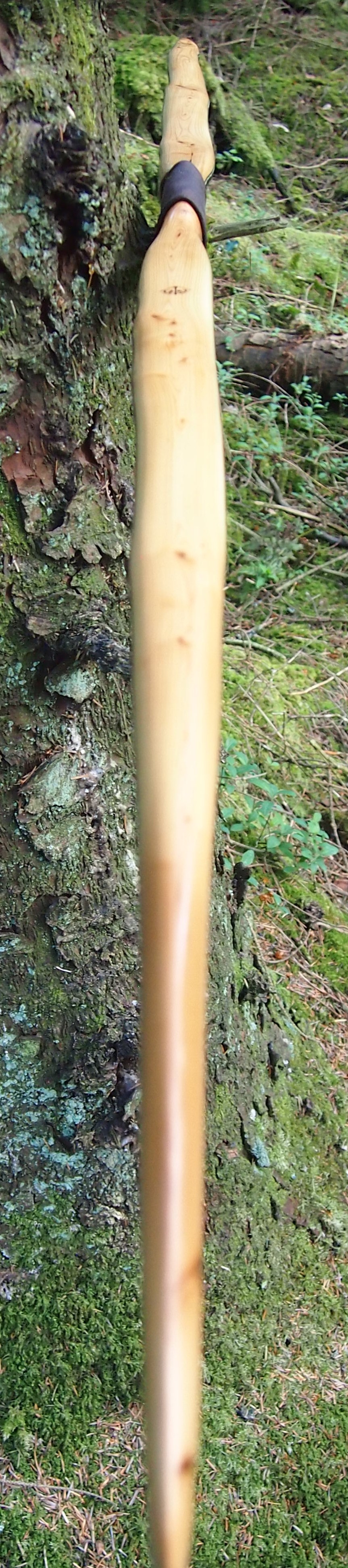
Sinew and snake skin backed Heavy Yew Flat bow 68#@28″ (Bow No: 23)
This bow was built from a Yew stave which I salvaged from a pile of yew logs cut down by tree surgeons a few years ago. If I’d know in advance that this particular yew tree was scheduled for felling, then I’d have kindly asked the tree surgeons to have left the better logs long and scar free. But unfortunately I got there too late and they had butchered most of the nice clean limbs.

After wiping away the tears and a bit of searching through the carnage I was able to recover was the one stave that was used in this build. Thankfully this one stave was pretty decent. It was almost clean across one face and fairly straight viewed face on. Side on however was a bit less straight.

The stave measured 70″ long and viewed from the side, right smack in the middle was some deflex to the tune of around about an inch and a half overall negative tip to tip. There was a good chance that steam bending could pull that deflex out of the handle but I figured it would be fine left alone so long as the outer thirds of the limbs were flicked a little to compensate for the natural deflex positioned in what would be the handle in the finished bow.

So after taking the bark off and chasing off a few rings of sapwood, I reduced the edges and the belly material enough so that I could heat some reflex into the last 10 inches of the limbs outer thirds. This added reflex was able to bring the overall deflex to reflex ration back to a level playing field. Which is always where I prefer to start from.

After a good bit of cooling off time I roughed out the face profile so I could inspect the string alignment and was pleased to see that there was no need for any other heat corrections. And after a bit of whitling here and there I was happy with the overall shape and size of the bow.

Given the shear amount of material I had to work with on this stave, I felt confident in being able to produce a bow which would be a bit heavier than what I usually aim for. And given that I intended to sell this bow, I wanted to maximise it’s longevity, durability and performance by sinew backing it thus increasing its potential draw weight even further.

After sinew backing and a 6 month curing process I finished this bow and shot it in over a couple of weeks. The 1/4″ positive tiller held good and she performed with great power and cast. Over the chrono she consistently recorded arrow speeds of around 165 fps with a 550 grain arrow. And with no noticeable hand shock or kick, she was a pleaser to shoot in, despite the heavier than personally preferred draw weight of 65lbs.

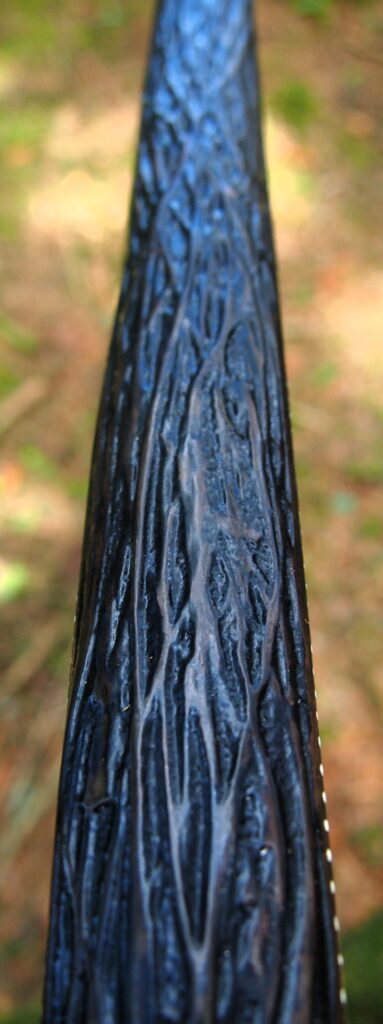
To finish and decorate I covered the bland sinew backing with two King Rat Snake skins embellished with some earth pigment edge work to make the transition from wood to snake skin pop. Tip overlays of red deer antler were fitted and the top nock was cut to receive a stringer since this bow was a little too heavy to safely string via push pull or step through method.

The handle covering/arrow pass is all wild red deer bark tanned leather and the finish is Danish oil buffed and polished with paste wax. For a string she was fitted with a custom built 12 strand B50 flemish twist string fitted with wild fox fur silencers to make this already quiet bow whisper quiet.

This bow is now available for sale and can be purchased in our Southmoor Bows Etsy shop found here:

Here are the details.

Draw Weight: 68lbs at 28”
Mass: 925 grams
Length NTN: 67” (asymmetrical limb layout)
Width: 1 11/16″” at widest part
Tips: last 6” semi static reflexed, 1/2” wide
Back: Crowned with undulations. : Pyramidal face profile
Belly Profile: Working limb sections rounded D shaped, transitioning at the tips to a ridged cross section.
Tiller: Eliptical. 1/4” positive
Brace height: 6″

Hope you enjoy the photos and video below. Please feel free to comment or contact me with any questions!