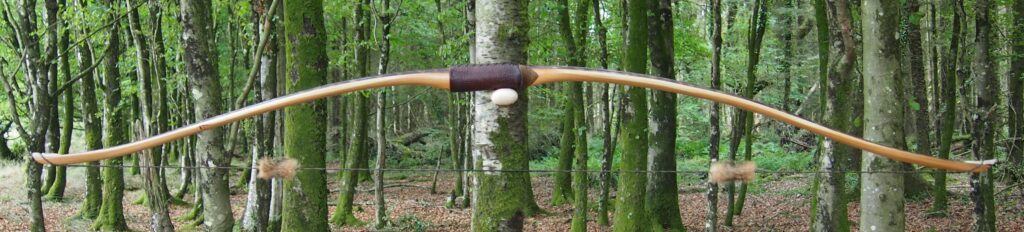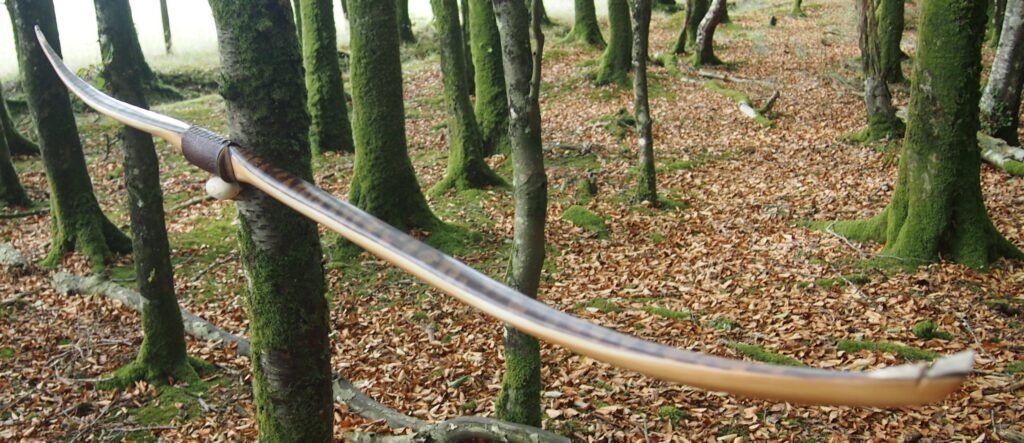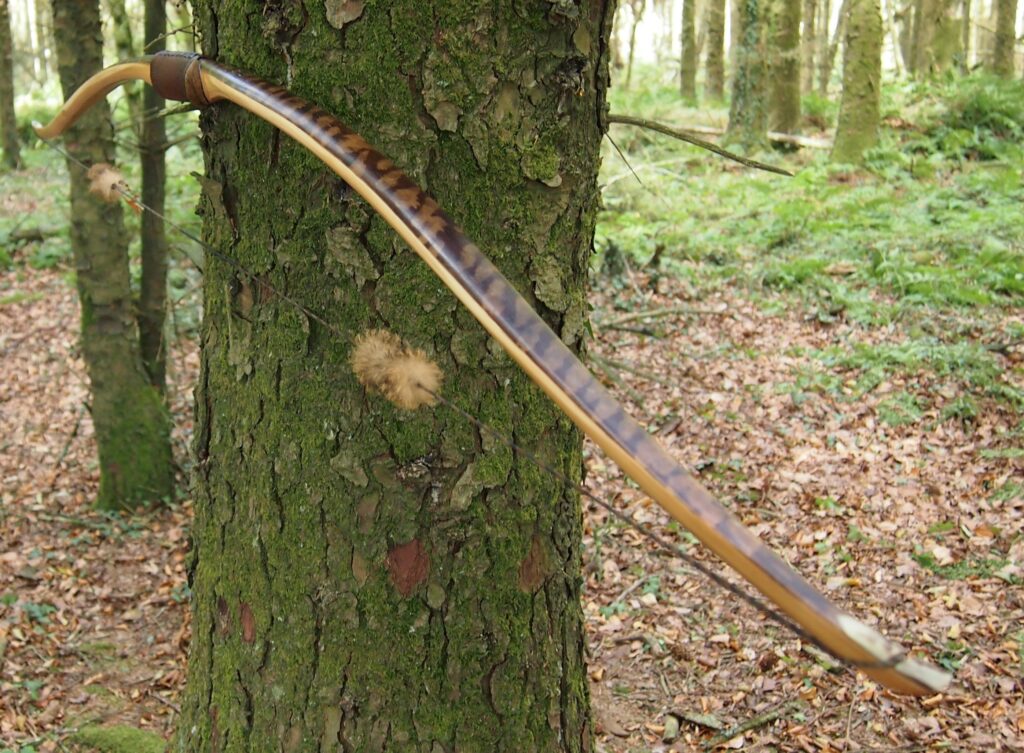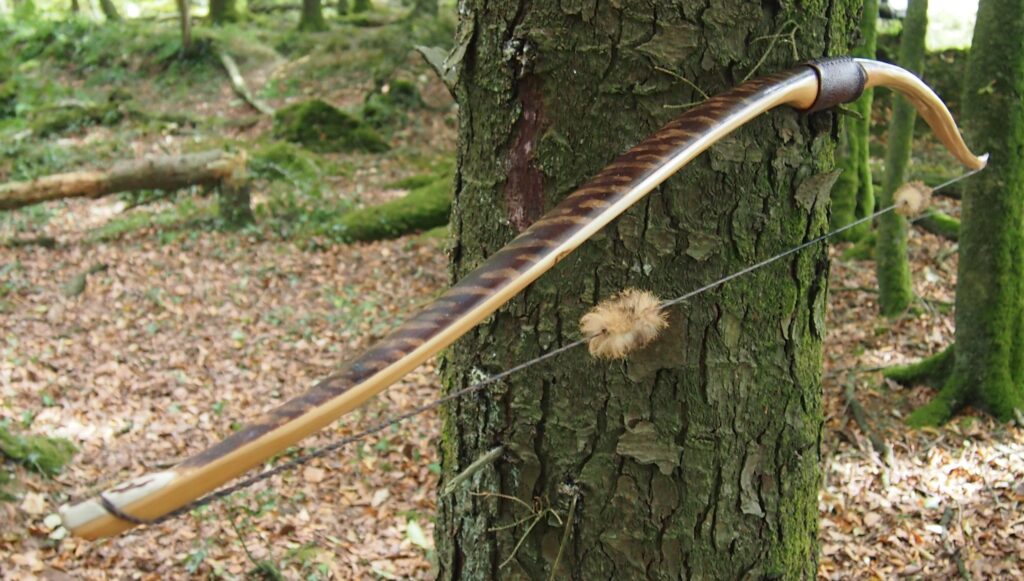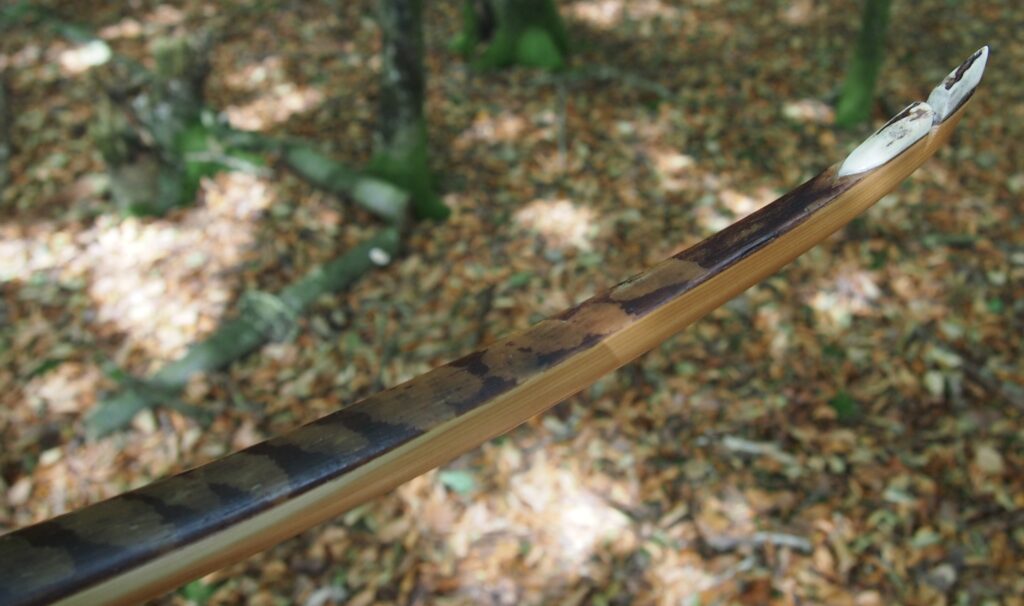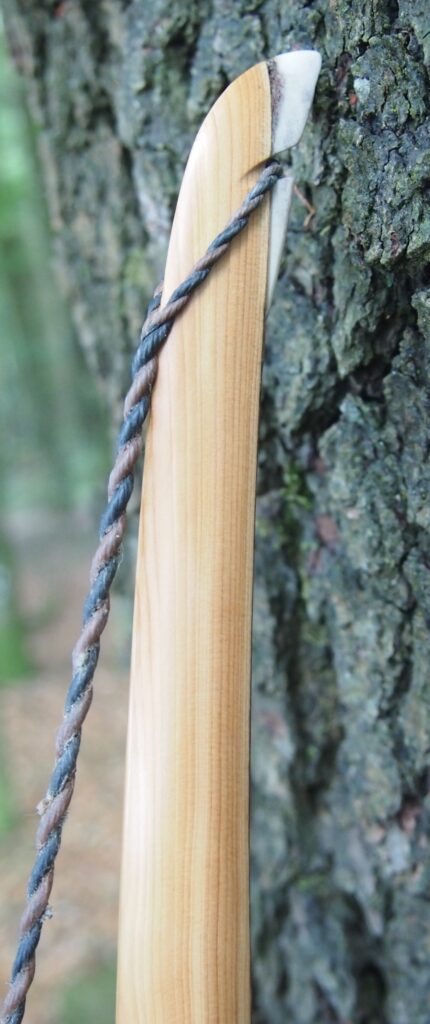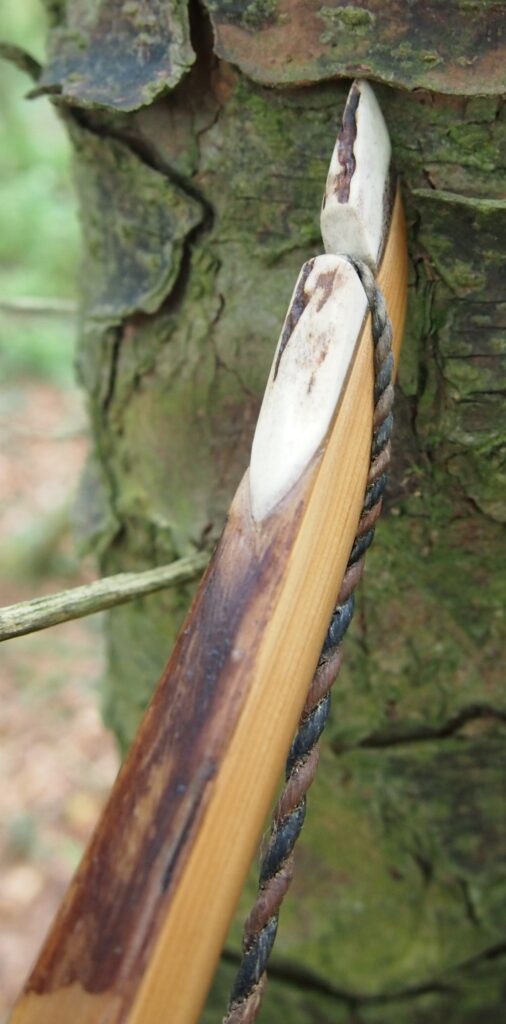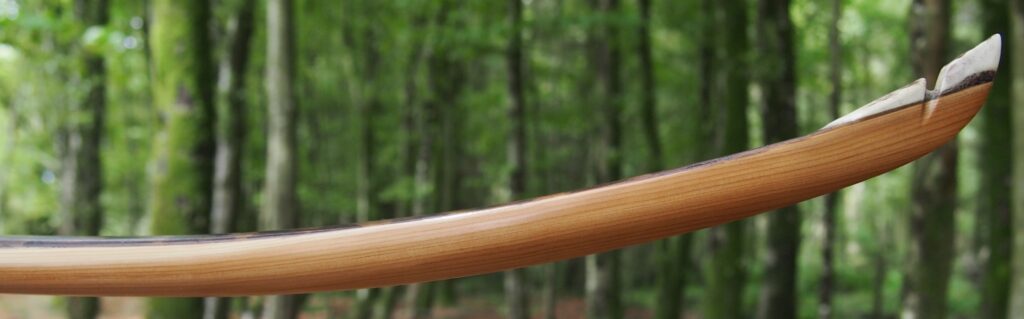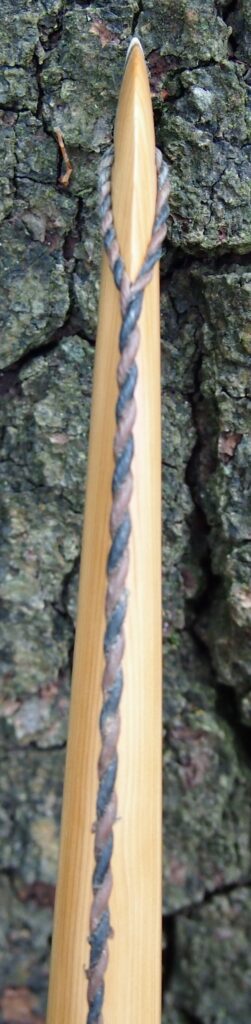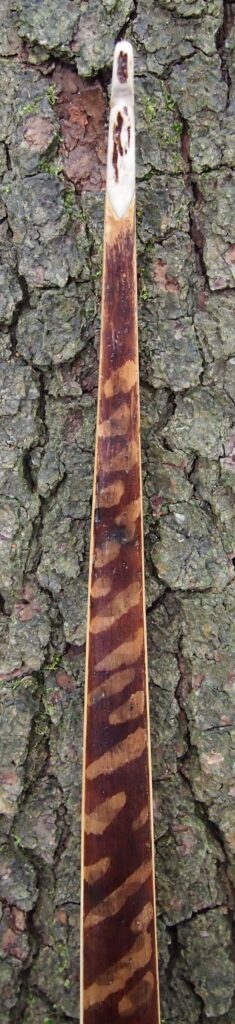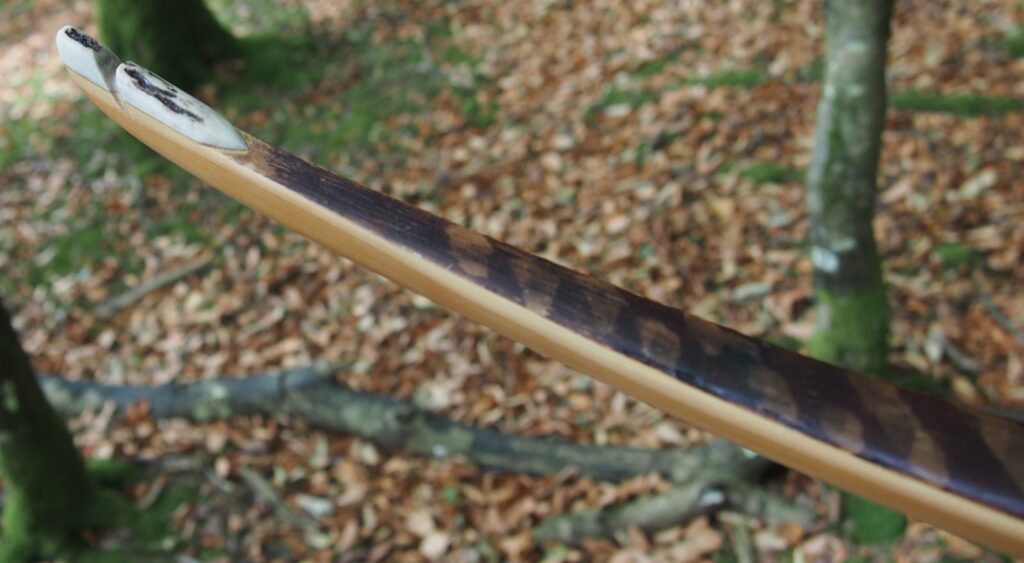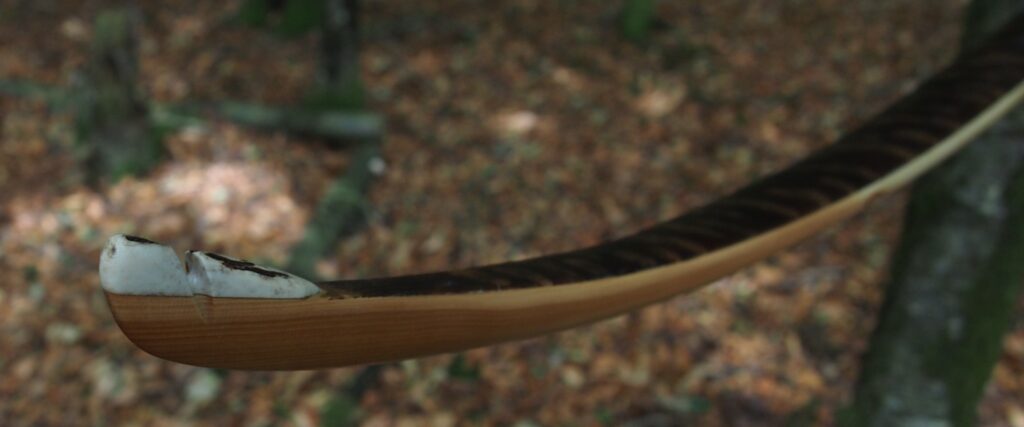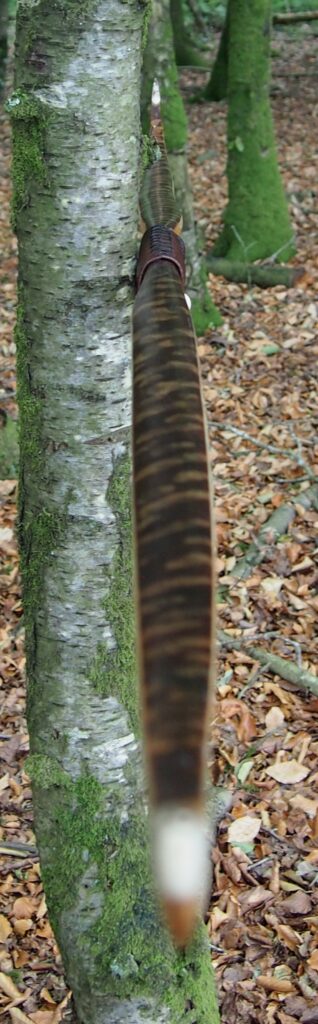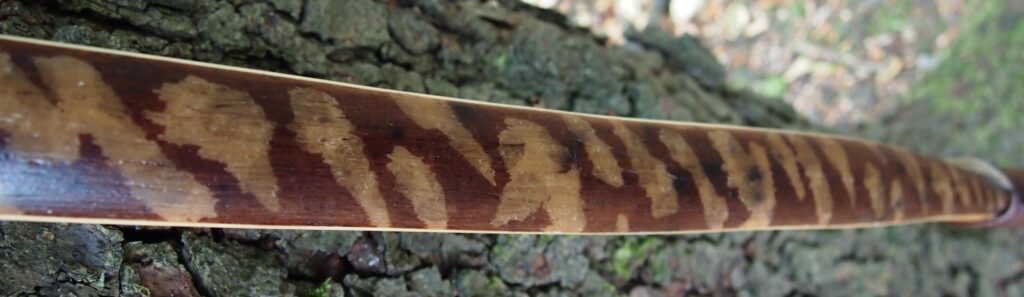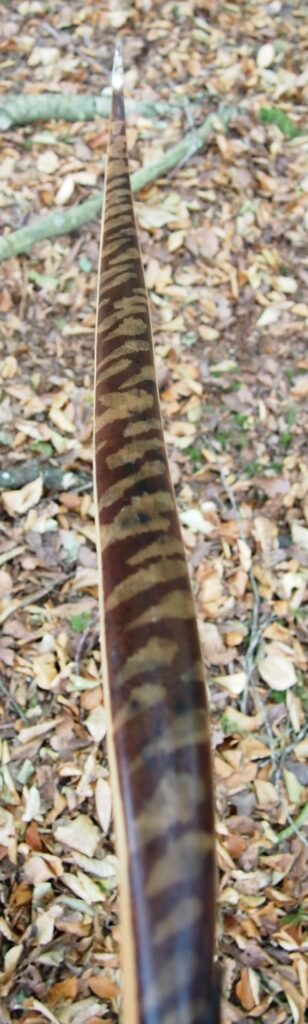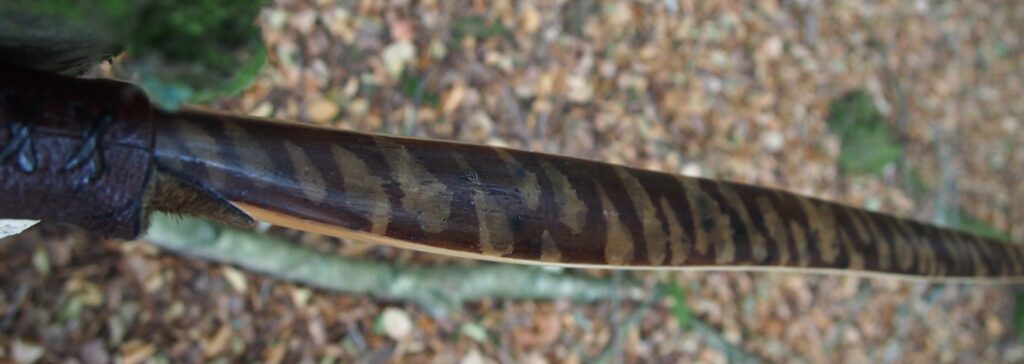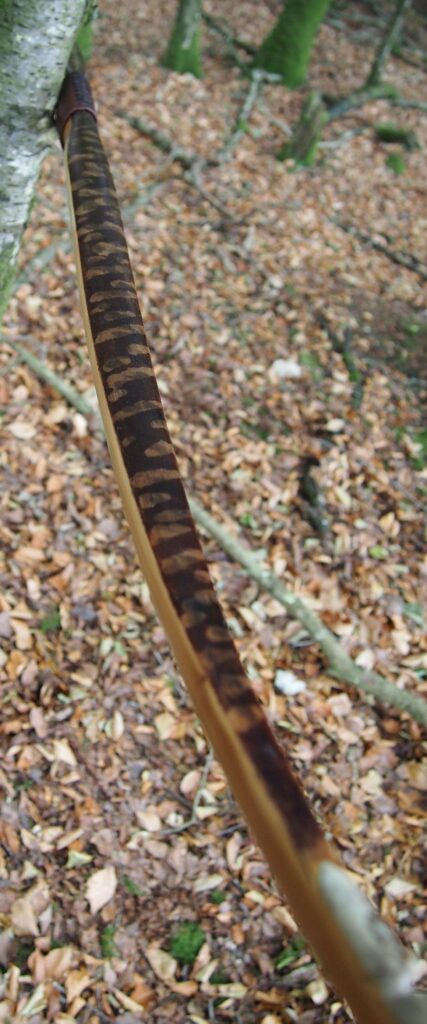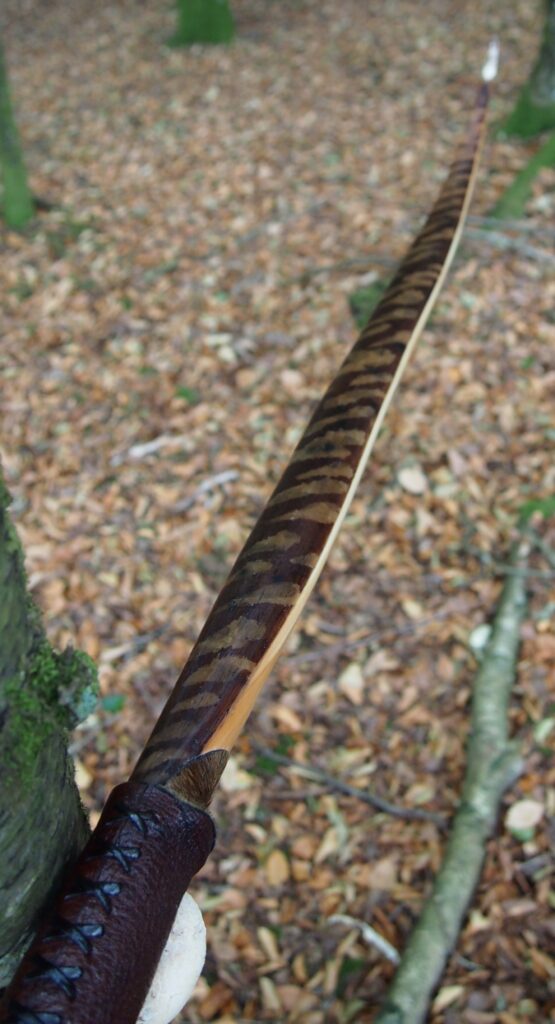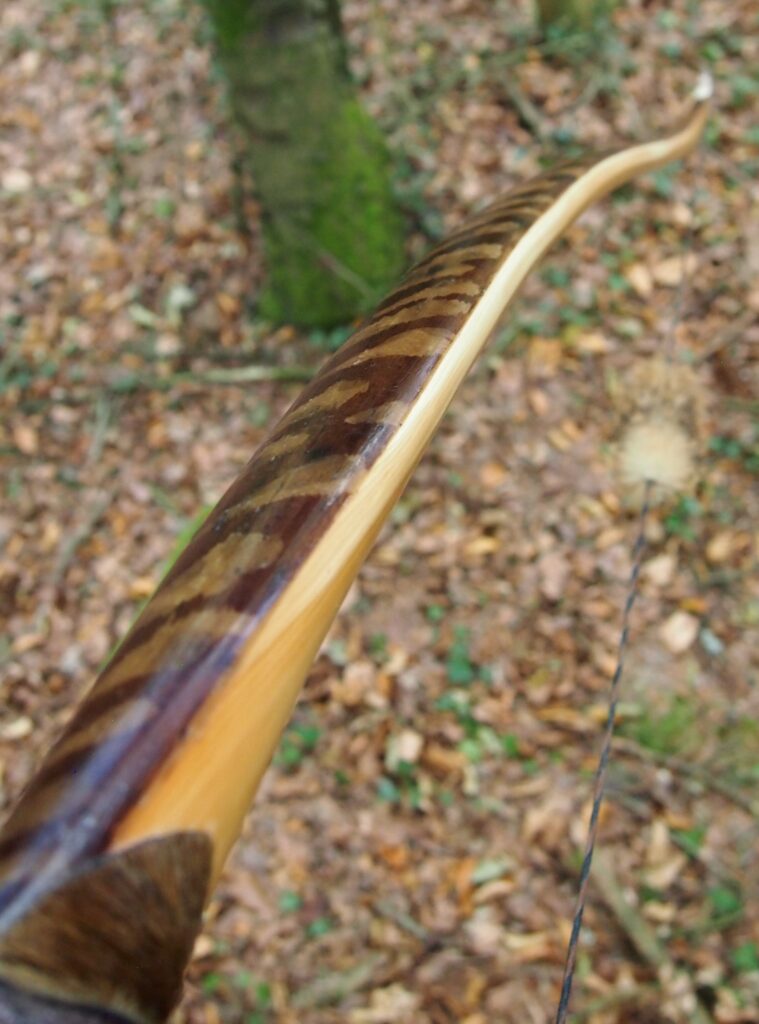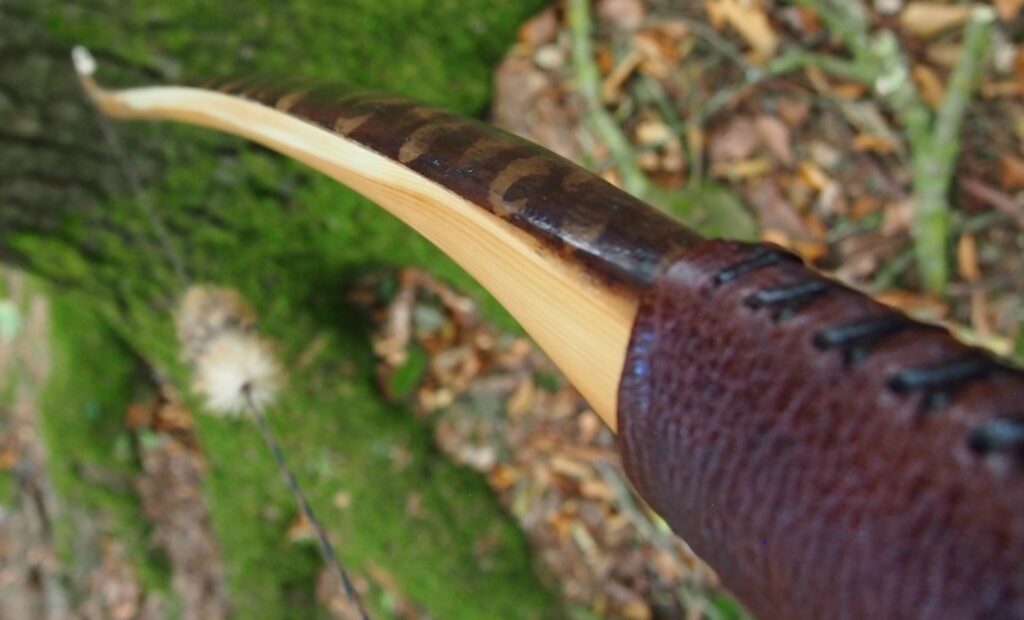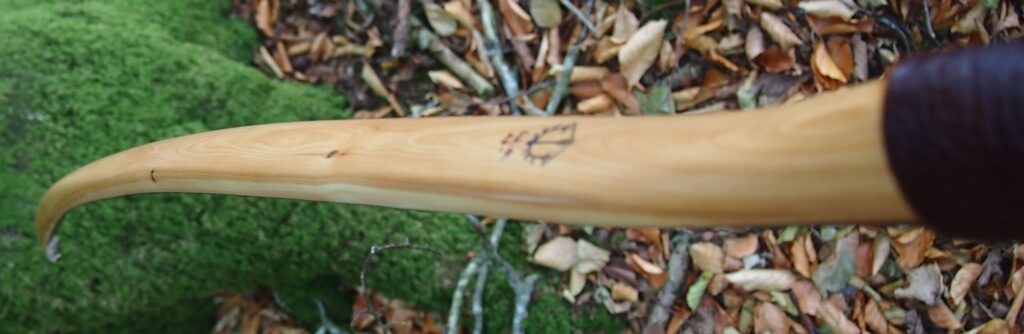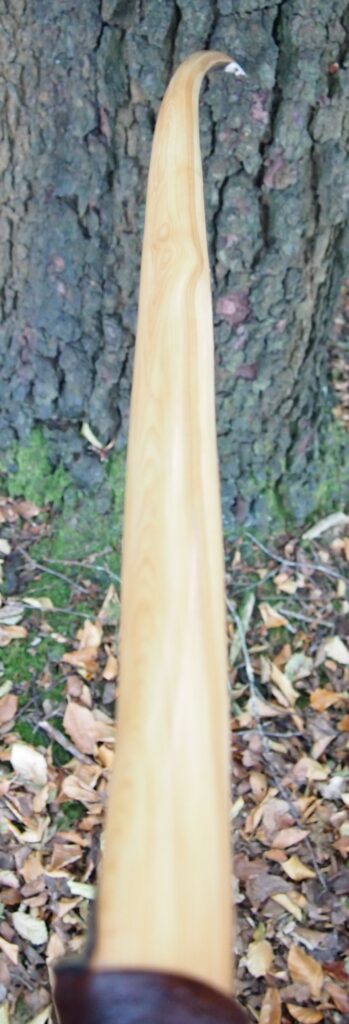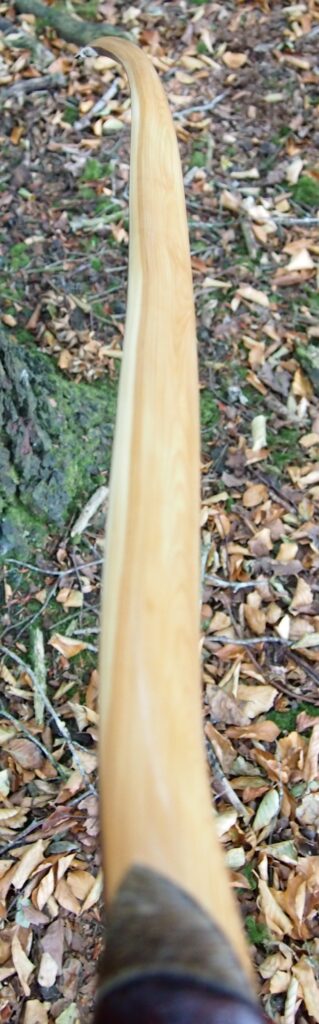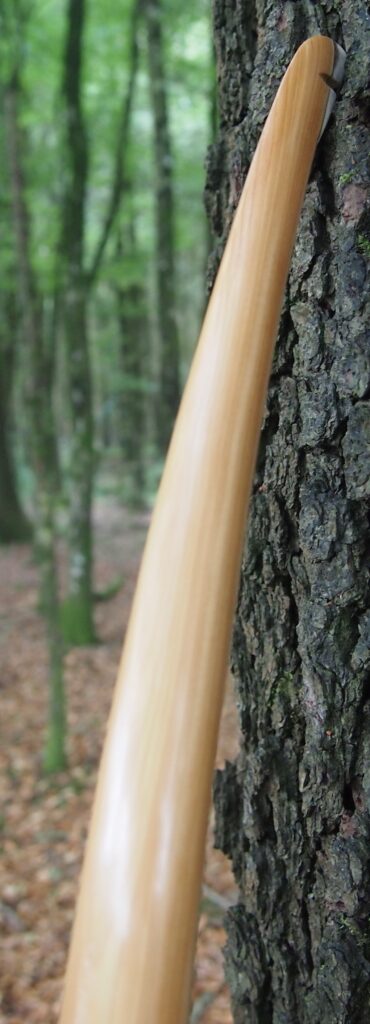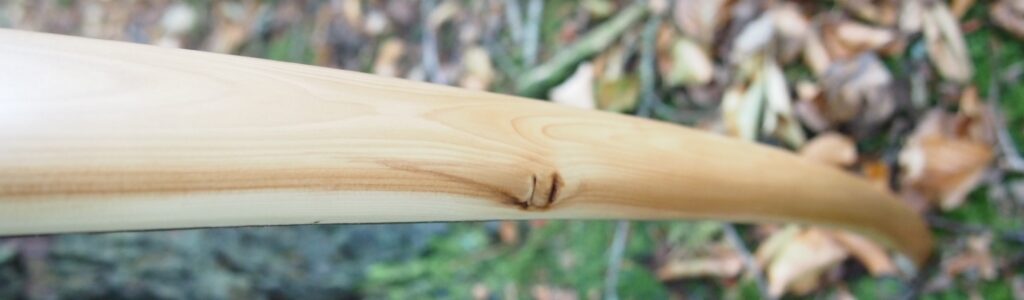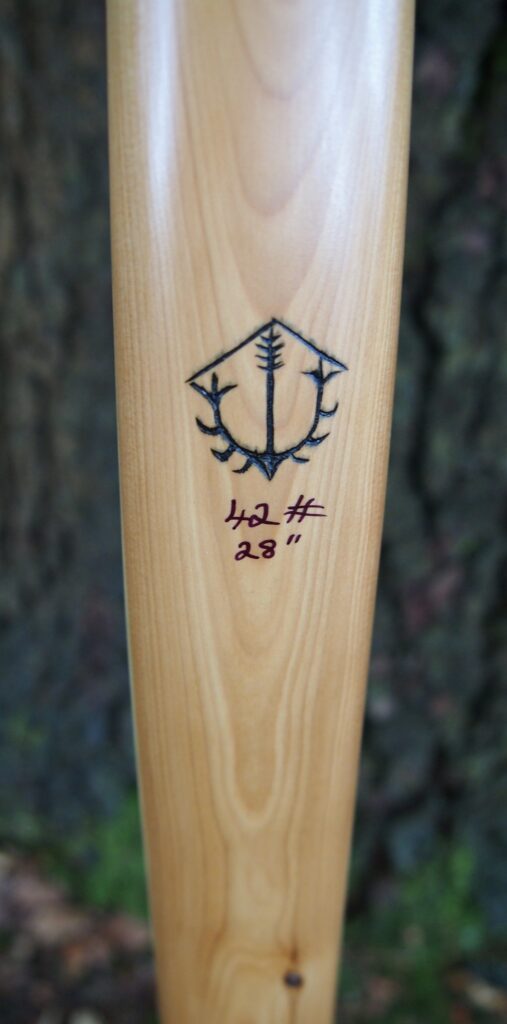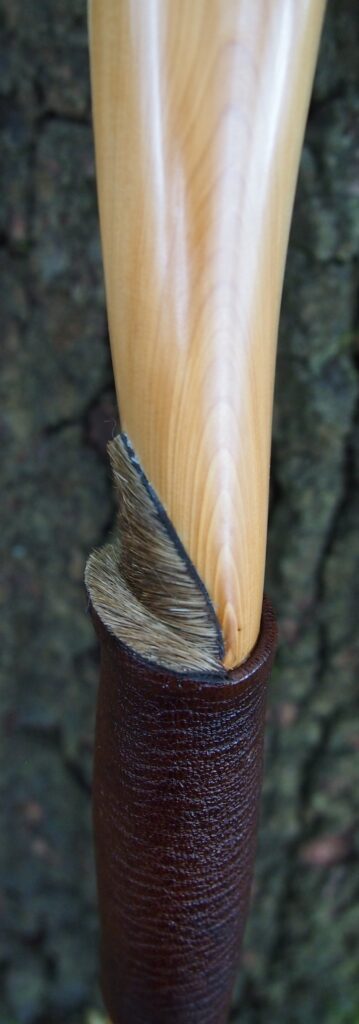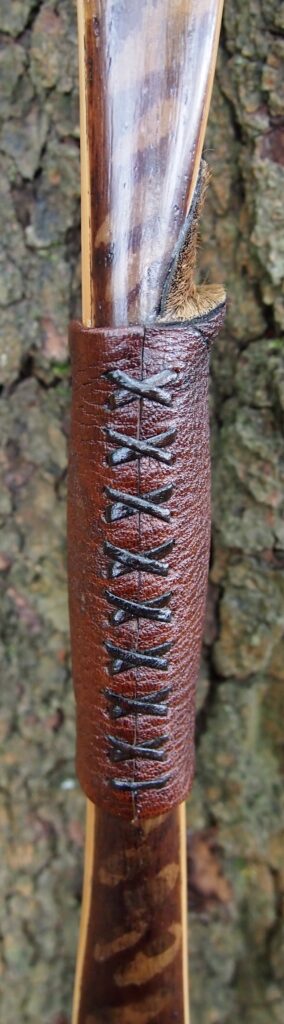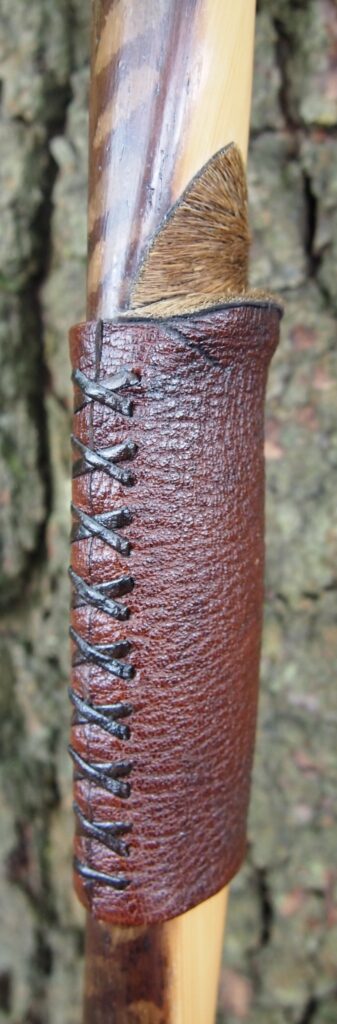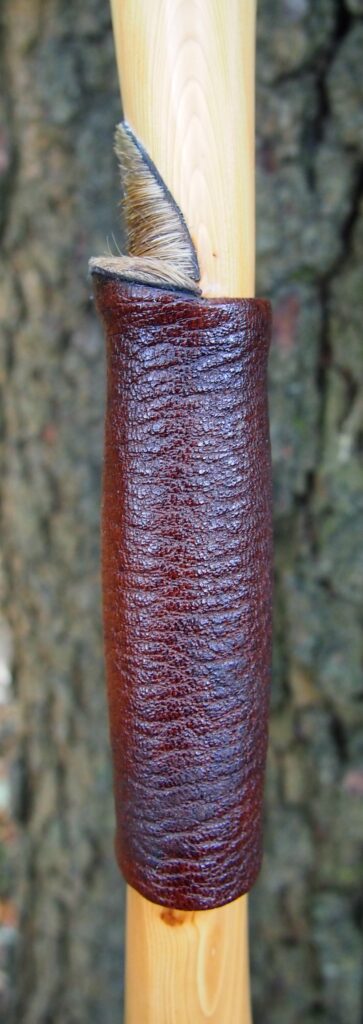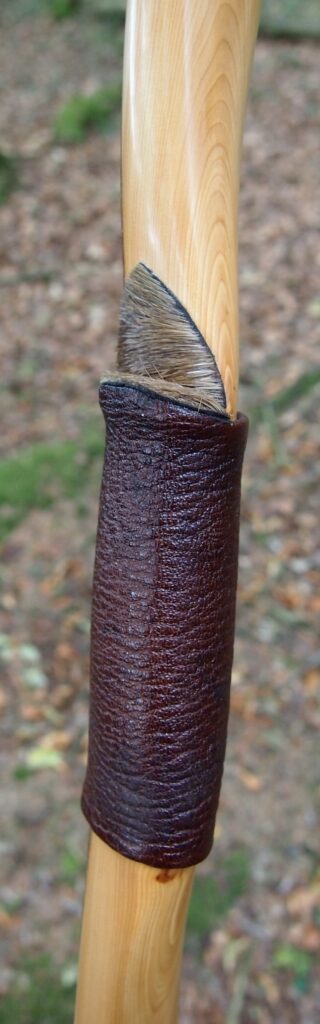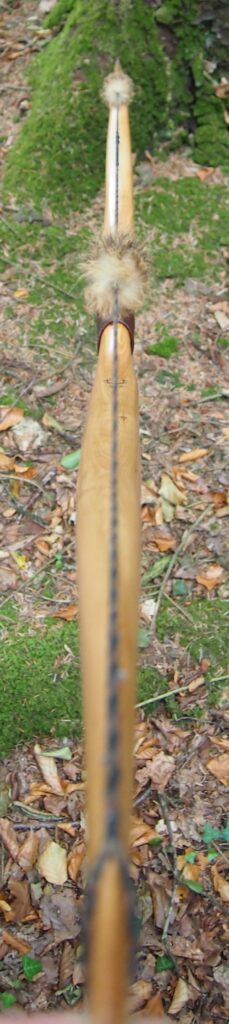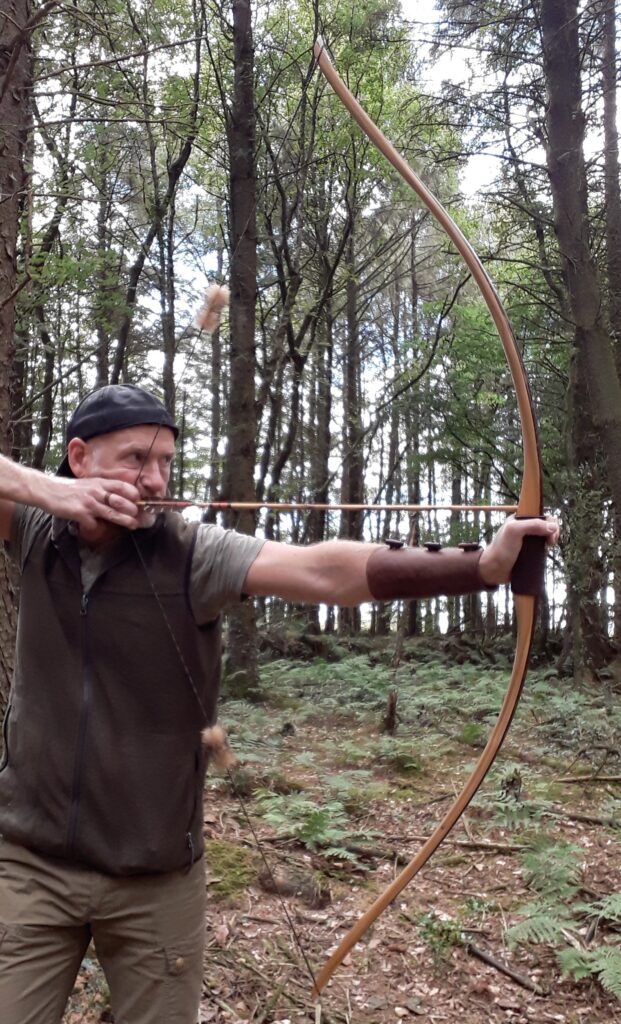
This bow was built from a really nice 6 year old English yew stave. In one of my recent blog posts which can be found here I talked about how I believe it is important to select the part of a stave which best suits itself to being used as the belly of a bow. This bow stave emphasised the points made in that post perfectly.
The stave used to make this bow was a 5″ diameter, clean, straight, horizontally grown English Yew branch stave. And as is often the case with yew branch staves, this one had all the small branches and pins located on it’s upper most side.
So when this stave got ripped down the middle on the band saw, the upper side was discarded as it was clearly useless for making a bow, but the lower side which would have been facing the ground was nice and clean and packed full of lovely orange pink compression strong wood.
The sap wood on this lower side was evenly distributed but a little on the thick side, so I reduced it down from about 1/2″ to about 3/16″. Since this stave was going to be treated to a nice bomb proof 3oz layer of sinew backing, I didn’t have to worry about violating the sapwood growth rings either, so I planed most of it off leaving behind only a even flat surface of sapwood which would act as a nice level low mass foundation for the sinew to stick too.
As the compression strong wood was used to build this bow, It took next to no set at all, even after being fully tillered and shot in, In fact this bow still holds 3″ of reflex after half an hour of post shooting rest. This resistance to string follow is not just a reflexion of the compression strength of this bows wood either, it’s also a measure of the protective influence that an elastic backing such as sinew has on the belly of a bow.
Many bowyers are unaware that sinew, being as elastic as it is, actually take the pressure off a bows belly by providing give to the back of the bow, especially at the top end of the draw cycle. This “give” from the crowned layer of sinew on the back negates the need for the belly to take on as much compressive force as it would have to if say it were backed with something lacking elasticity like other common backing materials such as bamboo or hickory.
Sinew is a wonderful material for building bio-composite bows when used properly. Too much sinew and a bow can end up too bulky and heavy to benefit from it’s elastic qualities. But get the weight and distribution right and it can really add some zip to a bow. So long as the sinew is adequately cured and the maximum draw length is achieved relative to the bows overall length.
It always amazes me how much faster an arrow will travel out of a sinew backed bow when it is drawn all the way back to full draw, as opposed to it being slightly short drawn. And this bow was one were the difference in arrow speed between 26″ and 28″ was really noticeable.
Over the chrono this bow was sending my 400 grain 600# stumping carbons at 152ft/sec, which made for some whistling arrows with a nice flat trajectory, and a great bit of fun out in the woods shooting her in.
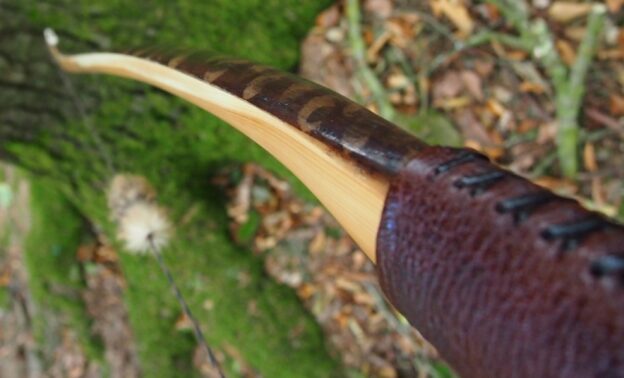
I thought I’d try a camo effect on the sinew backing this time and followed the guidance given by Simon at Stonehill Primitive Bows. His great article on camo decoration can be found here and does a better job of explaining how I did the backing on this bow! Check out Simon’s website if you haven’t already as it’s packed with gorgeous bows and some great articles on bow building.
Stats are as follows:
Draw Weight: 42lbs at 28”
Mass: 905 grams
Length NTN: 67” (asymmetrical limb layout)
Width: 1.5” at widest part
Tips: last 8” semi static reflexed, 3/8” wide
Back: Crowned with undulations. : Pyramidal face profile
Belly Profile: Working limb sections rounded D shaped, transitioning at the tips to a ridged cross section.
Tiller: Eliptical. 1/4” positive
Brace height: 5.5″
This bow is now available for sale and can be purchased in our Etsy Shop Here
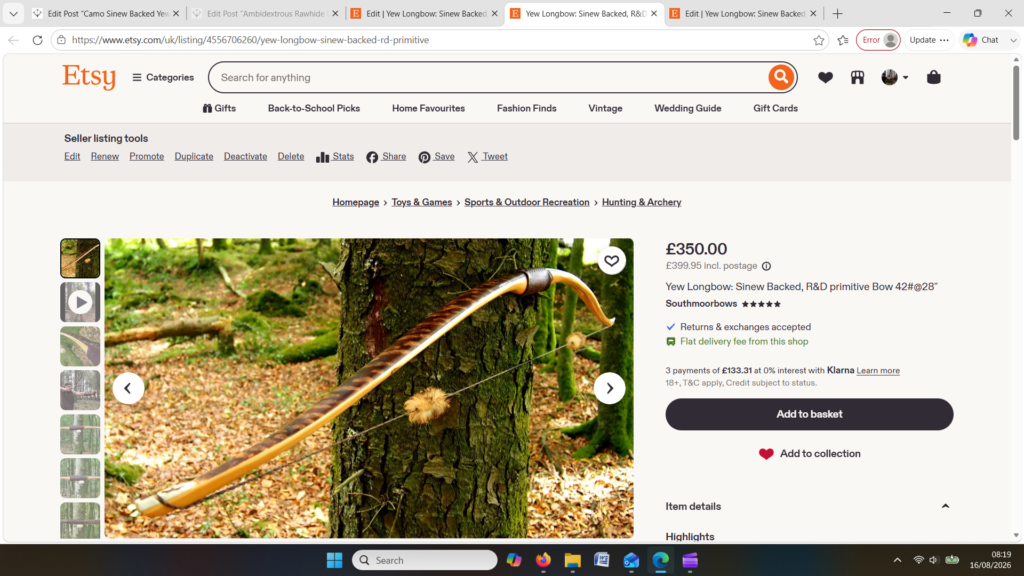
Here are the Photos and video. Hope you enjoy!